WhatsApp:+86 18005022363 WeChat: +86 18005022363
  Email:
Product Overview
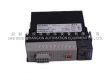
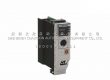
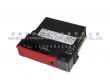
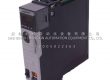
The 3BSE003879R1 (BB174) is a 4-slot S800 I/O backplane (base) manufactured by ABB as part of the S800 distributed I/O family for the AC800M controller and 800xA / Compact 800 automation platforms. Physically, the BB174 is a DIN-rail-mounted extruded-aluminum profile with a printed-circuit backplane bus embedded, four module-keyed slots along the front (each slot accepts one S800 I/O module — AI835, DI840, DO840, CI854 communication interface, etc.), and side-mounted terminal blocks (the defining “17x-series” feature) that distribute 24 V DC field power from a single PSU landing to all four hosted modules via the backplane’s internal power rails. In plain terms, the BB174 is the “spine” of a small S800 I/O segment: you snap it onto the DIN rail in a cabinet, land 24 V field power onto the side TB once, plug four S800 modules into the slots, and the segment is live — no need to run 24 V field wires to each module’s front terminal individually.Within the ABB 800xA / AC800M architecture, the BB174 sits between the controller and the field. A typical small bay: PM856 CPU + CI854 (Profibus DP to S800) plugged into its own backplane (or integrated into the same DIN run), then one or two BB174 segments (each 4 modules, so 4–8 S800 modules total) daisy-chained via the S800 bus extender cable (ribbon from the CI854’s S800 port to the first BB174, then bus-extender between BB174 segments if more than 4 modules). Each S800 module on the BB174 talks to the CI854 over the S800 internal bus (proprietary HDLC-like protocol, ~1.5 Mbps, up to 12 modules per segment without repeater). For plants operating AC800M-based systems — pharmaceutical skids, water-treatment packages, packaging-machine controls, mid-size process units, turbine-auxiliary DCS fringes — the BB174 is a C-class structural spare: modest cost, zero wear mechanism, but if a backplane’s bus traces fatigue (very rare) or the side-TB corrodes in coastal/humid rooms, the whole 4-module segment goes dark. Because S800 has been ABB’s workhorse I/O since the early 2000s and the BB174 crosses multiple platform generations (AC800M → 800xA → Compact 800), sourcing tested-surplus with a bus-continuity check is straightforward, and ABB still lists the 3BSE003879R1 as active in most regions (unlike some 3BHE Unitrol spares which are long-lead).
Technical Specifications
| Parameter Name | Parameter Value |
|---|---|
| Product Model | 3BSE003879R1 (BB174) |
| Manufacturer | ABB (S800 I/O / 800xA / AC800M) |
| Product Type | S800 I/O Backplane (Base), 4-Slot with Field-Power Distribution |
| Platform | ABB S800 I/O (AC800M, 800xA, Compact 800) |
| Slots | 4 module positions (accepts any S800 I/O or communication module) |
| Mounting | 35 mm DIN rail (TS35/7.5 or TS35/15) |
| Bus Interface | S800 internal bus (proprietary, to CI854 / CI867 / CI871) |
| Field Power Distribution | Yes — side-mounted TB for 24 V DC field power input, distributed to all 4 slots via backplane rails |
| Module Keying | Mechanical key per slot (prevents plugging wrong-module-family into slot — S800 vs. S800L vs. S900 distinguishing) |
| Bus Extender | Supports S800 bus-extender cable between BB174 segments (daisy-chain up to 12 modules/segment before repeater) |
| Operating Temperature | 0 °C to +55 °C |
| Storage Temperature | –40 °C to +70 °C |
| Humidity | 5%–95% RH, non-condensing |
| Protection | IP20 (cabinet-only), conformal-coated PCB traces |
| Dimensions (L×W×H) | ~160 mm (4× ~40 mm slot pitch) × ~40 mm × ~30 mm (backplane profile) |
| Weight | ~0.25–0.35 kg |
Main Features and Advantages
Integrated field-power distribution eliminates per-module 24 V wiring. The defining advantage of the BB174 (vs. its “15x” sibling BB154) is the side-mounted field-power terminal block. On a BB154 (4-slot, no FP), each S800 module’s 24 V field-power pair (typically terminals 1–2 on the module’s front TB) must be landed individually — for 4 modules that’s 8 field wires (2 per module) plus the PSU feed. On a BB174, you land the 24 V DC PSU (+24, 0V) once on the side TB of the backplane, and the backplane’s internal copper rails distribute +24/0V to all four slots — each module draws field power through its backplane connector, no front-terminal landing needed for 24 V. For a skid OEM building 20 identical packages (e.g., 4× DI + 4× DO + 2× AI per skid = three BB174 segments), this cuts wiring time ~15 minutes per skid and removes 24 V terminal points as a fault domain. The side TB also typically carries a “shield drain” bar (earthing the cable shields of the S800 bus extender and the field cables if the OEM routes them that way).Mechanical keying prevents wrong-module insertion. Each slot on the BB174 has a physical key profile that matches the S800 module family — an AI835 (analog in) keys differently from a DI840 (digital in) which keys differently from a CI854 (communication). You can force a CI854 into an AI slot if you’re determined (saw off the key), but in normal use the BB174‘s keying enforces BOM discipline — the panel builder can’t accidentally put a DO840 where an AI835 belongs because the key won’t align. For plants where contractors do cabinet mods during outages and “any spare S800 module fits any slot” is a dangerous assumption, the BB174‘s keying is a quiet safeguard.Daisy-chainable to 12 modules per segment. The BB174 has an S800 bus-out header at one end (and bus-in at the other, depending on orientation) that accepts the S800 bus-extender ribbon (flat 10-way or 16-way, shielded). One BB174 (4 modules) + second BB174 (4 modules) + third BB174 (4 modules) = 12 modules on one S800 segment, all talking to one CI854 port. Beyond 12, ABB requires an S800 bus repeater (or split across two CI854 ports). This scalability means a plant can start with one BB174 (4 modules) on a small skid, then add a second BB174 daisy-chained when the skid expands, without re-racking the first. The bus-extender cable is ~0.5 m standard; longer custom lengths exist for non-adjacent backplanes on the same DIN rail.Robust backplane bus for AC800M real-time. The S800 bus on the BB174 runs at ~1.5 Mbps HDLC, with the CI854 polling each module every ~5–10 ms (scan-time configurable in the AC800M Control Builder). The backplane’s PCB traces are impedance-matched and shielded by the aluminum extrusion, so even in a cabinet next to a 2.2 kW VFD the S800 bus doesn’t CRC-error. For process applications where the DI/DO scan integrity matters (ESD valve DO, fire-pump DI), the BB174‘s bus stability is part of why ABB S800 remains the default I/O for 800xA plants 20 years in.
Application Field
The BB174 is the go-to backplane for any AC800M/800xA application where the I/O count per bay is 1–4 modules and you want centralized 24 V field-power distribution. A municipal water-treatment plant running 800xA on AC800M: the chlorine-dosing skid has 2× DI (chlorine-scale-empty float switches) + 1× DO (chlorine-feed-valve open/close) + 1× AI (chlorine-mass-flow 4–20 mA) = 4 modules, one BB174. The skid’s 24 V DC PSU (a 3BSE018295R1-class ABB PSU or third-party) lands +24/0V on the BB174 side TB, all four modules power up from the backplane, and the CI854 (in the same cabinet, maybe 3 m away) reaches the BB174 via a 0.5 m bus-extender. The panel builder saved ~20 termination points vs. a BB154 approach. Three years in, the municipality added a second chlorine skid (identical) — they snapped a second BB174 onto the same DIN rail, daisy-chained the bus-extender from skid-A’s BB174 to skid-B’s BB174, and landed the same 24 V PSU onto skid-B’s BB174 side TB (or doubled-up the PSU if load > PSU headroom). Total add-skid I/O commissioning: one morning.In pharma (biologics suite, purified-water skid), the BB174 hosts 2× AI (RO pressure, tank level, conductivity — often AI835 8-ch, so 2× AI835 = 16 AI on one BB174 is possible if the skid is AI-heavy), 1× DI (pump-run-feedback, valve-position-limit), 1× DO (solenoid open/close). The 24 V field power feeds the RO pressure transmitter (two-wire 4–20), the level transmitter, the conductivity analyzer — all draw from the BB174‘s field-power rail. The skid OEM’s BOM: one BB174, one CI854 (Profibus DP to the plant’s 800xA), one PM856 CPU (if the skid is standalone Compact 800) or just CI854 if the skid is remote I/O off a central AC800M. The BB174‘s conformal coating handles the CIP-vapor humidity in the skid’s local panel (IP54 enclosure, but internal humidity spikes during steam-SIP).On packaging lines (flow-wrapper, thermoformer), the BB174 often pairs with S800L? No — S800L uses BL-series backplanes. The BB174 is standard S800, so the modules are full-width (20 mm). A thermoformer with 12 AX5211 servo-drive I/O + 8× DI + 4× DO = 24 S800 modules across six BB174 segments (6 × 4 = 24), all daisy-chained, one CI854 port. The BB174‘s side-TB for 24 V field power is landed per 4-module segment (so 6 × side-TB landings) — still better than 24 × individual module 24 V landings.Retrofit / cabinet-expansion scenario: A plant’s original cabinet was spec’d with BB154 (4-slot, no FP) and the contractor ran 24 V to each module front-terminal. Five years later, they add a 4-module expansion bay on the same DIN rail — they choose BB174 this time (side-TB) because the original PSU has headroom and landing one pair on the BB174 side TB is faster than running 8 wires to four new module fronts. The two backplane types (BB154 + BB174) coexist on the same S800 bus daisy-chain — no problem, the bus doesn’t care about FP vs. non-FP backplanes. That hybrid is common in cabinets that grew over two outages.