WhatsApp:+86 18005022363 WeChat: +86 18005022363
  Email:
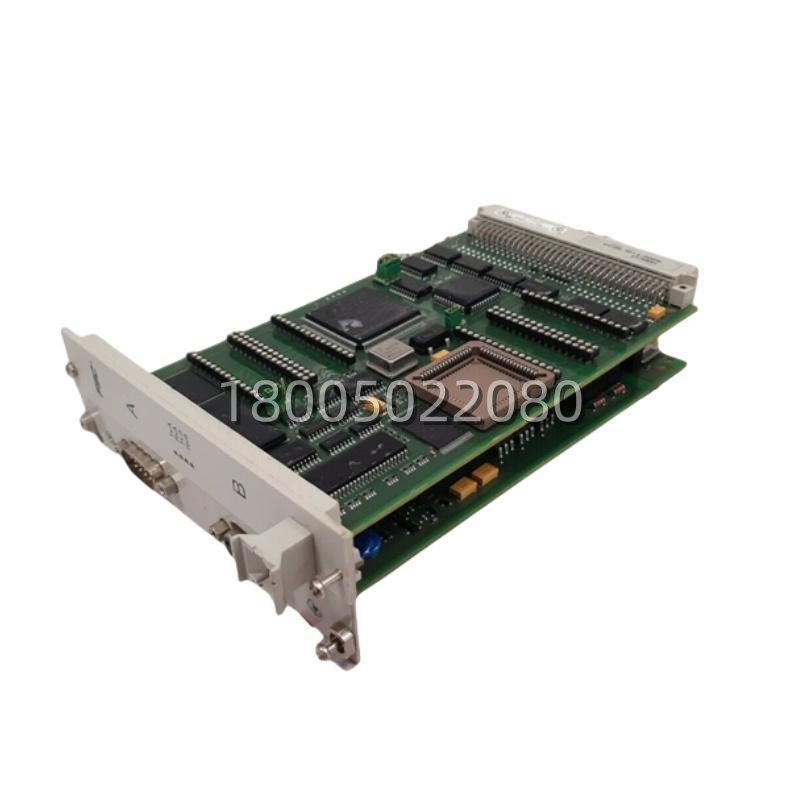
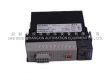
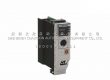
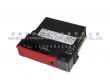
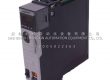
Application Scenarios:In a large thermal power plant, the existing Symphony Harmony DCS needs to integrate a new flue gas desulfurization (FGD) system controlled by a third-party Allen-Bradley PLC. Hardwiring hundreds of I/O points would be prohibitively expensive and slow. Instead, engineers install an ABB YPQ102E module in a Harmony NCOM node. Configured for DF1 Full Duplex protocol, the YPQ102E acts as a master, polling the A-B PLC for critical process data (pH, pump status, valve positions) and sending setpoints. This “soft link” eliminates miles of control wiring, reduces commissioning time by weeks, and provides the control room with a unified view of the entire process, solving the critical pain point of multi-vendor system interoperability.
Parameter:
| Parameter | Specification |
|---|---|
| Product Model | YPQ102E |
| Manufacturer | ABB |
| Part Number | YT204001-FT |
| Product Category | Enhanced Serial Communication Module |
| System Compatibility | Symphony Harmony, Advant OCS (INFI-NET) |
| Mounting Location | NCOM / Communication Node Rack Slot |
| Key Protocols | Modbus RTU (Slave/Master), DF1, 3964R, ASCII |
| Interface Type | RS-232 / RS-485 (configurable) |
| Data Rate | Up to 115.2 kbps (dependent on protocol) |
| Power Supply | 5V DC (via NCOM backplane) |
| Configuration Tool | ABB Composer / Control Builder |
| Primary Role | DCS-to-PLC/Drive Serial Gateway |
Technical Principles and Innovative Values:
- Innovation Point 1: Software-Defined Protocol Flexibility: Unlike fixed-function cards, the YPQ102E is a programmable communication processor. Its core innovation lies in its ability to be loaded with different protocol drivers (Modbus, DF1, etc.) via ABB’s engineering software. This allows a single hardware module to adapt to a wide range of legacy and modern serial devices, drastically reducing the need for external protocol converters and simplifying spare parts management.
- Innovation Point 2: High-Density Data Mapping for Complex Integration: The module features enhanced memory and processing power to handle large and complex data tables. It can map hundreds of registers from a remote PLC (e.g., a Siemens S7 via 3964R or a GE Fanuc via Modbus) directly into the Harmony system’s global database as if they were native I/O points. This provides a level of integration depth typically requiring expensive custom gateways.
- Innovation Point 3: Offloading Controller CPU for Reliability: The YPQ102E operates as an independent communication front-end. It handles all byte-level protocol parsing, error checking, and retry mechanisms autonomously. This offloads the main AC 110 or AC 800F controller from communication overhead, ensuring that control loop execution remains deterministic and unaffected by serial link latency or noise, a critical feature for high-availability processes.
Application Cases and Industry Value:
- Case Study: Steel Mill Blast Furnace Upgrade: A steel mill needed to connect its legacy ABB Advant OCS controlling a blast furnace to a new MES (Manufacturing Execution System) for real-time production tracking. The MES required raw material consumption data stored in a separate Modicon PLC. An ABB YPQ102E module was deployed as a Modbus Master. It continuously polls the PLC for weight and level data, packaging it into the Advant OCS historian. This provided the mill with accurate yield calculations without any modification to the 20-year-old furnace control logic, extending the system’s life and ROI.
- Industry Value: In water and wastewater treatment, the YPQ102E is instrumental in SCADA integration. It allows regional treatment plants using Symphony Harmony to communicate pump and flow data over leased telephone lines or radio modems (using ASCII protocol) to a central master station, enabling remote monitoring and control of unmanned facilities.