WhatsApp:+86 18005022363 WeChat: +86 18005022363
  Email:
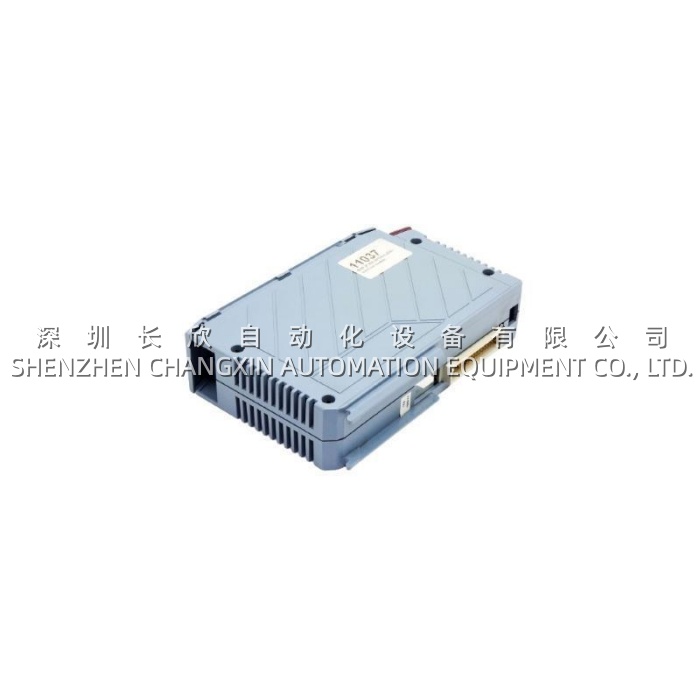
Product Overview
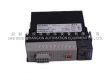
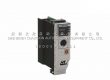
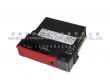
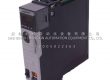
The 3IF050 6 B R is most consistently interpreted as a Siemens SIMATIC S7-300 Interface Module (IM 36x series) under your plant’s internal ERP coding, with 6 B R indicating Rack 6, Slot 2, Revision B. The IM 36x family is the only “interface module” class in the S7-300 ecosystem: its job is to link a S7-300 Central Rack (CR) — which holds the CPU, CP 340/341 comms, and first 8 I/O modules — to one or more Expansion Racks (ER) when the CR runs out of slots (8 max per S7-300 rack).Three variants share the same mechanical footprint and backplane interface:
- IM 360 (6ES7360-3AA01): Master interface, seats only in the Central Rack (last slot of CR, next to CPU). Drives the ER bus to up to 3 slave ERs.
- IM 361 (6ES7361-3CA01): Slave interface, seats only in an Expansion Rack (first slot of ER). Receives the ER bus from IM 360, powers the ER’s backplane, and requires its own 24 VDC PSU (PS307) in the ER cabinet.
- IM 365 (6ES7365-0BA01): Combined master+slave in a single package pair — one unit in CR, one in ER, connected by a 1 m ribbon cable. Only supports 1 ER, ≤1 m from CR, and the ER steals 24 VDC from the CR’s PS307 (no extra PSU needed).
Your 3IF050 internal code most likely maps to IM 361 (the most commonly spare-replaced variant, as ERs are where I/O counts grow over plant life), but confirm against the existing module’s front MLFB before swapping. All three variants seat in a standard S7-300 rack slot (single-width, 40 mm), draw 24 VDC from the rack’s PS307 PSU, and communicate over a 468 kbps parallel ER bus (IM360/361) or 1 m ribbon (IM365). The IM 361 also has two status LEDs: SF (System Fault, e.g., ER bus broken, PSU missing) and BF (Bus Fault, e.g., IM 360 not responding, cable cut).For spare-parts buyers, the IM 36x is a quiet but critical SKU: if the IM 361 in ER-2 fails, the entire ER’s I/O (maybe 30+ SM321/322/331 modules) goes offline — a batching plant losing its weigh-scale I/O or a bottling line losing its conveyor I/O for a $200 interface module is an expensive outage. The IM 36x is mature (Siemens S7-300 “mature product” status), so tested-surplus stock is the pragmatic path.
Technical Specifications
| Parameter Name | Parameter Value |
|---|---|
| Product Model | 3IF050 6 B R (interpreted as Siemens S7-300 IM 36x series, internal plant code) |
| Manufacturer | Siemens AG (SIMATIC S7-300) |
| Product Type | Interface Module (Rack Expansion) |
| Variants | IM 360 (master, CR), IM 361 (slave, ER, needs own PS307), IM 365 (master+slave pair, ≤1m ER) |
| Compatible Racks | S7-300 Universal Rack (UR) — CR holds CPU + IM360 + ≤8 modules; ER holds IM361 + ≤8 modules |
| Max Expansion Racks | 3 per Central Rack (IM360/361); 1 per Central (IM365) |
| Slots per Rack | 8 (CR + each ER) |
| Bus Type / Speed | 468 kbps parallel (IM360/361); 1 m ribbon (IM365) |
| Power Supply | 24 VDC from rack PS307 (IM361/ER needs own PS307; IM365 ER steals from CR PS307) |
| Current Consumption (backplane) | ~0.3 A (IM361), ~0.2 A (IM360), ~0.15 A (IM365) |
| Operating Temperature | 0 °C to +60 °C |
| Protection | IP20 (cabinet-internal) |
| Dimensions (W×H×D) | 40 × 125 × 130 mm (single S7-300 slot) |
| Weight | ~0.15 kg |
Main Features and Advantages
Extends S7-300 I/O capacity without migrating to S7-1500. The core value of the IM 36x family (and your 3IF050 spare) is that plants built in 2000–2015 with S7-300 often hit the 8-slot CR limit years after commissioning: a bottling line adds a new filler, a batching plant adds a new silo scale, a material-handler adds a divert arm — each needs 2–4 SM modules, and the CR is full. Adding an ER via IM 360 (CR) + IM 361 (ER) + a second PS307 gives 8 more slots without rewriting the S7-300 program or migrating the CPU — the ER’s I/O maps directly into the S7-300 address space (PIW/PQW) as if it were in the CR.ER bus isolation from plant noise. The IM 360→IM 361 ER bus runs over a shielded parallel cable (up to 10 m between CR and ER cabinet) — the IM 361 retransmits the backplane signals optically/electrically, so a ground loop or VFD noise in the ER cabinet doesn’t couple back to the CR’s CPU. For plants where the ER sits next to a VFD panel (e.g., conveyor VFDs next to the S7-300 ER for the conveyor I/O), that isolation is why the IM 361 doesn’t crash when the VFD dV/dt spikes.Variant choice matches ER distance/budget.
- IM 360+361: Up to 3 ERs, up to 10 m between cabinets, each ER needs its own PS307 — the default for plants where ERs are scattered (e.g., batching plant: CR in MCC, ER1 in silo area 5 m away, ER2 in mixer area 8 m away).
- IM 365: 1 ER, ≤1 m from CR, no extra PS307 — cheaper, simpler, for cases where the ER is in the same cabinet as CR (e.g., a compact bottling-line panel where CR + 1 ER fit in a 800 mm wide cabinet).
Your 3IF050 internal code likely maps to IM 361 (the slave, most failure-prone because ER cabinets are often in harsher areas — vibrating conveyor alleys, humid batching rooms), but confirm the MLFB: IM 360 = 6ES7360-3AA01, IM 361 = 6ES7361-3CA01, IM 365 = 6ES7365-0BA01.24 VDC backplane power, PSU-aware. The IM 361 draws from the ER’s own PS307 (2A/5A/10A) — it doesn’t steal from the CR’s PSU, so the CR’s CPU stays stable even if the ER PSU browns out. The IM 361 has a “PSU OK” internal check: if the ER PS307 drops below 20 VDC, the IM 361 throws SF and drops the ER bus — the CR CPU sees the ER I/O go to “not available” and can trigger a plant alarm (e.g., “Silo ER PSU Fail”) instead of random I/O glitches.LED sanity for field wiring. SF = IM 361 internal fault (own PSU missing, ER backplane short) or IM 360 not responding. BF = ER bus fault (cable cut between CR and ER, IM 360 powered off, 468 kbps parity error). For a maintenance electrician at 3 AM where an entire ER of conveyor I/O went dark, those two LEDs differentiate “IM 361 dead” from “CR IM 360 lost power” from “ER bus cable cut by a forklift” in 30 seconds.