WhatsApp:+86 18005022363 WeChat: +86 18005022363
  Email:
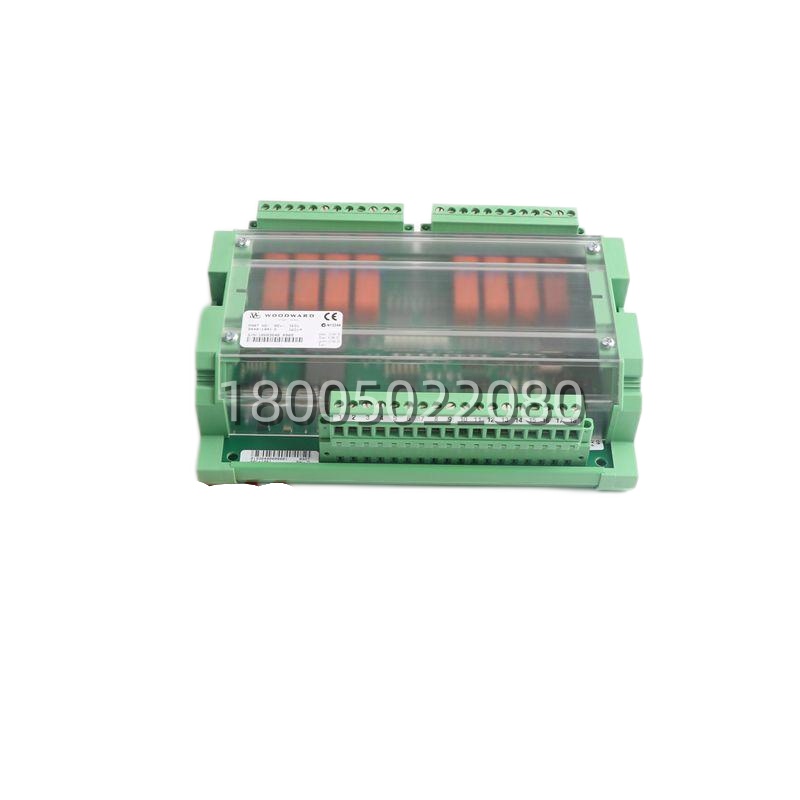
Product Overview
The Allen-Bradley 1756-DICAM (Digital Cam Switch Module) is a ControlLogix Series intelligent position-based I/O module manufactured by Rockwell Automation, engineered to perform high-speed, deterministic cam-switching functions independent of the ControlLogix processor’s scan time. Unlike software-based cam logic executed in the PLC program, the Allen-Bradley 1756-DICAM evaluates encoder position against up to 32 user-defined cam profiles in dedicated hardware, asserting or de-asserting its 32 digital outputs with sub-microsecond latency relative to the incoming position data. This makes it ideally suited for applications where mechanical cam shafts, Geneva mechanisms, or rotary index tables are being replaced by servo or variable-frequency drives and electronic cam profiles.The Allen-Bradley 1756-DICAM accepts two independent quadrature encoder inputs (A, B, and optional Z/index signals) in either differential RS-422 (5 V) or single-ended 24 V DC configurations, with a maximum input frequency of 1 MHz per channel and a 32-bit signed/unsigned position counter per channel. Each of the 32 solid-state outputs can be mapped to any cam bank and programmed with independent ON and OFF position setpoints, hysteresis, and direction sensitivity. The module supports multiple operating modes including modulo (wrap-around) counting for continuous rotary axes, linear (non-modulo) counting for linear actuators, and bidirectional evaluation so that cams can behave differently on forward vs. reverse travel. Configuration is performed through the Cam Editor built into RSLogix 5000 / Studio 5000 Logix Designer, which provides a graphical interface for defining cam ON/OFF points, linking outputs, and simulating cam behavior before downloading to the Allen-Bradley 1756-DICAM.Occupying two (2) contiguous slots in a 1756 ControlLogix chassis, the Allen-Bradley 1756-DICAM draws power from the backplane (approximately 1.1 A at 5.1 V DC) and communicates module status, diagnostic codes, and current position data to the controller via the ControlLogix I/O image. Its outputs are 24 V DC sourcing type with a typical 0.5 A per point rating (2 A max per output group), suitable for driving interface relays, indicator lamps, or solid-state interposing devices. By executing position comparison in hardware, the Allen-Bradley 1756-DICAM eliminates the jitter and uncertainty associated with scan-dependent software cam logic, delivering repeatable, microsecond-accurate actuator timing even on machines running at thousands of cycles per minute.
Technical Specifications
Product Model | 1756-DICAMManufacturer | Rockwell Automation / Allen-BradleyProduct Type | ControlLogix Digital Cam Switch (DICAM) ModuleNumber of Encoder Input Channels | 2 (independent, each with A, B, optional Z)Encoder Input Type | RS-422 differential (5 V TTL) or 24 V DC single-ended, software-selectable per channelMaximum Input Frequency | 1 MHz (X1 mode); 250 kHz recommended max for X4 with long cablesPosition Counter Resolution | 32-bit signed (–2,147,483,648 to +2,147,483,647) per channelNumber of Digital Outputs | 32 (arranged as two groups of 16, each group shares a V+ and 0V terminal)Output Type | 24 V DC Sourcing (PNP), short-circuit and overload protectedOutput Current Rating | 0.5 A max per point; 2.0 A max per 16-point groupOutput Response Time | < 1 µs typical (position match → output assertion, hardware-evaluated)Cam Definition Capacity | 32 cams per channel (total 64 cam definitions stored in module); each cam assignable to any outputChassis Slot Requirement | 2 contiguous slots (left module = Slot N, right module = Slot N+1)Backplane Current Draw | 5.1 V DC: 1.10 A typ.; 24 V DC: 0 mA (outputs externally powered)Terminal Block Compatibility | 1756-TBCH (screw type) or 1756-TBS6H (spring clamp) — one per half-moduleIsolation (Field I/O to Backplane) | 1500 V AC tested for 1 s; 250 V continuous working voltageOperating Temperature | 0 °C to +60 °C (32 °F to 140 °F)Storage Temperature | –40 °C to +85 °CRelative Humidity | 5 % to 95 % non-condensingDimensions (per half-module) | 146 × 33 × 140 mm (5.75 × 1.3 × 5.5 in.)Certifications | cULus Listed, CE marked, C-Tick, FM (Class I Div 2 with appropriate system design)Compatible Chassis | Any 1756 chassis (1756-A4, -A7, -A10, -A13, -A17) with adequate backplane power
Main Features and Advantages
Scan-independent hardware cam execution: The defining strength of the Allen-Bradley 1756-DICAM is that all position-to-output comparisons occur in dedicated ASIC/FPGA logic on the module itself, not in the ControlLogix processor’s logic-solve routine. This guarantees output transitions occur at the exact encoder count specified, regardless of whether the controller is in a long program scan, executing a communications task, or processing other I/O. On high-speed rotary machines—e.g., a 3600 rpm indexing dial with 1° resolution—a software-evaluated cam might jitter by ± several degrees due to scan variation; the Allen-Bradley 1756-DICAM holds output timing to sub-encoder-count precision, typically < 1 µs reaction from position match to physical output change.Up to 32 programmable cams with direction-sensitive behavior: Each channel on the Allen-Bradley 1756-DICAM can host 32 individually defined cams (ON position, OFF position, hysteresis, and directional enable mask). Cams may be linked to any of the 32 outputs in any combination—one output can be driven by multiple cams (logical OR), and one cam can drive multiple outputs. Forward and reverse direction masks allow a cam to be active only on clockwise rotation, only on counterclockwise rotation, or in both directions—a critical feature for machines that jog bidirectionally or reverse during a cycle. Hysteresis settings prevent output chatter when the axis dwells near a cam edge.Dual independent encoder channels in one module: The Allen-Bradley 1756-DICAM provides two completely independent position-input channels in a single 2-slot package. This allows one module to serve a dual-axis machine—for example, a rotary index table (Channel 1) and a linear cross-cut carriage (Channel 2)—without purchasing two separate counter/cam modules. Each channel maintains its own 32-bit counter, zero/preset registers, and cam-bank assignments. The Z (index/marker) input on each channel can be used to automatically home or preset the counter, supporting both absolute homing and periodic marker verification.Graphical Cam Editor in Studio 5000: Configuration of the Allen-Bradley 1756-DICAM is performed through an integrated Cam Editor tab within the module’s properties in RSLogix 5000 / Studio 5000 Logix Designer. The editor displays a virtual cam chart where ON/OFF positions are entered numerically or graphically, shows overlap and minimum-dwell warnings, and allows simulation of cam sequences before download. This drastically reduces commissioning time compared with older cam-switch modules that required ladder logic or hexadecimal table entry. Once downloaded, cam tables reside in the module’s non-volatile memory and survive power cycles; they can also be changed online via MSG instructions if dynamic cam-profile changes are required during recipe changeovers.Comprehensive diagnostics and controller visibility: The Allen-Bradley 1756-DICAM exposes a rich set of status tags to the ControlLogix program, including current 32-bit position, direction, Z-input detection flag, cam-active bits for each defined cam, and module health/fault codes. This allows the controller to supervise the camming operation—e.g., verifying that a particular cam fired within an expected window, or logging actual trigger positions for quality traceability. Module fault conditions (loss of encoder power, excessive input frequency, configuration mismatch) are reported through the standard ControlLogix I/O fault mechanism and can trigger controller-level alarm routines.Robust 24 V DC sourcing outputs with group fusing consideration: The 32 outputs of the Allen-Bradley 1756-DICAM are arranged as two isolated groups of 16, each with its own 24 V DC supply and common return terminals on the terminal block. This grouping allows separate fusing per bank and simplifies wiring when some outputs drive 24 V DC relays while others drive LED tower lights or solenoid interposing cards. Each point is short-circuit protected and automatically recovers when the fault clears. The sourcing (PNP) topology matches the dominant wiring convention in North American machinery, ensuring direct compatibility with most panel-mounted pilot devices and interposing relays.