WhatsApp:+86 18005022363 WeChat: +86 18005022363
 Email:

Application Scenarios
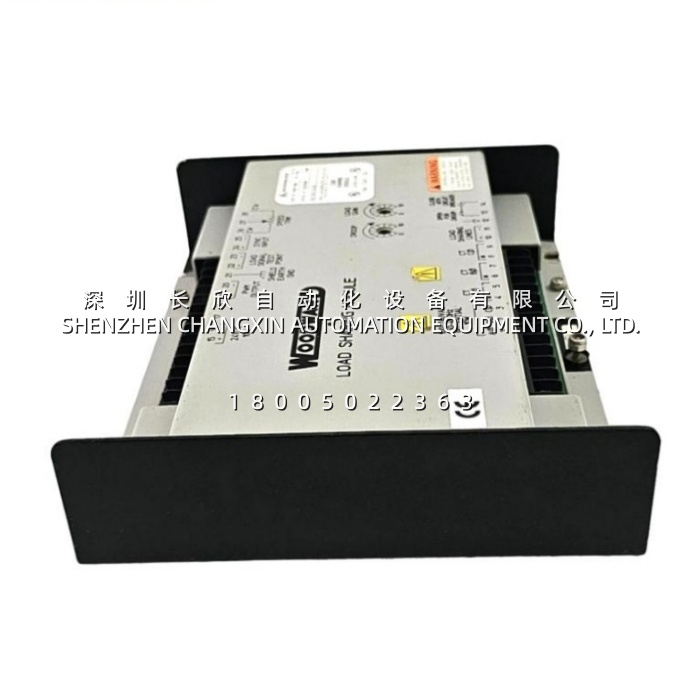
At a remote natural-gas compressor station in northern Alberta, winter temperatures regularly fall below −30 °C and the control house is unheated to reduce operating costs. The station’s original analog speed governor had been drifting off-setpoint during cold-soak conditions, causing load-sharing errors across three paralleled gas engines. After retrofitting with the Woodward CSC3LG120, the control room gained a module rated for −40 °C to +85 °C that maintains stable PID regulation without calibration drift. The 4–20 mA analog inputs read speed pickups, manifold pressure, and exhaust temperature directly; the 16 digital outputs drive fuel-valve solenoids and alarm annunciators. CANbus links the module to the engine’s J1939 network for real-time ECU data, while Modbus RTU feeds compressor suction pressure and flow to the SCADA host. During a load-shed event the following winter, the CSC3LG120 held speed within ±0.25% of setpoint through the entire transient—a 4× improvement over the legacy analog governor.
Parameters
| Main Parameters | Value/Description |
|---|---|
| Product Model | CSC3LG120 |
| Manufacturer | Woodward |
| Product Category | Control Module / PLC-Style Controller |
| Series | CSC (Control, Speed & Combustion) |
| Supply Voltage | 24 VDC nominal (operating range 18–32 VDC) |
| Power Consumption | ~5 W (low-power industrial design) |
| Digital Inputs (DI) | 16 channels |
| Digital Outputs (DO) | 16 channels |
| Analog Inputs (AI) | 4 channels, 12-bit resolution |
| Analog Outputs (AO) | 4 channels, 12-bit resolution |
| Control Algorithms | PID, Feed-forward, Adaptive control |
| Communication Protocols | CANbus, Modbus RTU / CANopen |
| System Compatibility | Woodward MicroNet, DSLC, and third-party DCS/SCADA |
| Operating Temperature | −40 °C to +85 °C (wide-temperature industrial rating) |
| Storage Temperature | −40 °C to +85 °C |
| Humidity | 5–95 % RH, non-condensing |
| Mounting | DIN rail / control-cabinet panel mount |
| Enclosure Protection | IP20 (cabinet-internal installation) |
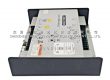
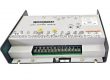
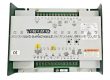
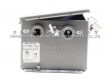
| Dimensions (L × W × H) | 120 × 100 × 60 mm (variant: 160 × 100 × 45 mm) |
| Weight | ~1.2 kg (variant: 0.5 kg) |
| Certifications | CE, UL |
| Country of Origin | USA |
Technical Principles and Innovative Values
Innovation Point 1 — Three-Algorithm Control Architecture: The CSC3LG120 is not a simple on/off controller. It executes PID control for steady-state regulation, feed-forward control to anticipate load changes before they affect the process variable, and adaptive control to auto-tune parameters as engine or turbine characteristics drift over time. This layered approach keeps speed and load stable through transients that would saturate a single-algorithm controller.Innovation Point 2 — 12-Bit I/O Resolution in a Compact Footprint: With 4 analog inputs and 4 analog outputs at 12-bit resolution, the CSC3LG120 provides fine-grained measurement and command authority—sufficient to resolve small speed deviations and drive proportional actuators without the quantization errors common in 8-bit modules. This directly translates to tighter speed control and smoother load sharing.Innovation Point 3 — Dual-Protocol Open Integration: The CSC3LG120 speaks both CANbus (for direct connection to engine ECUs, J1939 networks, and Woodward proprietary control links) and Modbus RTU (for SCADA, HMI, and third-party PLC/DCS integration). This dual-path design eliminates protocol gateways and allows the same module to serve as both the local control engine and the field-level data concentrator.Innovation Point 4 — Extreme-Temperature Hardware Design: Rated for −40 °C to +85 °C, the CSC3LG120 operates reliably in environments where commercial-grade controllers fail—unheated compressor stations, Arctic offshore platforms, desert pump sites, and engine-room enclosures. The wide 18–32 VDC input range also tolerates battery-supply sag and charging-system transients without resetting.Innovation Point 5 — Modular, Backward-Compatible Replacement: The CSC3LG120 is designed as a direct-form-factor replacement for aging modules in legacy Woodward control cabinets. Its configurable I/O mapping and standard communication protocols allow drop-in substitution without re-engineering the panel wiring or control architecture—critical for facilities operating under tight maintenance windows.