WhatsApp:+86 18005022363 WeChat: +86 18005022363
  Email:
Application Scenarios
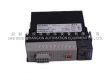
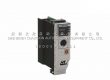
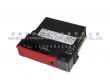
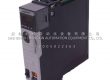
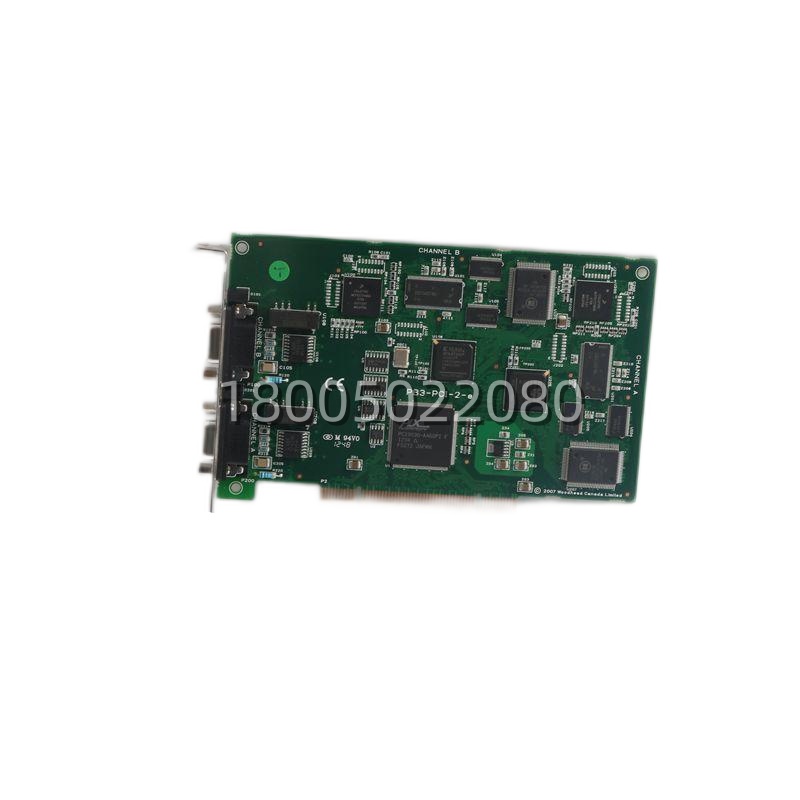
In a Taiyuan-based coal-fired power plant, the 211QS50003B serves as the core logic processor for a turbine control system. It continuously monitors inputs from temperature and pressure sensors, executes complex safety interlock logic, and outputs commands to governor valves and exciters. The board’s high noise immunity ensures stable operation amidst the intense electromagnetic interference (EMI) generated by high-voltage switchgear and large motors, preventing spurious shutdowns and maintaining grid stability.
Parameter
| Key Parameter | Specification |
|---|---|
| Manufacturer / Series | Ansaldo STS / Ansaldo (now Hitachi Energy/Rail) |
| Part Number | 211QS50003B (211 QS 50003 B) |
| Module Type | PLC Control Board / CPU Board / Interface Module |
| Primary Function | Central Processing, Communication Interface, I/O Management |
| Processor Architecture | Industrial-grade Microprocessor (e.g., PowerPC) or ASIC/FPGA |
| Memory | SRAM for runtime, Flash/ROM for firmware (MB range typical) |
| Communication Protocols | Modbus RTU (RS-485), CANopen, proprietary backplane bus |
| I/O Capability | Varies by configuration; may interface with 16+ digital/analog points |
| Power Supply | 24V DC (typical, via backplane or direct input) |
| Operating Temperature | 0°C to +60°C (industrial grade, some sources cite -10°C to +55°C) |
| Isolation & Protection | High-grade isolation, watchdog timer, fault-safe design principles |
| Certifications | CE, cUL, potentially SIL (EN 50126/8/9 for rail) |
Technical Principles and Innovative Values
- Innovation Point 1: Mission-Critical Reliability Design. Unlike standard commercial PLCs, the 211QS50003B is built with military/industrial-grade components and incorporates hardware-based fault detection mechanisms (e.g., watchdog timers, ECC memory). This “fail-safe” or “high-availability” design philosophy ensures that in critical infrastructure like power plants or rail signaling, the system defaults to a safe state upon detecting any internal fault, preventing catastrophic equipment damage or safety hazards.
- Innovation Point 2: Application-Specific Optimization. The board often utilizes custom ASICs (Application-Specific Integrated Circuits) or FPGAs tailored for specific control tasks like fast motor control algorithms or complex safety interlocks. This hardware-level optimization provides deterministic performance and faster response times compared to generic software-based solutions, which is crucial for real-time control loops in turbine management or train braking systems.
- Innovation Point 3: Seamless Legacy System Integration. As part of Ansaldo’s modular control system architecture, this board is designed for plug-and-play compatibility with proprietary backplanes and I/O modules. This allows operators of legacy infrastructure in sectors like steel or mining to perform direct component-level replacement, extending the lifecycle of multi-million dollar control systems without the cost and risk of a full system rip-and-replace.