WhatsApp:+86 18005022363 WeChat: +86 18005022363
 Email:

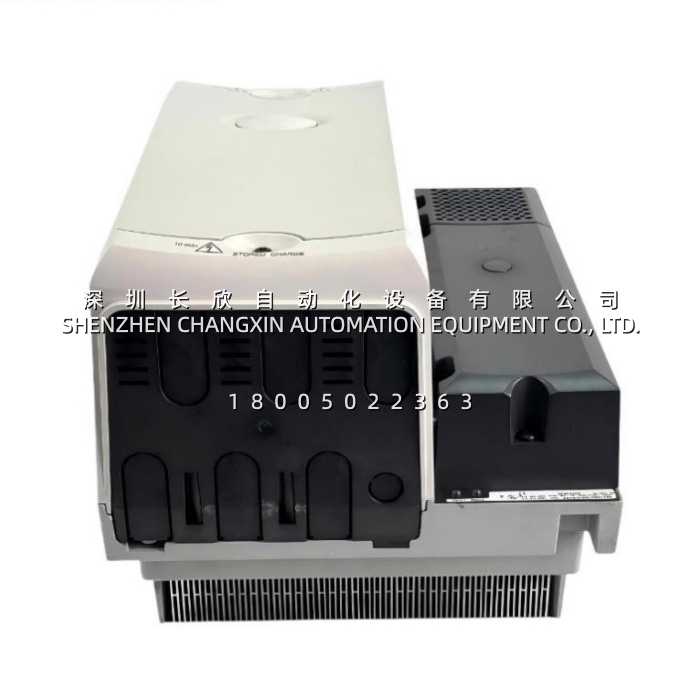
Product Overview
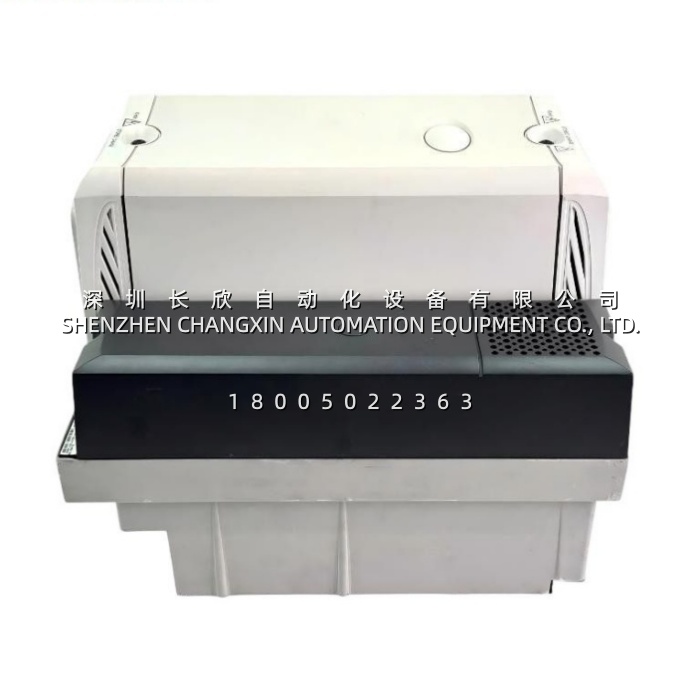
The SPMC2402 is the controlled-input rectifier module from Emerson’s SP-series drive platform, the power-stage assembly that lives at the utility-side face of a Unidrive SP, Digitax ST or SPMC servo chassis and owns the moment the drive is energised. Its job is twofold and both parts are load-bearing. First, it is the three-phase diode/IGBT bridge that rectifies the 400/480 VAC line into the DC link that every inverter stage downstream depends on. Second — and this is what “controlled input” actually means — it carries the soft-charge and precharge sequencing that limits the inrush current of the DC-link capacitors to a controlled ramp instead of the violent current spike that blows fuses, welds contactor tips and ages every capacitor in the bank.In the SP architecture the SPMC2402 is not a standalone converter you spec for a panel. It is a module-level spare keyed to a specific drive size and a specific control-board firmware family. The gate-drive and fault-isolation paths run back to the drive’s control PCB, which means the module, the DC bus, the precharge resistor network, the snubber and the control board all have to agree on what “healthy” looks like. A bridge that tests clean on a megger can still fault the drive at power-up because the current-sense transformer, the bus-voltage divider or the soft-charge relay timing is out by a cycle. That is why the SPMC2402 is always sold and tested as a system component, not as a bare brick.What makes this module the right repair path is the alternative cost. An SP-series drive in the 37–45 kW class is a complete inverter, brake chopper, control board, heatsink and EMC package. When the failure is a burnt input bridge or a precharge fault, replacing the whole chassis is throwing the working inverter away with the rectifier. Dropping a tested SPMC2402 into the same heatsink pocket restores the line interface for a fraction of the chassis price, and because the control board, the parameter set, the encoder feedback and the motor tuning are untouched, the drive comes back online inside the maintenance window instead of triggering a commissioning project. For a web line, a hoist, a compressor or an extruder where the SP drive is the only thing between the motor and a shutdown, that is the only arithmetic that matters.The module is built for the duty cycle the SP family was designed around: 3-phase, 50/60 Hz utility power; high dV/dt switching on the inverter side; and the thermal swing of a fan-cooled bay that sees stop-start cycles all shift long. The bridge substrate and the press-fit bus connections are sized for the RMS and surge currents of that class, and the assembly includes the mounting and isolation hardware that keeps the collector potential off the heatsink. The SPMC2402 is a replace-once-and-forget-it part — provided the failure that killed the first one has been found. Swapping the bridge without checking the precharge resistor, the DC-link caps and the snubber is how a brand-new module becomes a repeat failure, and it is the first thing any credible seller should warn you about.
Technical Specifications
| Parameter | Value |
|---|---|
| Product Model | SPMC2402 (listing suffix “3” = internal idx/serial; not an Emerson config digit) |
| Manufacturer | Emerson / Control Techniques (Nidec Drive Technology) |
| Product Family | SP-series drive power stage (Unidrive SP / Digitax ST / SPMC platform) |
| Product Type | Controlled-input rectifier module, line bridge + soft-charge/precharge stage |
| Input Phases | 3-phase, 3-wire (L1/L2/L3), no neutral |
| Input Voltage | 400 VAC / 480 VAC class, 50/60 Hz (verify nameplate voltage band before fitment) |
| Input Tolerance | ±10% typical per SP-series chassis rating |
| Rated Input Current | Module/bridge class ≈ 80–120 A RMS (drive-size dependent; confirm against host chassis label) |
| DC-Link Voltage | ≈ 820 VDC at 600 VAC input / ≈ 680 VDC at 480 VAC nominal (bridge peak-rectified class) |
| Power-Stage Rating | 37 kW / 45 kW SP-chassis class (nameplate-dependent; not a universal fit across all SP sizes) |
| Topology | 3-phase diode + IGBT controlled bridge, soft-charge/precharge sequencing, integrated current sense |
| Switching / Control | Gate-driven by host control PCB; fault reporting via bus-voltage and bridge-current feedback |
| Precharge | Controlled inrush limiting through soft-charge path; precharge resistor network is chassis-side |
| Cooling | Heatsink-mounted, conduction-cooled module; chassis forced-air bay required |
| Isolation | Galvanic separation between line side and DC link; substrate-to-heatsink isolation per drive safety design |
| Protection | Bus-overvoltage, bridge overcurrent, short-circuit, thermal/sensor-fault reporting to control board |
| Mounting | Direct to SP chassis heatsink, insulated stand-offs; torque to host-service manual value |
| Interfaces | AC line bus bars, DC+ / DC− link studs, gate-drive and sense harness to control PCB |
| Indicators | No local LEDs; status reported through drive fault codes (rectifier/precharge/bus-fault group) |
| Heatsink / Thermal | Requires clean airflow and intact thermal interface pad; junction-temperature margin set by control board |
| Compliance | To host-drive safety and EMC approvals (CE / UL per chassis, not module-standalone) |
| Form / Weight | Press-fit power module on ceramic/metal base, ≈ 0.6–1.1 kg typical |
| Lifecycle | Mature platform; new-surplus and tested-pull available, OEM manufacture wound down |