WhatsApp:+86 18005022363 WeChat: +86 18005022363
  Email:
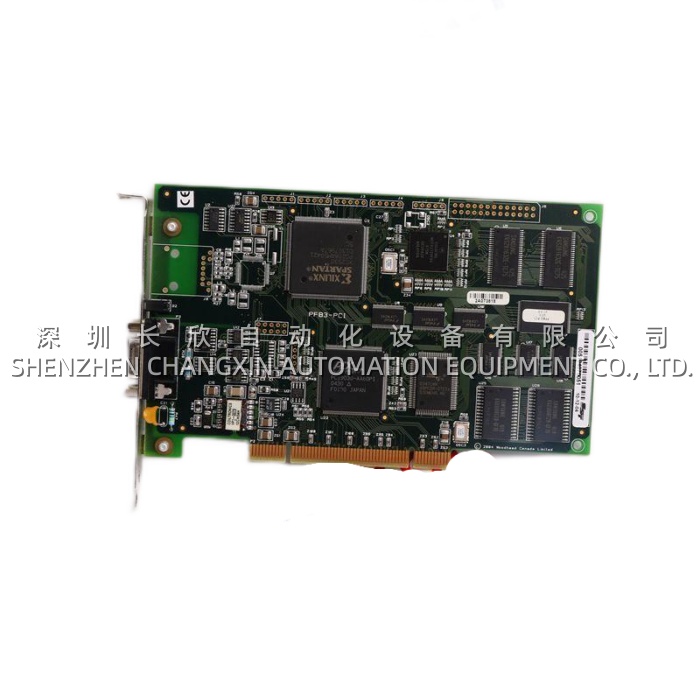
Application Scenarios
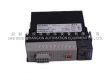
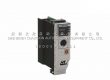
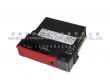
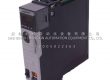
In a high-speed packaging line, the control system (a B&R CP260 CPU) needed to communicate with multiple servo drives for precise axis synchronization while also connecting to a legacy barcode scanner via RS232. The engineering team deployed the B&R 3IF672.9 interface module in one of the CP260’s insert slots. The two CAN interfaces were configured as a CANopen master, polling up to 63 servo axes and remote I/O stations with real-time precision, while the RS232 interface handled the scanner data. The result was a seamless, multi-protocol communication architecture that eliminated the need for costly external gateways. The B&R 3IF672.9‘s robust electrical isolation on its CAN ports ensured that the communication remained stable even in the electrically noisy environment of the packaging hall, validating its role as the indispensable “communication powerhouse” for demanding automation systems .
Parameters
| Main Parameters | Value/Description |
|---|---|
| Product Model | B&R 3IF672.9 (IF672) |
| Manufacturer | B&R Automation |
| Product Category | Interface Module (Communication Module) |
| Compatible Systems | B&R System 2005 (CP260, IF260, IF060) |
| Interfaces | 1x RS232, 2x CAN |
| CAN Protocol Support | CANopen (DS-301/401) with Master capability |
| Max CAN Baud Rate | 500 kbit/s (bus length ≤60 m) |
| Max RS232 Baud Rate | 115.2 kbit/s |
| Power Consumption (5V) | Max. 1.8 W |
| Electrical Isolation (CAN) | Galvanically isolated from PLC and between CAN interfaces |
| Max CAN Nodes | Up to 63 slaves (as master) |
| Physical Interface (CAN) | 2x 4-pin terminal blocks (accessories included) |
| Physical Interface (RS232) | 9-pin DSUB male connector |
| Mounting Type | Insert module for CPU or IF module |
| Certification | C-UL-US Listed |
Technical Principles and Innovative Values
- Innovation Point 1: Dual CAN Interface with Full Electrical Isolation
The B&R 3IF672.9 distinguishes itself by offering two independent CAN interfaces, each featuring galvanic isolation both from the PLC backplane and from each other . This design protects the main CPU from high-voltage transients on the fieldbus, a common cause of controller failure in heavy industrial environments. Furthermore, the dual ports allow a single module to manage two separate CANopen networks, enabling segmented architecture for large machines and preventing a single point of failure on the communication bus. - Innovation Point 2: Multi-Protocol Bridge for Legacy and Modern Integration
The B&R 3IF672.9 combines a standard RS232 interface (UART ST16C650 with 32-byte FIFO) with two CAN interfaces, serving as a built-in protocol bridge . This allows System 2005 CPUs to simultaneously communicate with modern CANopen servo drives and legacy serial devices such as barcode readers, printers, or older HMIs without requiring a separate gateway, thereby reducing hardware costs and cabinet space. - Innovation Point 3: Hardware Time Stamping and Deterministic Communication
The B&R 3IF672.9 utilizes dedicated CAN controllers (82527) and hardware time stamping, enabling deterministic, real-time communication even under high bus loads (up to 80%) . This is critical for multi-axis motion control applications where the precise synchronization of data is non-negotiable, ensuring that control loops for servo drives and valves close with minimal jitter. - Innovation Point 4: Flexible Node Addressing and Software Configuration
The B&R 3IF672.9 offers exceptional flexibility for addressing CAN nodes. Node IDs can be set conveniently using physical hexadecimal switches on the module, or they can be assigned dynamically via software . This dual capability streamlines initial commissioning and simplifies network reconfiguration during maintenance, as addresses can be updated without changing hardware settings.