WhatsApp:+86 18005022363 WeChat: +86 18005022363
  Email:
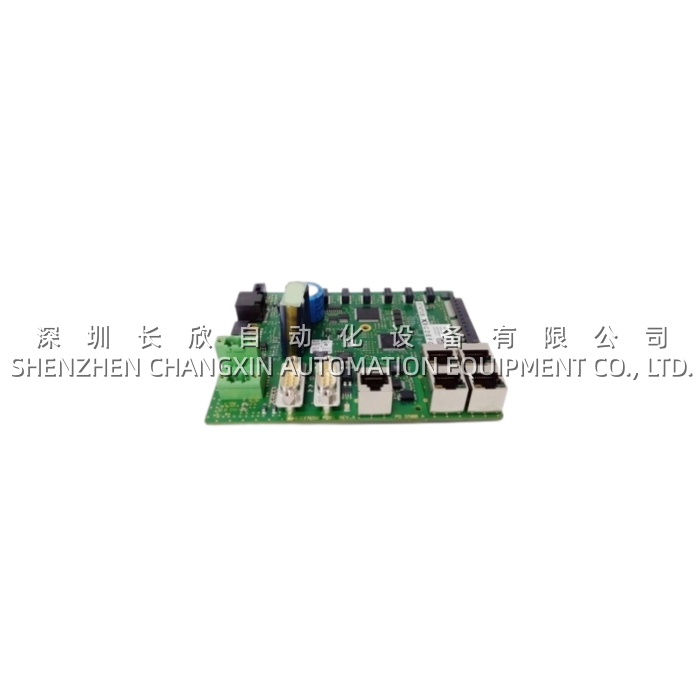
Technical Specifications
| Parameter Name | Parameter Value |
|---|---|
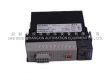
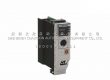
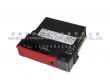
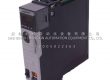
| Product Model | 3BHE037649R0101 (PD D500 A101) |
| Manufacturer | ABB (Heppenheim, Germany — Power Generation / Excitation) |
| Product Type | Digital Controller Module for UNITROL D500 Compact Excitation System |
| Compatible System | ABB UNITROL D500 (compact static excitation, small-to-mid gensets) |
| Control Functions | AVR (auto voltage reg), FCR (field current reg, manual backup), PSS2B, OEL, UEL, V/Hz limiter |
| Generator Inputs | PT 63.5 V or 110 V phase-phase (3-phase V), CT 1 A or 5 A (configurable 1-phase or 3-phase) |
| Interface to Power Stage | Fiber-optic link to D500 thyristor firing module (compact air-cooled bridge) |
| Communication to Plant | Modbus RTU (RS485), optional Profibus DP / IEC 61850 |
| Local Interface | Cubicle door HMI port / handheld (ABB Unitrol PC Tool compatible) |
| Mounting | D500 cubicle CMU rack (proprietary rail, plugin card) |
| Control Supply | 24 VDC (from cubicle CMU PSU, fed by 110 VDC or 230 VAC cubicle control) |
| Redundancy | 1+1 hot-standby supported (two PD D500 A101 per cubicle) |
| Operating Temperature | -10 °C to +55 °C (cubicle internal) |
| Protection | IP20 (cabinet-internal, CMU enclosed) |
Main Features and Advantages
Compact excitation regulator for the “mid-size” genset segment. The PD D500 A101 exists because not every generator needs a full UNITROL 6000 cubicle. A 20 MW industrial cogen, a 5 MW run-of-river hydro, a 3 MW biomass skip, or a 2 MVA diesel sync set at a data-center — these don’t justify the footprint, the PWF80 power stage, or the price of a Unitrol 6000, but they do need IEEE 421.5 AVR, PSS2B for grid connection (even small cogens now face grid-code PSS requirements in EU/NA), and proper OEL/UEL to protect the rotor. The PD D500 A101 + D500 compact thyristor bridge hits that middle — maybe 30–40% smaller footprint than a Unitrol 6000 cubicle, air-cooled power stage, same firmware-quality AVR loop. For EPCs bidding cogen or small-hydro, the D500 + PD D500 A101 is the default ABB pick over the “big” Unitrol.Same limiter + PSS suite as the big brother. Don’t let “compact” fool you — the PD D500 A101 firmware implements the same OEL (timed, hot/cold curves per IEEE), UEL (underexcitation to keep the machine off the stator-end overheating / stability limit during light-load high-V), V/Hz limiter (flux cap during overspeed or underfrequency), and PSS2B (two-block, speed-input) as the PCD230A on a 600 MW turbogen. The difference is scale of the power stage, not scale of the regulation. For a 10 MW cogen tied to a stiff grid, the PSS2B on the PD D500 A101 still damps local mode — and the grid operator’s compliance audit doesn’t care that the cubicle is small.Fiber to the D500 thyristor bridge. Like all ABB Heppenheim excitation products, the PD D500 A101 fires the power-stage thyristors over short fibers — the controller lives in the low-voltage instrument section of the D500 cubicle, the thyristor bridge lives in the power section (480 V AC input, up to several hundred A DC field depending on D500 config). No copper logic next to switching, no dV/dt into the AVR. The fiber isolation also means the PD D500 A101 can be swapped (24 VDC backplane live, cubicle aux up but generator off-excitation) without arcing on the firing side — standard ABB practice, though full cubicle isolation is still the recommended default.1+1 redundancy for the “can’t-trip” units. Even on smaller gensets, some plants spec redundant PD D500 A101 pairs — e.g., a paper-mill cogen where the turbogen carries the machine hall during grid outages, or a data-center diesel where the sync set must hold voltage. Two PD D500 A101 in the D500 cubicle, A-active / B-standby, <100 ms takeover on A failure. The plant DCS only sees “AVR OK / Controller B Active.” For single-controller D500 cubicles (most small hydro, diesel), a controller failure = gen off — so spare strategy skews more aggressive.Rev-suffix discipline (A101 / A102 / A103). ABB iterated the PD D500 through A101 → A102 → A103 mainly on component/RoHS and firmware-branch splits. Electrically/mechanically near-identical, but the PD D500 A101 may carry an older firmware branch (v1.x or early v2.x) while a D500 cubicle retrofitted later may run A103 (v3.x). A PD D500 A101 may refuse to load an A103 .par file without conversion, and the cubicle HMI will flag “Config Mismatch” on first boot. For 1-for-1 failure swaps, match the suffix; for planned spares, buying A103 future-proofs if the plant already migrated, but confirm the existing unit’s label first.PD D500 A101 vs PCD230A (Unitrol 6000) — don’t mix. Both are 3BHE Heppenheim, both are excitation-controller cards, both seat in a CMU-class rack, both say “AVR” on the tin — but they are not interchangeable. The PD D500 A101 fires a D500 compact thyristor bridge (smaller, air-cooled, fewer fibers); the PCD230A fires PWF40/PWF80 (larger, air or water-cooled, more fibers). Firmware, parameter-file format, cubicle backplane pinout — all different. Storerooms that bin “3BHE Heppenheim excitation spares” together have mixed these up; the symptom is a cubicle that won’t arm the power stage and a very confused commissioning engineer. Label them separately: D500 vs Unitrol 6000.
Application Field
The PD D500 A101 deploys wherever ABB UNITROL D500 cubicles are installed — the “mid-range” generator-excitation segment that’s too big for a basestation analog regulator but too small for UNITROL 6000.Small-to-mid hydro is the densest slice: 2–50 MW run-of-river, irrigation-district hydro, mountainous micro-grid hydro. These plants often have 1–4 units, each with a D500 cubicle, and the PD D500 A101 is the AVR brain. Hydro’s unique load-rejection scenario (governor slams wickets, gen overspeeds, V rises) exercises the PD D500 A101‘s V/Hz limiter and AVR ramp-down — and the PSS2B damps the post-fault swing on the local grid (small-hydro plants are often in weak-grid areas where PSS matters more than on a stiff utility bus). Pumped-storage lower-reservoir small units (<30 MW) also spec D500.Industrial cogen and biomass: paper-mill turbogens (20–80 MW), refinery captive coal/gas turbines with steam extraction, biomass boilers (3–15 MW). The PD D500 A101 here often talks Modbus RTU to the plant DCS (Foxboro, DeltaV, PCS 7) — terminal V, stator I, field I, AVR mode, limiter-active flags all on the register map. On a paper machine where the turbogen carries the machine hall during a grid blip, the PD D500 A101 redundancy (1+1) is sometimes spec’d even on a “compact” cubicle.Diesel sync gensets and gas-engine gensets: data-center standby (2–3 MVA diesel sync sets paralleled), hospital standby, marine auxiliary gensets on larger vessels (D500 sometimes specified instead of the even-smaller UNITROL 101/102 line when PSS/grid-code compliance is needed). The PD D500 A101 handles the AVR during sync and load-share — diesel/gas engines have the “load acceptance” transient (gen breaker closes, engine governor lags, voltage dips) where the AVR + OEL window matters.Retrofit of older analog regulators: plants still running UNITROL D150/D175 (older analog D-series) or even rotating exciters on small-mid gensets often retrofit to D500 — the PD D500 A101 loads a converted parameter file, the D500 thyristor bridge replaces the old selenium stack or the rotating exciter, and the plant keeps the same cubicle footprint roughly. For spare-parts buyers, the key risk is firmware + config-tool version: ABB Unitrol PC Tool (UTK) versions are backward-compatible within reason, but a very old PD D500 A101 (A101, early firmware) may need a loader update before it accepts a current D500 parameter file. Grab the plant’s .par file and the “Controller Info” screenshot (firmware rev, hardware rev) before ordering the spare.