WhatsApp:+86 18005022363 WeChat: +86 18005022363
  Email:
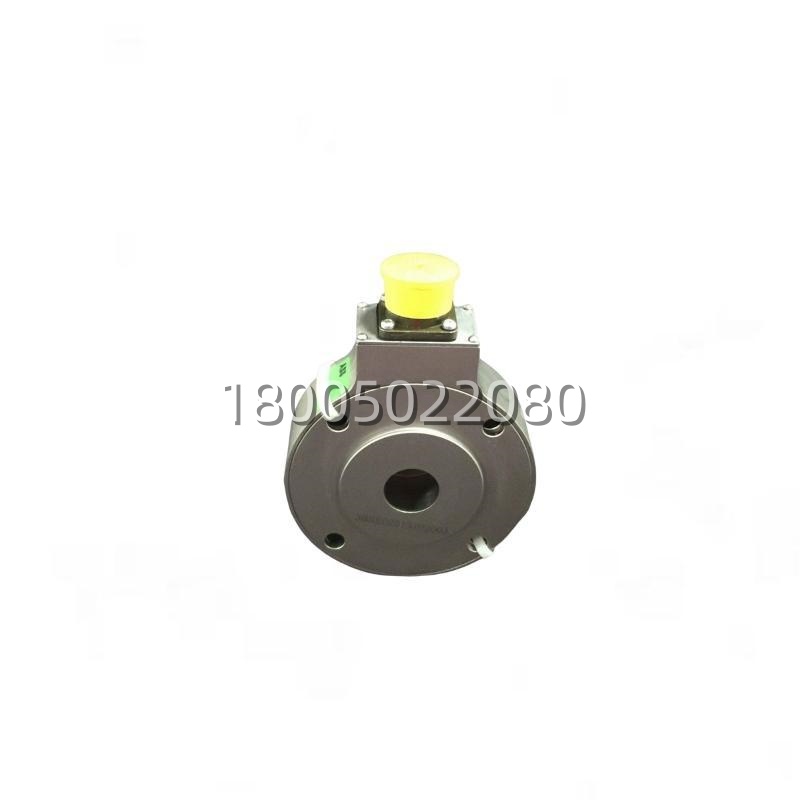
Description
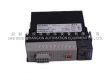
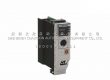
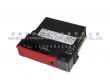
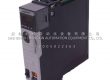
The PFRL101A-0.5KN (order No. 3BSE023314R0003) is an ABB Pressductor radial load cell, the shaft-mounted “tactile” that converts web tension on an idler/luff roll’s bearing housing into a measurement signal for ABB’s Millmate tension-control ecosystem. Rated at 500 N (112 lbf) with 500 % overload capacity in the measurement direction (2.5 kN), it uses ABB’s patented magneto-elastic (Pressductor) technology — no strain gauges, no moving parts, just a ferromagnetic core whose magnetic permeability shifts under mechanical load. The PFRL101A-0.5KN is the A-version of the PFRL101 family: 0.5 kN radial rating, with lateral and axial overload ratings of 2.5 kN (the C-version, by contrast, is derated laterally to 1.25 kN — making the A-version the tougher choice for side-load-prone mounts). It mounts on the idle-roll shaft via a center bore + idler adapter, feeds an AC low-impedance signal to a PFEA-series tension electronics unit (PFEA101/111/112/113), and closes the loop on unwind/rewind constant-tension control.
Application Scenarios
On a 1.6 m BOPP (biaxially oriented polypropylene) film-slitter in Thailand, the 3″ core rewind stands use PFRL101A-0.5KN sensors on the lay-on roll idler shafts — each stand’s rewind tension is only 120–350 N (film slit to 18 µm, 500 m/min), well within the 500 N rating but needing <±0.1 % repeatability so the slit edges don’t “telephone-cord” on the parent roll. Originally the OEM specced a strain-gauge load cell from a general-purpose supplier; every 6–8 months a core-slip event (film tail caught in the nip, instantaneous spike ~1.8 kN) would pop the strain gauge’s foil — and the sensor was a throwaway. The retrofit swapped to PFRL101A-0.5KN: the 500 % overload (2.5 kN) shrugged off the 1.8 kN spike, the magneto-elastic core doesn’t have a foil to tear, and the IP67 welded stainless housing shrugged off the slitter’s antistatic-oil mist. Three years, zero sensor failures, and the tension PID’s standard deviation dropped from ±4.2 N to ±1.8 N — because the PFRL101A-0.5KN‘s 30:1 usable range ratio means it’s still linear at 17 N (the minimum tension during core-change deceleration). For light-web lines where “the sensor sees more spike than steady-state,” the A-version’s 2.5 kN lateral/axial rating vs. the C-version’s 1.25 kN lateral is why the Thai plant chose A — slitter vibration shakes the bearing housing sideways; the C would’ve bruised.
Parameters
| Main Parameters | Value/Description |
|---|---|
| Product Model | PFRL101A-0.5KN (3BSE023314R0003) |
| Manufacturer | ABB (Measurement & Analytics / Pressductor) |
| Product Category | Radial Load Cell (Magneto-Elastic Tension Sensor) |
| Measuring Direction | Radial (mounts on idle-roll bearing housing) |
| Nominal Load (Rated) | 0.5 kN (112 lbf) |
| Extended Load | 0.75 kN (169 lbf) |
| Overload — Measurement Dir. | 500 % of rated = 2.5 kN (562 lbf) |
| Overload — Lateral / Axial | 2.5 kN lateral, 2.5 kN axial (A-version; C-version is 1.25 kN lateral) |
| Accuracy Class | ±0.5 % of FS |
| Repeatability | < ±0.1 % FS |
| Usable Range Ratio | 30:1 (min. measurable ≈ 1.7 % FS ≈ 17 N at 0.5 kN rating) |
| Spring Constant | 1000 kN/mm (≈ 50,286 lbf/inch) |
| Deflection at Rated Load | 0.01 mm (0.0004 in) |
| Technology | Pressductor® magneto-elastic (Villari effect) |
| Signal to Electronics | AC low-impedance (paired with PFEA101/111/112/113) |
| Compatible System | ABB Millmate Tension System |
| Housing Material | Stainless SIS 2387 / AISI 304 equiv. |
| Protection | IP67 (hermetically welded) |
| Operating Temp | -10 °C to +80 °C |
| Zero / Sensitivity Temp. Drift | < ±0.015 %FS/°C |
| Mounting | Shaft-mounted, center bore + idler adapter (per roll shaft Ø) |
| Cable | 8 m standard (Pressductor AC pair + shield) |
| Weight | ~1.0–1.3 kg |
Technical Principles and Innovative Values
- Innovation Point 1: Magneto-Elastic (Villari Effect) vs. Strain Gauge. A strain-gauge load cell measures deformation — the foil stretches, the resistance changes, the Wheatstone bridge outputs mV/V. Problem: foil tears at 150–200 % overload, and the glue creeps (zero drift after 5 years). The PFRL101A-0.5KN uses a ferromagnetic Pressductor core: when mechanical force is applied, the magnetic permeability of the core shifts, and an excitation coil / pick-up coil pair (driven by the PFEA electronics) outputs a proportional AC signal. No deformation needed — the 0.01 mm deflection at 500 N is practically “rigid.” Result: 500 % overload doesn’t break anything (the core just saturates, then recovers), and there’s no glue, no foil, no creep. For a slitter where “core-slip spike = 3× rated for 200 ms,” strain gauge = dead, PFRL101A-0.5KN = yawn.
- Innovation Point 2: AC Low-Impedance Signal = EMI-Immune in Drive Cabinets. The PFRL101A-0.5KN doesn’t output 4–20 mA or mV/V — it outputs a low-impedance AC signal (driven/excited by the PFEA unit) that travels up the 8 m sensor cable to the PFEA electronics in the MCC. Compared to a strain-gauge mV/V signal (high impedance, loves VFD switching noise), the Pressductor AC signal is practically bulletproof — ABB claims “very resistant to electrical interference and earth faults.” In a slitter MCC with six 22 kW ACS800 drives switching 4 kHz 2 ms apart, the PFRL101A-0.5KN‘s tension reading stays stable while a strain-gauge unit on the same cabinet would need a screened separator and a prayer.
- Innovation Point 3: A-Version Lateral/Axial 2.5 kN — The “Choice” in the PFRL101 Family. The PFRL101 comes in A / B / C / D. All share the radial rating logic (A=0.5, B=1.0, C=0.5–2.0, D=5.0 kN), but the A and B have 2.5 kN lateral/axial overload; the C drops to 1.25 kN lateral (axial stays 2.5). Why? The C’s internal core geometry is optimized for a different bearing-housing interface — lighter side-load tolerance. For a 0.5 kN application (light web), if your idler roll sees side-shake (misaligned web, slitter vibration, textile creel bounce), the PFRL101A-0.5KN is the safer grab even though both A and C are “0.5 kN radial.” The A is the “over-engineered” 0.5 kN; the C is the “weight-optimized” 0.5 kN. Spec matters.
Application Cases and Industry Value
Case 1 – Textile Ring-Twister Take-Up (Turkey): A 120-spindle ring-twister for industrial yarn (Nylon 6, 110 dtex) uses PFRL101A-0.5KN on the take-up-roll idler shafts — each spindle’s tension is 80–180 N, constant-tension rewind via PFEA112 + ACS880 drive on the take-up motor. The mill originally ran mechanical dancer arms + potentiometer; tension variation was ±12 %, leading to “soft packages” that unraveled on the subsequent warp-knit line. Swapping to PFRL101A-0.5KN + PFEA112 gave ±1.1 % tension stability. The A-version was chosen over C because the twister’s idler roll sees lateral whip from the spindle-end drive belt (periodic 1.8 kN lateral thump during belt-splice events) — the C’s 1.25 kN lateral would’ve bruised. Three years in, zero PFRL101A-0.5KN failures; the mill now standardizes A-version on all 0.5 kN positions across 4 twisting halls.Case 2 – Fine-Wire Drawing (Copper Magnet Wire, China): A 24-head fine-wire drawer (0.05–0.20 mm final, annealed copper) uses PFRL101A-0.5KN on the capstan-idler of each drawing pass — pass tension 40–280 N. The drawer’s annealing section drips condensate (steam annealer), and the capstan area sees 85 % RH + 40 °C. The IP67 welded stainless of the PFRL101A-0.5KN shrugged off the condensate; the magneto-elastic core doesn’t care about humidity (no glue to soften, unlike strain gauge). The plant reported that sensor replacement interval went from “every 14 months” (strain gauge, condensate + overload from wire-break snap-back ~1.6 kN) to “never in 4 years” on the PFRL101A-0.5KN. The 30:1 range ratio also helped — at thread-up (5 N), the PFEA still sees a clean signal; the old strain gauge was nonlinear below 10 % FS.