WhatsApp:+86 18005022363 WeChat: +86 18005022363
  Email:
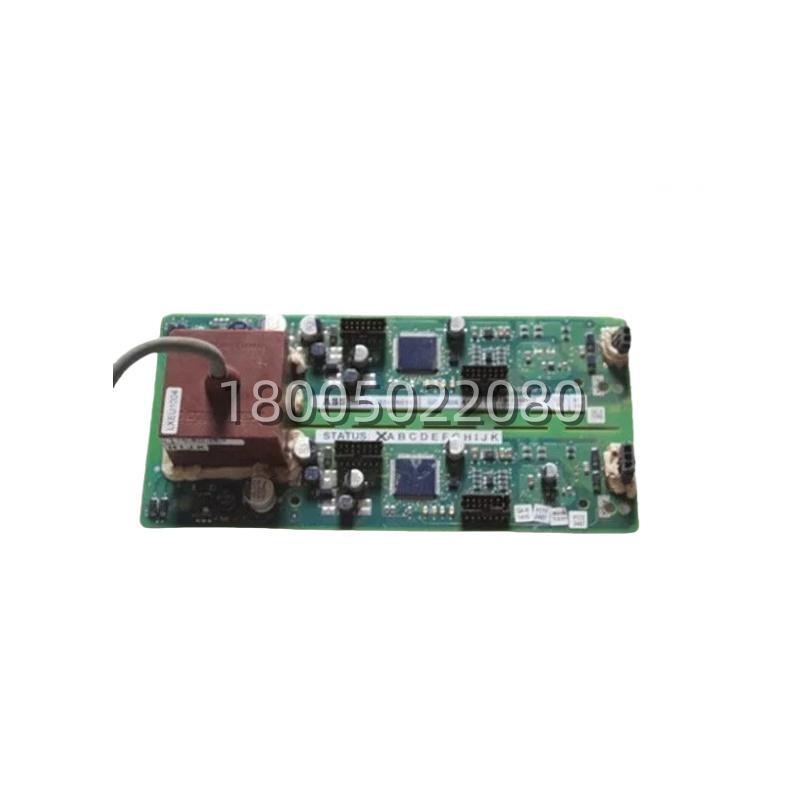
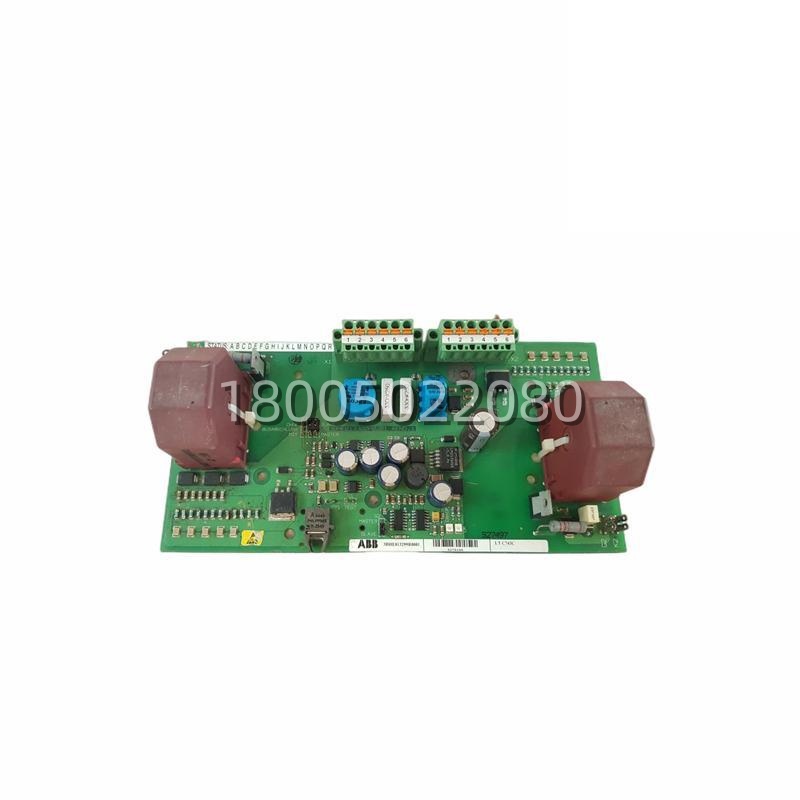
DescriptionThe ABB 3BHE02876R0101 is a high-power inverter module manufactured by ABB, positioned within the company’s modular drive and power-conversion ecosystem — the 3BHE prefix denotes ABB’s inverter/power-semiconductor product family, spanning custom-engineered ACS cabinets, PCS100 active filters, and PCS6000 marine/industrial inverter strings. The 3BHE02876R0101 is the IGBT-based PWM power stage: it takes DC-bus voltage from the upstream rectifier (or from a regenerative DC link in multi-drive builds) and synthesizes a variable-frequency, variable-voltage three-phase output to the motor. Rated in the ~100 A / ~200 kW class (380–480 V AC input envelope), it is a building-block module designed to be bolted into a drive cabinet’s power section alongside its rectifier sibling, sharing the DC bus and cooling air duct with parallel inverter modules when higher power or N+1 redundancy is required.Application ScenariosAt a 1.8 Mt/y hot-strip pickle line in the Ruhr Valley, the pay-off reel and tension-leveller drives are built as custom ABB ACS cabinets — each cabinet houses a diode rectifier + DC link + two parallel ABB 3BHE02876R0101 inverter modules sharing the DC bus, rated ~180 kW each, delivering ~360 kW total to a 6-pulse IEEE 841 motor with forced ventilation. One afternoon during a grade change (high-torque, low-speed reversal), the #2 inverter module’s internal IGBT desat alarm latched and the cabinet dropped to single-module operation at 50% torque — enough to keep the line crawling but not at schedule. The drive engineer isolated the DC link (rectifier lockout + DC-bus discharge verified — this is LV but still several hundred volts DC, so LOTO applies), unbolted the 3BHE02876R0101 from the cabinet’s power-section DIN/bolt rail (four M8 studs + DC+/DC-/U/V/W busbars), lifted it out (≈5 kg, manageable solo), and seated a fresh unit. Busbar torque to ABB spec, cooling-fan header reconnected, DC link re-energized, and the cabinet came back to 100% in 38 minutes. The desat root cause: a cracked solder on the module’s internal gate-distribution PCB — exactly the kind of fatigue a 12-year-old IGBT module in a reversing-mill cabinet will show. The mill’s E&I lead: “The 3BHE02876R0101 is why we didn’t have to replace the whole cabinet. One module, four bolts, back to 360 kW.”
Parameter
| Main Parameters | Value/Description |
|---|---|
| Product Model | 3BHE02876R0101 |
| Manufacturer | ABB |
| Product Category | Inverter Power Module (IGBT PWM stage) |
| Input Voltage (DC Bus) | Derived from upstream rectifier; AC input envelope 380–480 V AC three-phase (host-cabinet dependent) |
| Output Current | Up to ~100 A continuous (host-cabinet / heatsink rating dependent) |
| Power Envelope | ~200 kW class (380–480 V AC motor side, typical) |
| Conversion Efficiency | ≥ 98% (typical PWM, full-load) |
| Switching / Control | Advanced PWM, vector-control compatible (gate signals from host regulator/CPU) |
| Communication (Host Side) | Via regulator rack backplane (Profibus DP / Modbus TCP / CANopen on the CPU side; module itself is power stage) |
| Protection Features | Overcurrent, overvoltage, undervoltage, IGBT desat (supervised by host regulator) |
| Cooling Method | Forced air (cabinet-shared fan duct or module-local fan, depending on build) |
| Mounting | Cabinet power-section bolt rail + DC-bus bar (modular swap) |
| Operating Temperature | -20°C to +50°C (cabinet internal) |
| Physical (Approx.) | ~200 × 200 × 100 mm, ~5 kg |
| Compliance | CE, UL, IEC 61800 |
Technical Principles and Innovative Values
- Innovation Point 1: Modular DC-Bus Sharing Architecture. The 3BHE02876R0101 isn’t a standalone drive — it’s a power-stage slice that bolts into a custom ACS or PCS cabinet where the rectifier, DC link, and (sometimes) regenerative chopper are shared. Two or three 3BHE02876R0101 modules can parallel onto the same DC bus, giving you N+1 redundancy or power scaling without re-engineering the cabinet’s input side. That’s the architectural win over monolithic drives: when module #2 ages out, you unbolt one 3BHE02876R0101, not a whole 400 kW drive.
- Innovation Point 2: IGBT Stack Tuned for Vector-Control Torque Response. The 3BHE02876R0101 is designed to be driven by ABB’s regulator CPUs (like the 3BHB001336R0001 covered earlier in this series, or the ACS880’s processor chain). The gate-driver layout on the module’s internal PCB is matched to ABB’s fiber-optic / electrical gate pulses, so the PWM dead-time and desat supervision align with the CPU’s vector loop. Put a generic IGBT module in its place and you’ll see slower torque response and higher EMI — the 3BHE02876R0101‘s switching losses and dv/dt are tuned to ABB’s firmware, not to a datasheet average.
- Innovation Point 3: Forced-Air Duct Compatibility. At ~200 kW / 100 A, the 3BHE02876R0101 dissipates a few kW continuously — the module’s heatsink fins are sized to the standard ABB drive-cabinet vertical air duct (typically 0.8–1.2 m³/s per cabinet). The module’s form factor puts the IGBT junctions right in the highest-velocity portion of that duct. This means you don’t need a separate fan onthe module (though some builds include a local header); the cabinet’s main filter-fan or heat exchanger does the work. That shared-cooling design is why a 3BHE02876R0101 swap doesn’t involve re-ducting — just re-seat and go.
Application Cases and Industry ValueA marine-deck-machinery package on a 180 m offshore-support vessel runs its 150 kW winch drives on custom ABB PCS-type inverter cabinets (two 3BHE02876R0101 modules in parallel per cabinet, sharing a regen DC link with the bow-thruster drive). During a North Sea charter, one winch cabinet threw “Module #1 IGBT Temp High” — the local fan header on the 3BHE02876R0101 had ingested salt-crystal dust and stalled. The vessel’s ETO (Electrical Technical Officer) isolated the DC link, unbolted the 3BHE02876R0101, blew out the fins and the fan, and found one of the module’s internal NTC thermistor leads had fatigued from hull vibration. Rather than re-terminate onboard (the 3BHE02876R0101‘s internal PCB isn’t field-repairable at sea), he swapped in the spare from the critical-spares cage, re-torqued the DC-bar, and had the winch back for the next anchor-handling run. The chief engineer’s note: “One 3BHE02876R0101 on the shelf saved a winch-downgrade from 150 kW to 75 kW mid-charter. That’s €12k of charter penalty avoided for a €3k board.”In a second case, a cement-mill baghouse exhaust fan (250 kW, ABB custom ACS cabinet: diode rectifier + DC link + two parallel 3BHE02876R0101) had been running since 2010. The plant’s energy team noticed the cabinet’s input power factor had slipped from 0.98 to 0.94 at the same fan speed — subtle, but measurable. A thermal-camera walk during a campaign found one 3BHE02876R0101‘s heatsink running 14°C hotter than its parallel sibling at equal load. Current probe on the DC-bar confirmed: module #2 was carrying ~55% of the DC current vs. 45% on #1 — the IGBT Vce(on) spread had widened with age. Proactive swap of the hotter 3BHE02876R0101 during the next baghouse bag-change outage brought the split back to 50/50 and PF recovered to 0.98. The plant’s E&I supervisor: “We’d have run that imbalance another two years and cooked the DC link caps. The 3BHE02876R0101 temp split was the early warning.”