WhatsApp:+86 18005022363 WeChat: +86 18005022363
 Email:

Application Scenarios
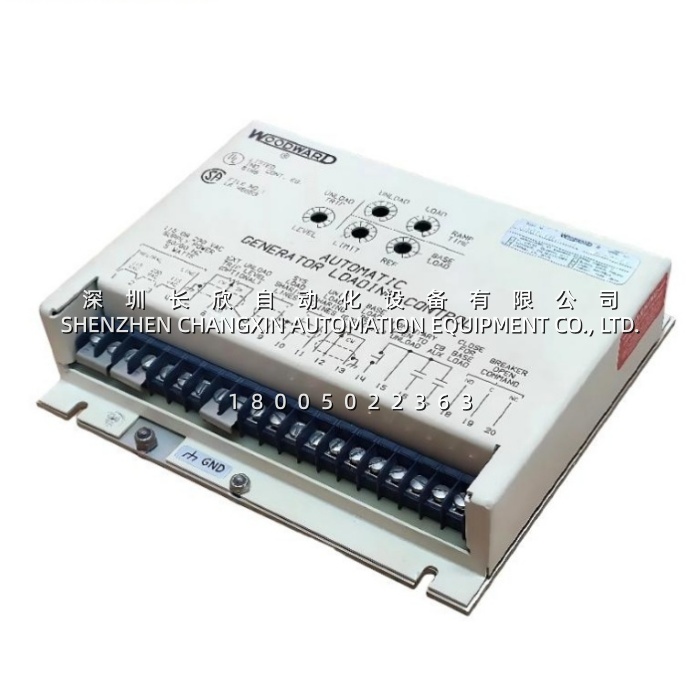
A regional hospital’s emergency power plant had lived with the same problem for years. Four 1 MW diesel generators sat in a paralleled lineup, and every quarterly load-bank and utility-transition drill produced a visible “thump” on the bus the moment a breaker closed or opened. The synchronization relay did its job correctly—voltage and phase were matched—but closing onto the bus still dumped several hundred kilowatts onto one engine in a fraction of a second. On one occasion the sudden load acceptance pushed exhaust temperature high enough to register on the annunciator, and the facilities engineer rightly treated it as a near-miss for a reverse-power trip on take-down.The correction was not a new governor. It was inserting the 9905-096 into the existing Woodward load-sharing loop. With the load ramp set to suit the engine manufacturer’s load-acceptance curve and the unload trip point dialed to 50 kW, breaker closures now occur at essentially no load and the set assumes its share of the bus over a timed, linear ramp. Take-down is the reverse: load falls smoothly to the trip point, then the 9905-096‘s internal relay initiates breaker opening. Post-retrofit tests recorded no perceptible bus disturbance during unit transitions, and the monthly generator exercise no longer requires an operator to “feather” the throttle manually.
Parameter
| Main Parameters | Value/Description |
|---|---|
| Product Model | 9905-096 |
| Manufacturer | Woodward, Inc. (USA) |
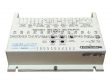
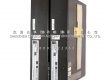
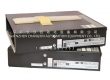
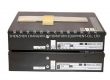
| Product Category | Automatic Generator Loading Control (AGLC) module |
| Input Power | 170–264 VAC, 50/60 Hz, 5 VA (option 2); optional 88–132 VAC, 2.5 VA |
| Load/Unload Ramp Rate | 20 to 0.33 % of full load per second |
| Ramp Time | 5 seconds to 5 minutes for a 100 % load change |
| Maximum Controlled Units | Up to 15 paralleled load-sharing generators |
| Load Signal Input | 0–3 VDC from load sensor or sharing module |
| Output Signal | Bias signal to electronic speed control (e.g., 2301A) |
| Unload Trip Level | Adjustable internally or via external 2 kΩ potentiometer |
| Maximum Load Limit | Independent limit prevents base load exceeding desired maximum |
| Unload Trip Relay | Double-throw relay initiates breaker opening at trip point |
| Operating Temperature | –40 to +85 °C (–40 to +185 °F) |
| Storage Temperature | –55 to +105 °C (–67 to +221 °F) |
| Maximum Humidity | 95 % at 38 °C, non-condensing |
| Vibration Resistance | 4 G, 5–500 Hz |
| Shock Resistance | 60 G |
| Dimensions | 8.5 × 7.5 × 2 in (216 × 191 × 51 mm) |
| Weight | 1.0–1.7 kg (approximately 2.25 lb), metal chassis |
| Certifications | UL and cUL Listed, CSA Certified |
| Documentation | Woodward manual 82004 |
| Key Feature | Reverse-wiring version (“de-energize-to-disconnect”) for normally-closed breaker-feedback logic |
Technical Principles and Innovative Values
- Innovation Point 1 – Load transfer by rate control, not by operator reflex. The 9905-096 measures the generator load and starts every ramp from the existing load level rather than from zero. This is what makes the transfer bumpless: the prime mover is never asked to accept or shed load faster than its thermal and mechanical limits allow.
- Innovation Point 2 – Separate load and unload ramp rates. A large diesel may safely accept load at 20 % per second while a gas unit needs minutes to avoid flameout; conversely, unloading can usually be faster than loading. Independent adjustment of the two ramps lets each transition be tuned to the engine, not to a generic factory default.
- Innovation Point 3 – Built-in maximum load limit as a hard ceiling. The base-load setting can be established with an internal potentiometer or an external input, but an independent maximum-load limit prevents operator or control error from driving the set beyond its rated output. It is a simple guard that removes one entire class of overload incident.
- Innovation Point 4 – Self-initiated take-down through an internal relay. When unloading reaches the adjustable trip level, the 9905-096 actuates its own double-throw relay to command breaker opening. The remaining online units are never left to absorb a suddenly shed load, so bus frequency stays where it belongs.
- Innovation Point 5 – Engineered for the environments that break ordinary controllers. A heavy-gauge metal chassis, 4 G vibration rating, 60 G shock rating, and a –40 to +85 °C operating envelope put the 9905-096 at home in engine rooms, marine auxiliaries, desert enclosures, and offshore skids without special cooling.
- Innovation Point 6 – Field calibration with a meter, not a laptop. All principal adjustments are made through front-access potentiometers. A field engineer needs a voltmeter and a frequency meter—no proprietary software, no firmware revision to manage, and no obsolescence risk from a discontinued programming tool.