WhatsApp:+86 18005022363 WeChat: +86 18005022363
 Email:

Application Scenarios
A petrochemical plant expanding its DeltaV DCS faces a familiar problem: adding hundreds of new I/O points across a crowded marshalling cabinet. Traditional marshalling requires pre-determining signal types, routing individual wires to specific terminals, and installing dedicated I/O cards per signal type. With the VE4060C1, the engineering team can install the carrier and pre-wire field terminals before finalizing the signal assignment. When the project reaches commissioning, technicians simply insert the appropriate CHARM modules—analog, discrete, or specialty—into the baseplates, and the DeltaV controller auto-detects and characterizes each channel through software. If a late design change swaps a flow transmitter from 4-20 mA to RTD, only the CHARM module changes; the wiring, carrier, and controller configuration remain untouched. This flexibility is the core value of the Electronic Marshalling architecture that the VE4060C1 physically enables.
Parameter
| Main Parameters | Value/Description |
|---|---|
| Product Model | VE4060C1 |
| Manufacturer | Emerson |
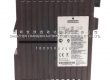
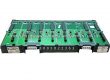
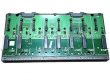
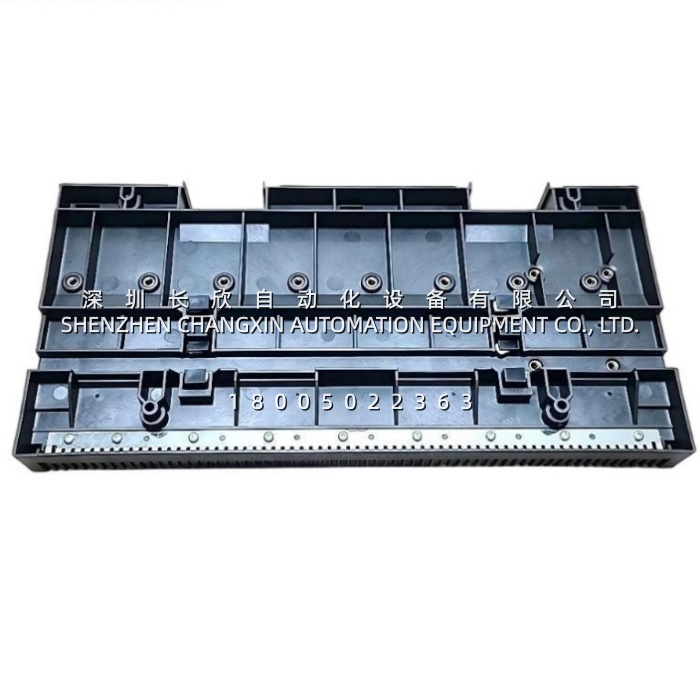
| Product Category | DeltaV CHARMs 8-Wide I/O Carrier (Baseplate) |
| System Compatibility | DeltaV Electronic Marshalling, CHARMs architecture |
| Carrier Capacity | 8 CHARM baseplate ports |
| Channels per Carrier | Up to 96 individual channels (8 ports × 12 CHARMs) |
| CIOC Support | One pair of redundant CHARM I/O Cards |
| Power Input | Redundant 24 VDC |
| Communication | Redundant Ethernet to DeltaV controllers |
| Mounting | DIN rail or cabinet mount |
| Protection Rating | IP20 (cabinet required) |
| Hazardous Area Rating | Class I, Div 2 / Zone 2 (system-level) |
| Extension Cable | Included (distinguishes C1 from C0 variant) |
Key Parameter Notes: The “8-wide” designation refers to the number of CHARM baseplate ports, not the number of I/O channels directly. Each baseplate port accommodates up to 12 CHARMs, yielding the 96-channel theoretical maximum. The included extension cable allows the carrier to be positioned for optimal cabinet wiring access.
Technical Principles and Innovative Values
- Innovation Point 1: Late-Binding I/O Architecture. The VE4060C1 embodies the Electronic Marshalling philosophy: physical wiring is decoupled from signal type definition. In conventional DeltaV I/O, the card type determines the signal (AI, AO, DI, DO), and the terminal block is wired accordingly. With the VE4060C1 and CHARMs, the field wiring lands on a universal terminal block first, and the signal type is “characterized” only when the specific CHARM module is inserted. This allows construction and wiring to proceed in parallel with engineering, compressing project schedules and reducing rework when late changes occur.
- Innovation Point 2: Redundancy at Every Layer. The VE4060C1 supports redundant CIOCs (one active, one standby), redundant 24 VDC power feeds, and redundant Ethernet connections to the DeltaV controllers. No single point of failure within the carrier’s scope of responsibility—power, network, or I/O card—will cause loss of signal. The system alarms on any path degradation rather than silently operating in a non-redundant state.
- Innovation Point 3: Hot-Swap Maintainability. CHARM modules and CIOCs on the VE4060C1 support online replacement. A failed CHARM can be pulled and replaced without shutting down the process, and the controller automatically re-identifies the new module. This reduces mean time to repair for I/O faults from hours (requiring loop isolation and cabinet work) to minutes.