WhatsApp:+86 18005022363 WeChat: +86 18005022363
 Email:

Description
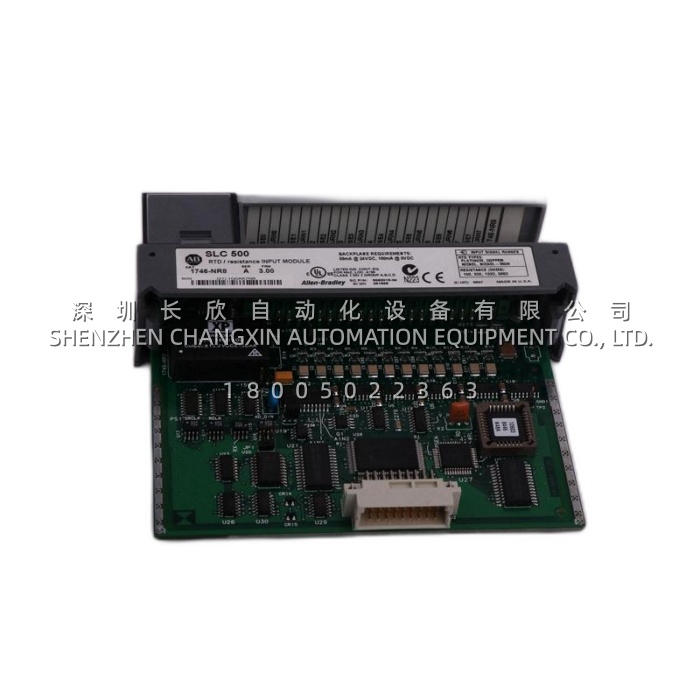
Technical Specifications
| Parameter Name | Parameter Value |
|---|---|
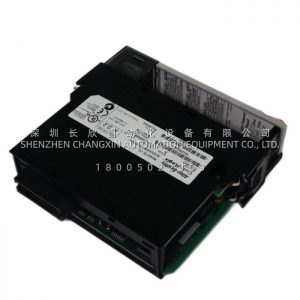
| Product Model | 1747-SDN |
| Manufacturer | Allen-Bradley (Rockwell Automation) |
| Product Type | SLC 500 DeviceNet Scanner Module |
| Network Type | DeviceNet (open fieldbus, based on CAN) |
| Maximum Nodes | 64 (scanner + slave nodes) |
| Data Rates | 125 kbps, 250 kbps, 500 kbps (set by rotary switch) |
| Configuration Memory | 1 Mbyte flash (stores scanner node address, slave list, I/O and explicit connections, data mapping) |
| Network Connector | 5-pin DeviceNet connector (miniature-style) |
| External Supply Voltage | 9–30 V DC (powers the module’s network interface) |
| Backplane Current (5 V DC) | 2.0 A |
| Power Dissipation | Approximately 12 W (module only) |
| Indicators | Module status, network status, and I/O status LEDs |
| Isolation | 500 V continuous between DeviceNet network and SLC 500 backplane |
| Wire Size | 0.25–2.5 mm² (22–14 AWG) solid or stranded copper |
| Enclosure Type | Open type |
| Dimensions (W × H × D) | 502 × 171 × 145 mm (19.78 × 6.73 × 5.71 in) |
| Weight | 1.9 kg (4.2 lb) |
| Operating Temperature | 0–60 °C (32–140 °F) |
| Storage Temperature | –40–85 °C (–40–185 °F) |
| Relative Humidity | 5–95% RH, non-condensing |
| Certifications | cULus listed, CE marked, ODVA conformance tested |
Main Features and Advantages
Native DeviceNet master capability for the SLC 500: The 1747-SDN gives the SLC 500 platform a genuine place on a DeviceNet network without gateways, protocol converters, or additional controllers. The module acts as the scanner node, polling up to 64 slaves and presenting their data to the SLC 500 I/O image in the same way local chassis I/O is presented. To the user program, a DeviceNet-connected 1792 block I/O module or a PowerFlex drive is addressed like any other SLC 500 input or output, so existing ladder logic continues to work unchanged while the underlying wiring shifts from point-to-point to a single trunk cable.Configuration that survives the power cycle: The 1 Mbyte flash memory on the 1747-SDN stores the complete network configuration — scanner node address, slave node list, I/O and explicit connection definitions, and the data mapping between DeviceNet objects and SLC 500 data files. This means the network rebuilds itself automatically after a power failure or a module replacement, without the processor having to renegotiate connections or relearn the slave list. For plants where a cold restart must bring the process back to a known state without operator intervention, this non-volatile configuration is a material advantage over scanner cards that rely on the controller to reconstruct the network each time.Baud rate set in hardware, not in software: The three standard DeviceNet data rates are selected with a rotary switch on the 1747-SDN, not through a software parameter. This deliberately prevents a configuration download or a programming error from silently changing the network speed and bringing every slave offline — a failure mode that is difficult to diagnose and expensive in downtime. Once the switch is set to match the trunk and the slaves, the rate is fixed, and the only way to change it is a deliberate manual action at the cabinet.Network and I/O visibility at the module: The status LED grouping on the 1747-SDN separates module health, network state, and I/O connection state into distinct indications. During commissioning, this allows a technician to distinguish a dead scanner from a silent network and from a single disconnected slave without opening a laptop. Combined with the 500 V isolation between the DeviceNet side and the backplane, the module contains network faults within the field side rather than allowing them to propagate into the controller backplane.
Application Field
The 1747-SDN is the standard DeviceNet interface for SLC 500-based systems and finds its strongest application where a proven, deterministic controller must communicate with a distributed mix of intelligent field devices. In manufacturing, the module is routinely used to connect SLC 500 processors to DeviceNet networks carrying 1792 and 1793 block I/O modules, photoeye arrays, RFID readers, and PowerFlex drives, replacing dozens of hardwired point-to-point connections with a single trunk. The result is lower wiring labor, simpler cabinet layouts, and the ability to add a device by assigning a node address rather than pulling a new home-run cable.In material handling and packaging, the 1747-SDN is frequently deployed where conveyors, sortation equipment, and palletizers are built from pre-wired DeviceNet drop cables and quick-disconnect connectors. A maintenance team can replace a jammed station’s entire I/O block in minutes by unplugging the drop and plugging in a spare, with the 1747-SDN automatically re-establishing the I/O connection once the new device is addressed. This “device-level” serviceability is the core economic case for DeviceNet, and the 1747-SDN is the component that makes it available to the SLC 500 platform.Process industries and infrastructure operators value the module for its ability to extend an SLC 500 processor’s reach into skid-mounted equipment supplied by third-party OEMs. A pump skid, a filtration package, or a burner management system delivered with a DeviceNet interface can be integrated into the plant’s SLC 500 control scheme without a second controller and without translating the OEM’s I/O list into hardwired points. Because the 1747-SDN supports up to 64 nodes and carries ODVA conformance testing, it interoperates with DeviceNet devices regardless of vendor, making it a practical integration tool in plants where the automation is not all from one source.