WhatsApp:+86 18005022363 WeChat: +86 18005022363
  Email:
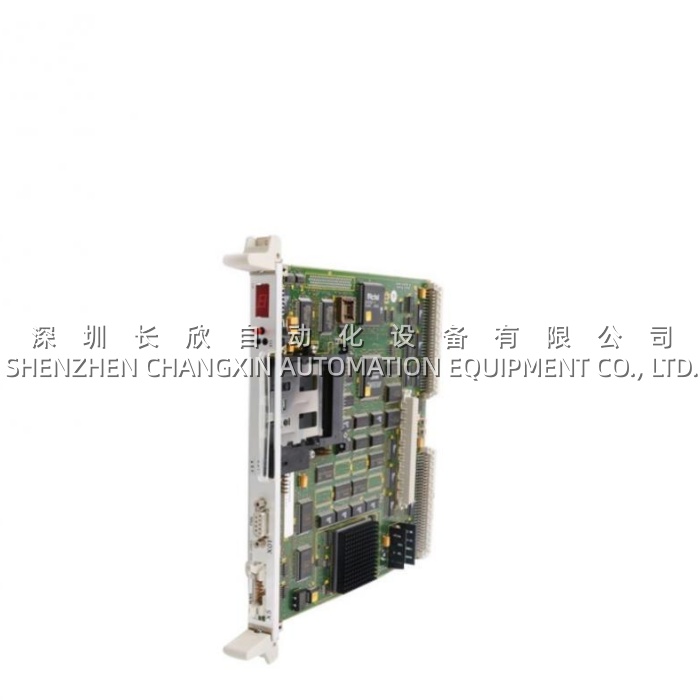
Application Scenarios
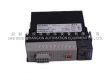
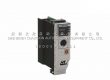
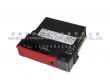
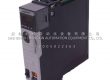
In a 2×600 MW coal-fired power plant commissioned in 1997, the boiler-turbine control and SOE system runs on a Siemens Teleperm M DCS spanning six AS620 automation stations distributed across two I/O cabinets in the turbine hall and four in the boiler building. The 6DS1124-8AA Taktgeber sits in the primary AS620 rack, injecting the global system clock onto the Teleperm M backplane so that every FUM (functional module) — from furnace-pressure analog inputs (6DP1995-8AA) to burner-management binary outputs — executes its scan cycle from the same timebase. This common clock is what makes the plant’s SOE resolution meaningful: when a turbine trip event occurs, the DCS can resolve the sequence of valve closures, pump trips, and relay operations to within 1 ms, because every node timestamps against the 6DS1124-8AA‘s clock. After 19 years of continuous operation, the maintenance team noticed the SYNC LED flickering intermittently during summer peaks when the cabinet ambient touched 55°C — a warning that the high-stability crystal oscillator was beginning to drift. They swapped in a verified 6DS1124-8AA spare during a planned outage: release the module from its Teleperm M rack slot, transfer nothing (no field wiring — the Taktgeber talks only on the backplane), seat the replacement, restore power. The AS620 re-enumerated the module, SYNC locked within seconds, and the SOE timebase was restored — all without touching a single FUM or disturbing the live standby AS620 path. This case illustrates why every Teleperm M plant should hold 6DS1124-8AA spares: if the clock generator drifts or fails, SOE data becomes meaningless, and post-trip investigations devolve into guesswork — a risk no utility can accept.
Parameter
| Main Parameters | Value/Description |
|---|---|
| Product Model | 6DS1124-8AA |
| Manufacturer | Siemens AG |
| Product Category | Taktgeberbaugruppe (Clock Generator Module) |
| Product Family | Siemens TELEPERM M DCS (6DS series) |
| Core Function | System-wide clock generation & low-skew distribution to Teleperm M backplane |
| Supply Voltage | 24 V DC (backplane-supplied, ±10% tolerance typical) |
| Power Consumption | < 5 W (typical for clock-gen class) |
| Clock Source | High-stability crystal oscillator, low temperature drift |
| Distribution Skew | Extremely low (microsecond/nanosecond级 across backplane) |
| Bus Interface | TELEPERM M dedicated backplane bus |
| Indicators (LED) | RUN (running), FAULT (fault), SYNC (synchronisation status) |
| Mounting | Dedicated TELEPERM M rack slot (Euromechanic C format) |
| Operating Temperature | 0 °C to +60 °C (recommended ≤ 40 °C for max life) |
| Storage Temperature | -25 °C to +70 °C |
| Humidity | 5% to 95% RH, non-condensing |
| Protection Rating | IP20 (cabinet-dependent) |
| Dimensions (approx.) | 114 × 96 × 68 mm (single-slot Teleperm M board) |
| Weight (approx.) | 0.25 kg |
| Country of Origin | Germany |
| Lifecycle Status | Mature / Discontinued — active spare-parts market |
Technical Principles and Innovative Values
- Innovation Point 1: Global Clock as the DCS “Heartbeat”. The 6DS1124-8AA is not merely an oscillator — it is the time-reference anchor for the entire Teleperm M installation. Every CPU scan, every FUM execution cycle, every SOE timestamp derives from the clock pulses distributed by the 6DS1124-8AA across the rack backplane. In a multi-AS620 plant where I/O racks may be distributed across turbine hall and boiler building, the Taktgeber ensures that “now” means the same thing in every rack — a prerequisite for meaningful Sequence of Events and for coordinated closed-loop control across distant process sections.
- Innovation Point 2: Low-Skew Distribution Architecture. The 6DS1124-8AA drives the Teleperm M backplane with extremely low skew (channel-to-channel and slot-to-slot), so that a furnace-pressure FUM in Rack A and a FD-fan binary FUM in Rack B see the clock edge within nanoseconds of each other. This low-skew design is what enables Teleperm M’s SOE subsystems to resolve event order to 1 ms resolution across dozens of distributed I/O drops — a capability that generic PLC-based DCS architectures struggle to match without expensive external IRIG-B or IEEE 1588 grandmasters.
- Innovation Point 3: High-Stability Crystal with Minimal Temp Drift. The 6DS1124-8AA uses a high-stability crystal oscillator as its timebase, engineered for minimal frequency deviation across the 0–60°C industrial operating window. In a power plant where cabinet ambient can swing 20°C between night-load and noon-peak, this temperature compensation ensures the SOE timestamps remain internally consistent — critical when investigating a trip where “valve A closed 3 ms before pump B stopped” determines whether the root cause was electrical or mechanical.
- Innovation Point 4: Triple-LED Diagnostic Philosophy. The 6DS1124-8AA reports its health via three front-panel LEDs: RUN (green = generating clock normally), FAULT (red = internal oscillator or backplane driver anomaly), and SYNC (green = locked and distributing to backplane). This at-a-glance diagnostic allows control-room and field technicians to verify clock health without software tools — a 10-second visual check during a walkthrough can catch early oscillator drift before it compromises SOE data.
- Innovation Point 5: Redundant-Architecture Compatibility. In Teleperm M redundant AS620 configurations (two CPUs with hot-standby), the 6DS1124-8AA in each rack provides the local clock, while the Teleperm M backplane architecture ensures the two clocks remain harmonised well enough for bumpless switchover. Some Teleperm M deployments also use a “master/slave” Taktgeber arrangement where one 6DS1124-8AA is nominated master and the other tracks it — ensuring that even on a redundant-swap, the SOE timeline remains contiguous.
Application Cases and Industry Value
A European nuclear power plant (1300 MW PWR, commissioned 1995) operates its RPS (Reactor Protection System) periphery and balance-of-plant DCS on Teleperm M, with Siemens 6DS1124-8AA Taktgeber modules in each of the six AS620 racks spread across three electrical galleries. The plant’s I&C team conducted a preventive audit at 22 years of service and found that the 6DS1124-8AA in the “B” train turbine rack was showing occasional SYNC LED dropouts during hot-standby switchover tests — asymptomatic during normal operation, but a red flag for SOE integrity. Because the plant’s EOP (Emergency Operating Procedures) require unambiguous SOE data to declare “safe shutdown” after any reactor trip, the team proactively replaced the module during a refueling outage. The swap took 8 minutes: extract the 6DS1124-8AA from its Teleperm M rack slot, seat the verified replacement, restore 24 V DC backplane power — the AS620 recognised the new Taktgeber instantly, SYNC locked, and the redundant train “A” never dropped. The plant’s senior I&C engineer commented that the Siemens 6DS1124-8AA “is the one module nobody thinks about until the SOE data doesn’t add up — and by then you’re already in a regulatory investigation.” The plant now stocks 4 6DS1124-8AA units (≈67% of installed count across the three galleries) as strategic buffer, having learned that Siemens no longer manufactures the 6DS series and the remaining global inventory is finite. This spares strategy has deferred a full Teleperm M → SPPA-T3000 migration by an estimated 6–8 years on the balance-of-plant side, avoiding a €18M CAPEX commitment.