WhatsApp:+86 18005022363 WeChat: +86 18005022363
  Email:
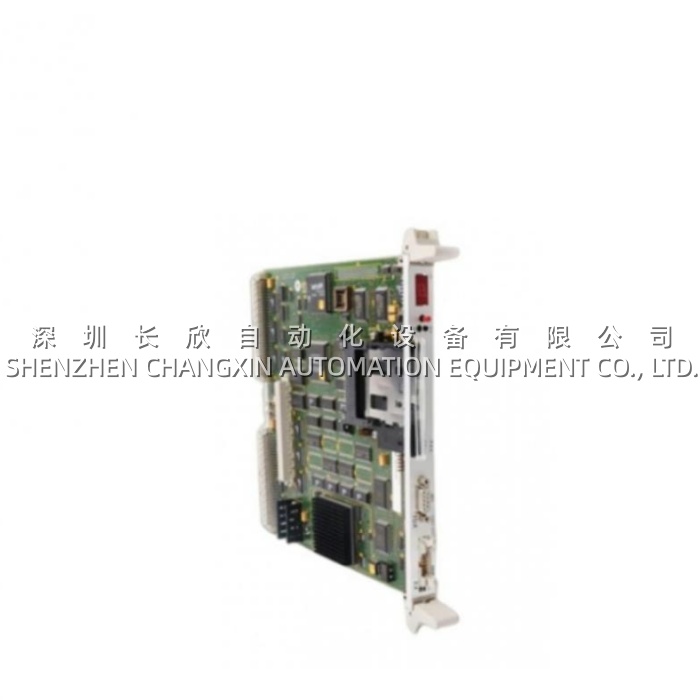
Application Scenarios
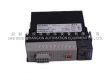
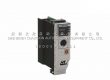
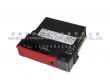
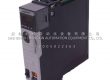
In a 450 MW combined-cycle power plant, the steam turbine’s electro-hydraulic (DEH) control system relies on a SIMADYN D rack to supervise governor valves, bearing lubrication, and — critically — turbine overspeed protection. Two high-resolution incremental encoders mounted on the HP and LP turbine shafts feed speed signals into the 6DD3460-0AC0 SE59 pulse sensor module via the PT10 terminal submodule. The PT10 brings the field wiring into the rack: two channels of A/B/Z tracks plus a rough pulse per channel, with 15 V encoder power supplied through the terminal block. The 6DD3460-0AC0 captures and buffers these impulse streams in its onboard memory, making the pulse data available to the PM6 processor module at microsecond-level determinism for speed calculation, acceleration monitoring, and — most critically — overspeed trip decision-making. When the original SE59 module began exhibiting occasional missed-pulse events after 16 years of continuous operation in the turbine hall electronics room, the maintenance team needed an exact replacement to avoid re-engineering the D7-SYS project or recalibrating the overspeed protection logic. Because the 6DD3460-0AC0 is a pure plug-in module that works in lockstep with the PT10 terminal submodule, the technician simply extracted the failing unit via its handle, inserted a verified replacement, and restored full turbine speed monitoring in under 10 minutes — with zero reconfiguration, as the PT10 terminal wiring and D7-SYS project remained untouched. This case illustrates why strategic spares stocking of the 6DD3460-0AC0 is non-negotiable for any plant running SIMADYN D-based speed/position feedback: the module sits at the intersection of field sensors and the control processor, and its failure blinds the system to shaft speed — a condition that can force a turbine trip or, worse, enable an overspeed event to go undetected.
Parameter
| Main Parameters | Value/Description |
|---|---|
| Product Model | 6DD3460-0AC0 |
| Manufacturer | Siemens AG |
| Product Category | SIMADYN D Pulse Sensor Module |
| Designation | SE59 |
| Companion Submodule | PT10 terminal block (field wiring interface) |
| Core Function | Memory buffering for 2 impulse sensings |
| Input Channels (via PT10) | 2 × speed sensing channels, each with A+/A−, B+/B−, Z+/Z− tracks + rough pulse |
| Encoder Power Supply (via PT10) | 15 V DC (P15 terminal, external encoder supply) |
| Reference Ground | GND ext. (encoder supply and rough pulse reference) |
| Binary I/O on PT10 | 16 BI + 8 BO (24 V DC, external supply) — interfaced through SE58 companion |
| Analog I/O on PT10 | 7 AI + 4 AO (via SE58 companion module) |
| Backplane Interface | SIMADYN D local bus (to PM4/PM5/PM6 CPUs) |
| Mounting | SIMADYN D rack slot (6DD3460 family position) |
| Operating Temperature | -10 °C to +50 °C (per spare supplier data) |
| Storage Temperature | -20 °C to +60 °C |
| Protection Rating | IP20 (indoor rack installation) |
| Net Weight | 0.23 kg |
| Dimensions (L×W×H) | 235 × 140 × 40 mm (packaging reference) |
| Country of Origin | Germany |
| Lifecycle Status | PM410 — Product cancelled, deleted without replacement |
Technical Principles and Innovative Values
- Innovation Point 1: Dual-Channel Impulse Memory Architecture. The 6DD3460-0AC0 is purpose-built to provide dedicated memory buffering for two independent impulse sensing channels sourced from the PT10 terminal submodule. Each channel captures A/B/Z quadrature tracks plus a rough pulse — the memory buffer ensures that no pulses are lost even during high-speed transients when the SIMADYN D CPU is busy executing other deterministic tasks. This architectural separation of pulse acquisition (SE59) from pulse processing (PMx CPU) is the foundational principle that enables SIMADYN D to achieve microsecond-level speed control determinism even with encoder frequencies in the hundreds of kHz.
- Innovation Point 2: PT10 Terminal Submodule Integration. The 6DD3460-0AC0 does not connect directly to field wiring — it partners with the PT10 terminal submodule, which provides the physical connection points for two incremental encoders (A/B/Z differential pairs, rough pulse, 15 V encoder power, ground reference) plus 16 binary inputs and 8 binary outputs at 24 V DC, and 7 analog inputs plus 4 analog outputs (via the SE58 companion). This division of labor — PT10 for field termination, SE59 for impulse memory, SE58 (6DD3460-0AB0) for interface — creates a clean, modular architecture where field wiring never touches the sensitive processor backplane.
- Innovation Point 3: Quadrature + Rough Pulse Architecture. Each of the two impulse sensing channels on the 6DD3460-0AC0 supports full quadrature decoding: Track A (A+/A−), Track B (B+/B−), and Zero pulse Z (Z+/Z−) for index/reset detection, plus a rough pulse for low-resolution fallback sensing. This dual-resolution architecture is essential for applications like turbine overspeed protection, where the rough pulse provides coarse speed detection during startup/spin-down (when the high-resolution A/B tracks may not yet be valid), while the quadrature tracks deliver precise speed and position data during normal operation.
- Innovation Point 4: 15 V Encoder Power Supply via PT10. The PT10 terminal submodule, working alongside the 6DD3460-0AC0, provides a dedicated 15 V DC encoder power supply terminal (P15) with separate ground reference (GND ext.) for the field-mounted incremental encoders. This isolated encoder supply prevents noise coupling from the plant’s 24 V DC distribution from contaminating the sensitive pulse signals — a critical design consideration in high-EMI environments like turbine halls and rolling mill drive rooms where VFDs and high-power converters routinely inject common-mode noise onto shared grounds.
- Innovation Point 5: Deterministic Backplane Handoff to SIMADYN D CPU. The 6DD3460-0AC0 delivers its buffered impulse data to the SIMADYN D processor module (PM4/PM5/PM6) via the rack’s local bus architecture. This handoff occurs with deterministic timing, ensuring that speed calculations, acceleration derivatives, and overspeed comparisons execute within the SIMADYN D’s minimum 100 µs task cycle. The SE59’s memory buffering acts as a hardware-level FIFO, decoupling the asynchronous arrival of encoder pulses from the synchronous execution of the control algorithm — a capability that general-purpose PLC high-speed counter cards cannot match due to scan-time latency.