WhatsApp:+86 18005022363 WeChat: +86 18005022363
  Email:
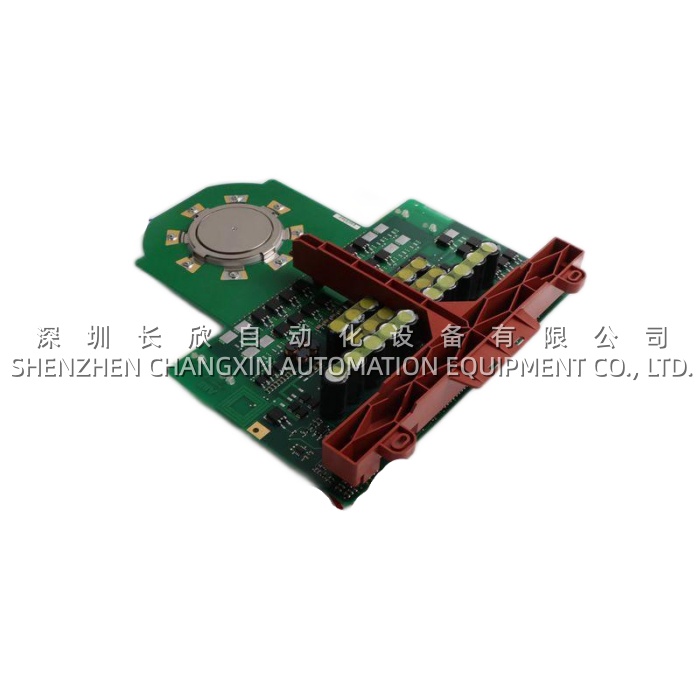
Technical Specifications
| Parameter Name | Parameter Value |
|---|---|
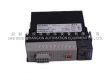
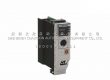
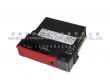
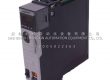
| Product Model | 3BHE014023R0101 (UFC789 AE101) |
| Manufacturer | ABB (Heppenheim, Germany — MV Drives / Power Electronics) |
| Product Type | Fast Short-Circuit Detection (FSCD) Board — MV Drive Protection Card |
| Compatible Drives | ABB ACS6000 (IGCT, multi-MW, 3–6.9 kV), ABB ACS5000 (IGCT, air-cooled, 4–6.9 kV) |
| Mounting | Plugin to ACS6000 / ACS5000 control-clamping stack (vertical guide-rail cage, backplane connector) |
| Power Supply | 24 VDC from drive internal backplane (clamping-unit PSU) |
| Communication | Internal fiber link to drive main CPU (DTC controller) + fiber from/to IGCT gate units |
| Detection Function | Di/dt anomaly on phase-leg / DC-link, µs-scale shoot-through recognition |
| Trip Path | Fast-trip assert to CPU → drive-block + gate-block, prior to standard overcurrent execution |
| Operating Temperature | 0 °C to +55 °C (drive cabinet ambient; some MV docs allow -10 to +55) |
| Storage Temperature | -40 °C to +70 °C |
| Humidity | 5%–95% non-condensing |
| Protection | IP20 (cabinet-internal, control-stack enclosed) |
| Weight | ~0.4–0.5 kg |
| Agency Approvals | CE, UL (per ABB ACS6000 system certification) |
Main Features and Advantages
µs-scale short detection = IGCT survivability. The core value of the UFC789 AE101 is what it catches that the drive’s standard overcurrent trip misses. A phase-leg shoot-through on an IGCT bridge at 4.16–6.9 kV can develop full fault current in <5 µs; the ACS6000’s normal OC trip (software-executed on the CPU, typically 2–3 ms to assert gate-block) is too slow to save the device. The UFC789 AE101 watches gate-drive feedback fibers from each IGCT gate unit, spots the di/dt signature of a short before the current magnitude crosses the OC threshold, and forces a hardware fast-trip through a separate path to the CPU and the gate-drive suppression. That microsecond delta is the difference between “drive tripped, swap a gate unit” and “IGCT vented, cabinet down 3 weeks.”Fiber-isolated architecture for MV noise immunity. Like all 3BHE MV control cards, the UFC789 AE101 talks to both the CPU and the IGCT gate units over short fibers — the control-clamping stack sits inches from the IGCT clamping structure (kV-level, dV/dt in the kV/µs range). Copper logic here would be deaf within a month. The fiber path also means the UFC789 AE101 can be serviced (seated/removed) with the 24 VDC backplane live and the MV isolated — standard ABB MV maintenance practice, though full power-down is still ABB’s recommended default.Complements, not replaces, overcurrent protection. A common misconception: the UFC789 AE101 is not the overcurrent trip. The ACS6000 still has its software OC (parameter 30.xx class, executed by the CPU DTC loop). The UFC789 AE101 is the hardware-level safety net for the fault mode OC was never meant to catch — the sub-millisecond shoot-through. In normal operation the UFC789 AE101 is quiet; if it asserts, the drive HMI will typically log “FSCD Trip” or “Fast SC Detected” followed by a gate-block. For a troubleshooter, that log entry is the clue: don’t go hunting for a motor short (OC would catch that) — go hunting for a gate-unit failure, a snubber, or a clamping-structure insulation flashover.Revision fluency (AE100 → AE101). ABB迭代 the UFC789 through AE100, AE101, etc. — mostly component substitutions (RoHS, semiconductor EOL replacements, improved EMI filtering on the detection front-end). Electrically and mechanically the UFC789 AE101 is a drop-in for AE100 in most cases, but late-production ACS6000 firmware builds (post-2015 service packs) may expect AE101+ and throw “Board ID mismatch” on an AE100. For plants doing a 1-for-1 failure swap, matching the rev suffix avoids a parameter-file reload; for planned spares, buying AE101 future-proofs against the edge case. The UFC789 AE101 also sits alongside sibling UFC cards in the ACS6000 stack (UFC78x numbers for other unit functions) — don’t confuse them; the “789” is FSCD-specific.24 VDC backplane = no extra PSU. The UFC789 AE101 draws from the same 24 VDC rail that feeds the rest of the clamping-unit control stack (CPU, AMC, firing boards, gate-drive interface). That rail is fed by the MV cabinet’s aux PSU (often 110 VDC or 230 VAC input, 24 VDC / 5–10 A output, mounted in the clamping-unit compartment or the cabinet door). One fewer PSU to source, one fewer fusing decision — the UFC789 AE101 just seats and powers.
Application Field
The UFC789 AE101 deploys exclusively inside ABB ACS6000 and ACS5000 MV drive cabinets — which means its installed base tracks ABB’s IGCT-drive footprint in heavy process, metals, marine, and utility-scale applications.Metals and rolling is the densest slice. ACS6000 (IGCT, multi-MW, 3–6.9 kV) drives roughing stands, finishing stands, coilers, and bridles on hot-strip and cold-mill lines — the UFC789 AE101 sits in the clamping-unit stack of each drive, supervising the IGCT phase-legs. On a 6-stand finishing train, six ACS6000s × two UFC789 AE101 spares on the shelf is standard — a shoot-through event that takes out an IGCT is a 2–3 week lead on a power-module, so the fast-trip that saves the device pays for the spare budget in one near-miss.Cement and mining: ACS5000 (air-cooled IGCT, 4–6.9 kV, 315 kW–3.68 MW class) on kiln ID fans, cooler-grate mains, and vertical-roller-mill boosters; ACS6000 on larger mining concentrator mains (SAG-mill lube, overland conveyor MV drives in multi-MW). The UFC789 AE101 is the FSCD spare for those cabinets — humid kiln areas and high-altitude mining sites both accelerate gate-unit insulation aging, which is exactly the fault mode the UFC789 AE101 is there to catch before it becomes a device-killer.Marine and offshore: ACS6000 on diesel-electric propulsion (azimuth thrusters, main propulsion drives on DP vessels) — the UFC789 AE101 is part of the class-compliant protection scheme; a shoot-through at sea with no shore spare for an IGCT is a very bad day, so marine owners typically stock the UFC789 AE101 as a classed spare.Power generation: utility boiler FD/ID fans and CW pumps in the MV class where ACS6000 was spec’d instead of ACS2000 (usually >3 MW or >6.9 kV where ACS2000 tops out). The UFC789 AE101 is the control-stack spare for those drive rooms.Brownfield replacement is the buyer journey: ACS6000 launched ~2000s, ACS5000 ~2010s, so 15-year and 12-year fleets respectively are hitting component mid-life. The UFC789 AE101 ages via the detection-front-end op-amps, the fiber transceiver to the gate units, and the backplane connector oxidation (especially in humid cement/FGD pump houses). Failure mode is usually “nuisance FSCD trip” (detection front-end drifts, flags a false di/dt) or “FSCD Trip on real short but gate-unit already damaged” — the latter means the UFC789 AE101 did its job but the gate unit / snubber was already failing. Plants buy tested-surplus UFC789 AE101 to keep a bay of ACS6000s alive while evaluating an ACS6080 (ABB’s current-gen IGCT drive) migration that’s 24+ months out. Rev-suffix matching (AE100 vs AE101) gets decided at reorder — if the cabinet firmware was bumped in a previous service pack, AE101 may be required.