WhatsApp:+86 18005022363 WeChat: +86 18005022363
  Email:
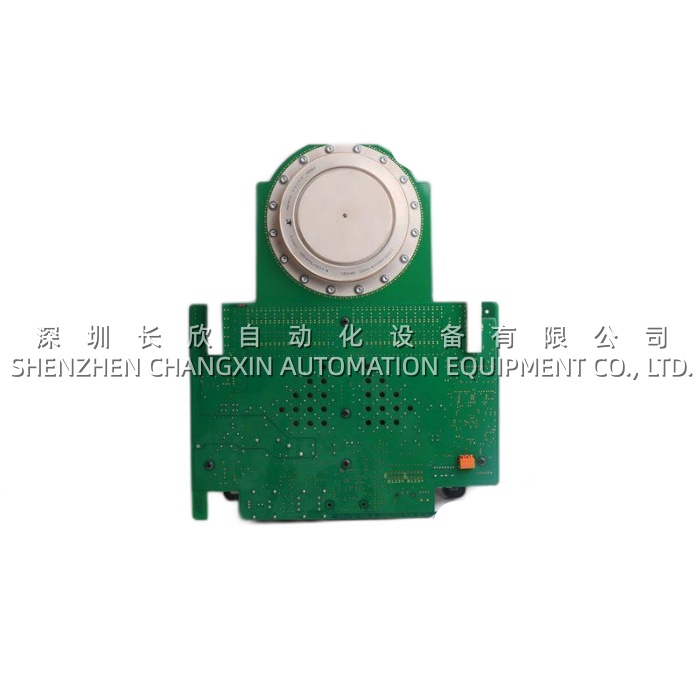
Product Overview
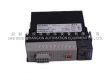
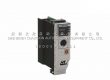
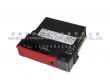
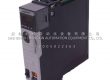
The ABB 3ADT314500R1001 (SDCS-FEX-4) is ABB’s Field Excitation Control board within the SDCS (System Drive Control System) family, engineered to manage the field-current regulation loop of ABB DCS400 and DCS500 DC drive converters. While the DCS400/DCS500 main power section handles the armature bridge (thyristor stack feeding the DC motor armature—2-quadrant non-reversing or 4-quadrant reversing, up to 5200 A armature on DCS500), the field circuit of a DC motor is a separate, lower-power thyristor bridge (field bridge) that supplies the motor’s field winding (exciter), and ABB 3ADT314500R1001 is the controller that fires that bridge. The board communicates with the DCS drive’s main controller—typically an SDCS-CON-2 or SDCS-CON-4—over the internal SDCS backplane/ribbon bus, receiving the field-current reference (derived from speed regulator → flux optimizer → field-current setpoint) and closing the current loop locally: measuring actual field current via a DCCT or shunt on the field bridge DC side, comparing to setpoint, and generating firing pulses for the field-bridge thyristors via fiber/pulse transformer to the gate drivers.The “FEX” acronym denotes Field EXcitation, and the “-4” variant (SDCS-FEX-4) is the later/revision board in the FEX family (FEX-2 preceded it), bringing improved diagnostics, firmware compatibility with the DCS500’s later firmware builds, and conformal coating suited to the heavy-industrial environments where DCS400/500 still dominate: hot-strip mill main stands, tandem cold-mill reels, mine hoists (single- and double-drum Ward-Leonard replacements), overhead crane main/hoist drives, paper-machine calender/ reel drives, marine winch converters, and cement-kiln DC auxiliary drives. The ABB 3ADT314500R1001 seats in the DCS drive’s control-cabinet section (not the power stack—separate enclosure), typically on DIN rail or the SDCS card cage alongside SDCS-CON-2 (main ctrl), SDCS-IOB-3 (I/O), and SDCS-PIN-4 (power interface). The board carries SMT logic, A/D for field-current measurement, firing-pulse generation, watchdog to the CON-2, and diagnostic LEDs visible through the control-cabinet door.With DCS400/DCS500 still representing a very large installed base globally (the platform dates ~1995–2010 but DC drives have 30+ year service life in metals/hoists), ABB 3ADT314500R1001 is a strategic sparing item: losing the FEX board doesn’t kill the armature bridge (the CON-2 will fault and block firing), but the DC motor loses field—meaning the armature bridge must be inhibited (otherwise V/Φ → infinite speed on field loss, a catastrophic event). For plants where a DCS500 runs a 5 MW hoist or a tandem-mill reel, the ABB 3ADT314500R1001 is a cold-spare that protects against a forced-outage measured in tonnes of scrap or hours of mine-production loss.
Technical Specifications
| Parameter Name | Parameter Value |
|---|---|
| Product Model | 3ADT314500R1001 (SDCS-FEX-4) |
| Manufacturer | ABB (Motion / Drives – former Drives Products, Turgi/Sweden) |
| Product Type | Field Excitation Control Board (SDCS family, DCS400/DCS500 DC drives) |
| Compatible Drives | ABB DCS400 (2Q/4Q, up to ~500 A armature), DCS500 (up to 5200 A armature) |
| Host Controller | SDCS-CON-2 / SDCS-CON-4 (main drive controller, SDCS backplane) |
| Function | Field-current regulation loop, field-bridge thyristor firing, flux weakening control |
| Field Current Range | Application-dependent (DCS400: up to ~10–40 A field; DCS500: up to ~300–500 A field bridge rating, per drive rating) |
| Measurement Input | Field DCCT / shunt (depends on drive BOM), analog to SDCS-FEX-4 A/D |
| Communication | SDCS internal bus (ribbon to CON-2), firing pulses to field-bridge gate drivers (fiber or transformer-coupled) |
| Supply Voltage | 24 V DC (from drive control PSU, via SDCS backplane) |
| Mounting | SDCS card cage / DIN rail in DCS drive control cabinet |
| Operating Temp. | 0 °C to +55 °C (control-cabinet envelope) |
| Protection | Conformal coating (typical per SDCS FEX-4 batch), watchdog to CON-2 |
| Agency / Compliance | CE, UL, IEC 61800-3 (drive-level), RoHS (post-2006 batches) |
Main Features and Advantages
Field-current loop closure independent of armature loop. The architectural value of ABB 3ADT314500R1001 is that it offloads the field regulation from the CON-2 main controller. DC motor speed equation: n = (Vₐ – I·R) / (k·Φ). Below base speed, field is held at full Φ (full excitation, ~rated field current) and armature V is varied (armature bridge, handled by CON-2). Above base speed (field-weakened region), Φ is reduced (field current reduced) to raise n while keeping Vₐ at max. The ABB 3ADT314500R1001 runs this field-current regulation at high bandwidth—measuring actual field current (DCCT/shunt), comparing to the setpoint from CON-2’s flux optimizer, and adjusting firing angle on the field bridge thyristors. This separation (CON-2 = armature + speed reg; FEX-4 = field current reg) keeps the DC motor stable across the full speed range, including the transition into field weakening which is where DC drives most commonly oscillate if the field loop is lazy.Flux weakening and flux optimization. The ABB 3ADT314500R1001 firmware (loaded from CON-2 at boot, or on-board Flash depending on DCS build) supports ABB’s flux-optimization logic: at light load, the field current is reduced below rated to reduce core loss (iron loss ∝ Φ²·f), improving motor efficiency by 2–5 % at partial load—meaningful in hoists and cranes that spend >50 % of cycle at partial load. The FEX-4 also handles the “field-loss protection” logic: if measured field current drops below a threshold (e.g., DCCT fault, field-bridge SCR short/open, field-circuit breaker trip), the ABB 3ADT314500R1001 signals CON-2 to inhibit armature firing immediately—preventing the “field-loss runaway” that destroys a DC motor (armature sees full V with near-zero Φ → n → ∞ theoretically, limited only by armature rupture). This is why the FEX board is safety-critical in hoists and mills.SDCS backplane integration with CON-2. The ABB 3ADT314500R1001 enumerates on the SDCS ribbon/backplane alongside CON-2, IOB-3, PIN-4. At drive power-up, CON-2 queries the FEX-4 (“are you there? what variant?”), loads the FEX firmware image if the board carries Flash, and begins cycling the field-current reference. Diagnostics flow back: FEX-4 reports field-bridge fault (SCR desat, firing-pulse loss, DCCT error, overcurrent), which CON-2 translates into DCS drive fault codes (visible on the drive’s operator panel—ODP, or via DriveWindow PC tool). For service techs, the ABB 3ADT314500R1001 front LEDs (power, run, fault) plus the DriveWindow trace of “Field Current Actual” vs “Field Current Ref” are the primary diagnostic path when a DCS500 throws “Field Fault” or oscillates in weakening region.Thyristor firing via fiber/transformer to field bridge. Unlike the armature bridge (which on DCS500 can be 4× thyristor stacks at 690 V / 5200 A), the field bridge is smaller (same 690 V class but lower current—field windings typically draw 5–15 % of armature rating). Still, the ABB 3ADT314500R1001 firing outputs must be isolated—ABB uses either fiber-optic (newer DCS500 builds) or pulse-transformer (older) to the field-bridge gate drivers, keeping the 4–10 V gate signal isolated from the 690 V anode-cathode. The FEX-4 also handles “firing-pulse supervision”: if a pulse train to a field-bridge SCR doesn’t produce the expected anode current step (via DCCT), the FEX flags a “missing pulse / SCR fail” to CON-2. In a mine-hoist DCS500, this early warning lets the maintenance team schedule a bridge rebuild before the next loaded run.