WhatsApp:+86 18005022363 WeChat: +86 18005022363
  Email:
Technical Specifications
| Parameter Name | Parameter Value |
|---|---|
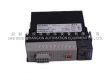
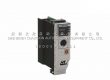
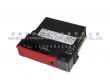
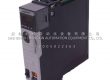
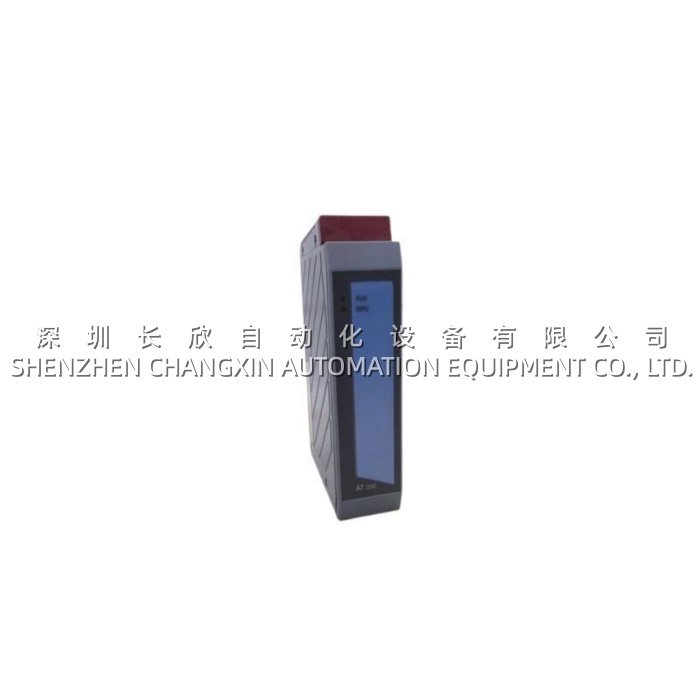
| Product Model | 3AT350 (Variant 6-B-R: 6 ch, Rev B, RTD) |
| Manufacturer | B&R (Bernecker+Rainer, ABB Group) |
| Product Type | Analog Temperature Input Module (RTD) |
| Platform | B&R System 2003 compact PLC |
| Channels | 6 independent RTD inputs |
| Sensor Types | Pt100 (IEC 751 / DIN 43760), Ni100, custom resistance 0–400 Ω / 0–4000 Ω (range-dependent per configuration) |
| Wiring Modes | 3-wire (lead compensation active) or 4-wire (lab-grade, compensation bypassed) |
| Resolution | 16-bit A/D per channel |
| Accuracy | ±0.3 °C typical (Pt100, 0…100 °C), ±0.5 °C full span |
| Conversion Time | ~10–20 ms per channel (system bus cycle dependent) |
| Interface | System 2003 backplane (parallel data + address bus to CPU) |
| Supply | 5 V DC via backplane + internal 24 V DC sensor excitation |
| Mounting | DIN rail, 3-TE width (~37.5 mm), System 2003 rack casing |
| Operating Temperature | 0 °C to +55 °C |
| Storage Temperature | –20 °C to +70 °C |
| Protection | IP20 (cabinet-only), conformal-coated PCB |
| Diagnostics | Sensor-break detection per channel, module-status LED (green OK / red Fault) |
Main Features and Advantages
Lead-compensation without external hardware. The 3AT350 implements mathematical 3-wire lead-resistance cancellation at the A/D level, exciting the RTD with a constant current and measuring the voltage drop differentially across the sense leads. On a 50-metre home-run from a mould-heater RTD to the control cabinet, 2 Ω per lead (4 Ω total error in 2-wire mode) would translate to ~10 °C error on a Pt100 — the 3AT350 cancels this to <0.2 °C without requiring an expensive 4-wire run or a local 4–20 mA transmitter. For applications where laboratory-grade accuracy is required — calibration skids, reference baths, R&D pilot lines — 4-wire mode disables the compensation math and reads pure sensor resistance.High-density in a compact DIN footprint. At 3 TE (~37.5 mm) width, the 3AT350 packs six RTD channels where a universal AI module would typically deliver four (and even then would need external 250 Ω resistors and 4–20 mA transmitters for RTD conversion). On a 12-axis injection moulder with 6 heated barrel zones plus 6 cooled zones, two 3AT350 modules (12 channels) plus two 3AI775 universal AI modules (12 analog outputs for SSR/thyristor drives) fit inside a 12-TE System 2003 rack — the entire temperature-loop controller (CPU + AI + AO + DI/DO) occupies under 200 mm of DIN rail. For machine builders competing on panel volume, this density directly impacts enclosure size and cost.Built-in sensor-break and range diagnostics. Each channel on the 3AT350 continuously monitors loop continuity; an open-circuit RTD (vibration-loosened terminal at a heater manifold, damaged cable by maintenance activity, etc.) trips a “channel fault” bit in the process image that the 3CP CPU evaluates in one scan — the machine can transition to safe-state (heaters off, alarm horn) within 50 ms rather than waiting for an operator to notice a drifting trend. The front-panel module-status LED (green = OK, red = Fault) gives the panel technician a first-pass indicator without connecting a laptop.Seamless migration path within the B&R ecosystem. The 3AT350 represents the System 2003 generation; B&R’s natural upgrade is the 7AT350 (System 2005, same 6-ch RTD concept, 19″ rack 7-TE width), and beyond that the X20AT6402 (X20, current platform, 4-ch RTD with MK/MSC connectors). For plants planning phased rack modernisation, the 3AT350 can remain in service on legacy zones while new zones adopt X20, and B&R’s Automation Studio handles cross-generation data mapping without requiring a complete rewrite of temperature-control logic.
Application Field
The 3AT350 is most at home on machine-level automation racks where temperature is one of several controlled variables and panel space is constrained. A typical injection-moulding cell uses the 3AT350 to land Pt100 sensors on the barrel zones (feed, compression, metering, nozzle — 4–6 points) plus mould-cavity Pt100s (2–4 points), totalling 6–10 channels — one or two 3AT350 modules cover the requirement. The 3CP CPU executes PID loops using B&R’s built-in temperature-PID function block (not a simplistic on/off), the 3AI775 or 3AO-series module sends 0–10 V to thyristor-drive SSR banks on the heater bands, and the 3AT350 provides the PV (process variable) at 16-bit resolution. Because B&R’s PID block includes autotune and anti-windup, barrel zones hold ±1 °C on a 220 °C setpoint despite screw-cycle disturbances — no external temperature controller required, no 4–20 mA transmitter wiring, just the 3AT350 and the Pt100 sensors.In batch-pharma skids (mobile tanks, CIP-return tempering, jacket-water control), the 3AT350 lands the tank-jacket Pt100, product-recirculation Pt100, and CIP-supply Pt100 — again 3–6 points per skid, one 3AT350 per skid DIN-mounted inside the skid’s local panel alongside a 3CP CPU and a Profibus DP coupler back to the plant DCS. The skid OEM eliminates the cost of six individual 4–20 mA RTD transmitters (approximately €120 each = €720 saved) and replaces them with one 3AT350 at roughly €280 — and gains 16-bit resolution instead of the 12-bit typical of economy transmitters. For a 12-skid utility plant, that represents €5 k+ in BOM reduction and cleaner wiring schedules.On packaging lines (flow-wrapper, thermoformer, tray-sealer), the 3AT350 lands sealing-bar Pt100s and film-preheat Pt100s — 4–6 points, fast scan (10–20 ms/ch), and the B&R CPU’s temperature-PID drives the sealing-bar SSR through a 3AO module. The 3AT350‘s sensor-break detection catches a burnt-out Pt100 on the sealing bar before an entire production batch seals poorly — the machine faults, the line stops, scrap is near zero.Retrofit scenarios form another strong fit: plants with 1990s–2000s B&R 2003 racks where an original 3AT350 has failed (infrequent, but ESD events or cabinet floods can damage them). Since System 2003 is mature, the 3AT350 is no longer in active B&R production in several regions — tested-surplus with functional report and cross-check against the existing rack’s firmware revision (the 3CP CPU’s Automation Studio version) is the realistic procurement path. Pairing a 3AT350 swap with a spare 3CP CPU and a 3AI775 on the same shelf constitutes the standard C-class sparing strategy for these legacy machines.