WhatsApp:+86 18005022363 WeChat: +86 18005022363
  Email:
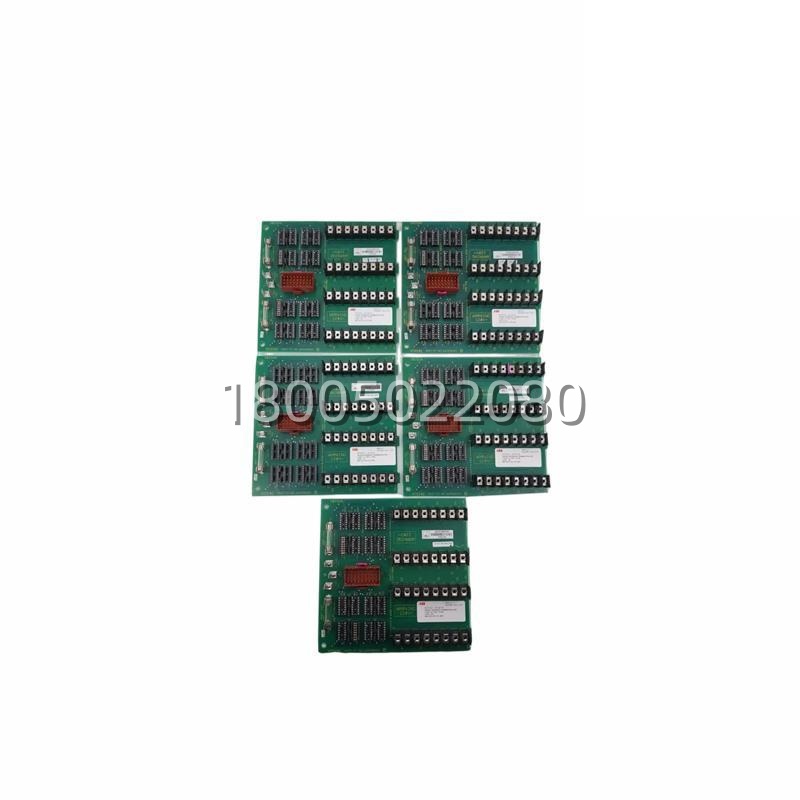
Application ScenariosOn a 320 MW combined-cycle unit’s steam-turbine lube-oil skid, the original I/O rack carried an IMDSO02 (SOE-rated DI, 1 ms timestamp) in the inner slot, paired with an NTDI02 in the outer slot. The 16 DI points on that NTDI02 landed: bearing-TI trip relays (4 pts), seal-oil tank low-level floats (2 pts), lube-oil pump overload contacts (2 pts), jacking-oil pressure switches (2 pts), seal-oil DP high (2 pts), MCC “pump-running” aux contacts (2 pts), and 2 spare. During a turnaround, the electrician needed to add a “bearing-vibration trip relay” (new DPR on the bearing pedestal) — he landed the N.O. contact on NTDI02 Channel 15’s screw terminal, jumpered the 48 V DC common from the plant’s DC distribution panel, and the IMDSO02 picked it up on the next scan — no rack power-down, no I/O-card handling, because the NTDI02 is the piece that faces the screwdriver. Two weeks later, a seal-oil DP switch chattered during a filter-change; the control-room SOE showed the NTDI02 Channel 11 transition at 14:32:07.004, and the IMDSO02’s 1 ms timestamp let the rotating-equipment lead pinpoint which of the two seal-oil filters was half-clogged. His note: “The NTDI02 is the only Bailey module whose LEDs the graveyard-shift operator actually understands — one glance at the outer slot tells you which contact is stuck.”h2
Parameter
| Main Parameters | Value/Description |
|---|---|
| Product Model | NTDI02 (also styled NTDI-02) |
| Manufacturer | ABB (Bailey) |
| Product Category | Digital Input I/O Termination Module |
| System Compatibility | Bailey INFI 90 / Net 90 DCS |
| Paired I/O Card | IMDSI02, IMDSO02, IMDSM01 (inner-slot DI cards) |
| Channels | 16 DI (single-group or dual-group commons, rev-dependent) |
| Field Voltage (typical) | 24 V DC / 48 V DC configurable (some builds 120 V AC — check tag) |
| Input Type | Dry contact or sourced DC (sinking input architecture) |
| Isolation | Optical, field side ↔ backplane (via inner I/O card’s optocouplers) |
| Termination | Screw-terminal block (plug-in style on most revs — lifts with the module) |
| Indicators | LED per channel (on = contact closed / voltage present) |
| Mounting | INFI 90 rack, outer slot of a 2-slot I/O pair (inner = DI card, outer = NTDI02) |
| Operating Temp. | -20 °C to +60 °C |
| Protection | IP20 (cabinet interior) |
| Dimensions (approx.) | 330 × 38 × 178 mm (full rack width, half-slot depth) |
| Weight | ~0.5 kg |
| Lifecycle | Discontinued – spare / refurb market |
h2 Technical Principles and Innovative Values
- Innovation Point 1: Outer-Slot “Sacrificial” Architecture. In a Net 90 rack, the expensive bit is the inner I/O card (IMDSI/IMDSO — ASIC, firmware, calibrated analog front-end). The NTDI02 is the outer-slot shield: if an electrician fat-fingers a 125 V AC onto a 48 V DC terminal, or a wiring short dumps surge onto the common, the NTDI02‘s series resistors/filter caps/clamp diodes take the hit, and the inner DI card (still pricey but intact) stays online. Swapping a NTDI02 is a 300 event; swapping an IMDSO02 because you skipped the terminator is a 2,000 + firmware-reload event.
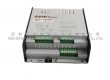
- Innovation Point 2: LED-Per-Channel = First-Line Diagnostics. The NTDI02 front carries 16 LEDs (one per DI). If the NMFC’s DI bitmap says “Channel 7 = 1” but the field pressure switch is supposed to be open, you walk to the rack, look at the NTDI02 outer slot — LED 7 on? Then the switch contact is welded or the wiring is shorted beforethe terminator. LED 7 off but NMFC says 1? Then the inner IMDSI has a channel fault. That two-second glance splits “field problem” from “I/O card problem” without a multimeter.
- Innovation Point 3: Pluggable Terminal Lift. Most NTDI02 revisions carry a pluggable screw-terminal block (the white/orange strip). When you RMA the NTDI02 for a burnt channel, you unplug the terminal strip, screw it onto the replacement, rack it — field wires never get disturbed. On a 16-point DI with 32 screws, that’s the difference between “15-minute swap” and “re-terminate 32 wires at 2 AM.”
- Innovation Point 4: Voltage-Class Family Discipline. Bailey’s NTDIxx family is deliberately split: NTDI01 = 24 V DC, NTDI02 = 48 V DC (or 120 V AC on some plant specs), NTDI03 = higher-voltage AC. The NTDI02 silk-screen and BOM code enforce the jumper/series-resistor values for the intended voltage — you can’t accidentally land 125 V AC on a 24 V input because the resistor wattage and clamp rating won’t be there. That family discipline has saved more than one plant from a “I grabbed the wrong spare” moment.
h2 Application Cases and Industry ValueIn a Southeast Asian palm-oil mill’s turbo-generator BOP, the lube-oil, seal-oil, and jacking-oil skids each run a 2-slot DI pair: IMDSO02 (inner, SOE-rated) + NTDI02 (outer, 48 V DC). The 48 V DC common comes from the plant’s DC distribution panel (float-charged by the 48 V battery that also feeds protection relays). During a stator-winding fault trip test, the “bearing-TI trip” and “seal-oil DP high” both fired within 80 ms — the IMDSO02 time-stamped both at 1 ms resolution, and the NTDI02 LEDs froze in the “on” state because the Net 90 rack held last-state on loss-of-supervisor (the trip test killed the DCS link briefly). Post-test, the rotating-equipment lead scrolled the SOE: “The NTDI02 + IMDSO02 pair is the only DI path on this skid I trust for trip forensics — the LEDs told the trainee which contact actually moved first.”A second case: a US Gulf Coast petchem tank-farm loading-arm skid (covered earlier in this series with the NMFC03) uses four Net 90 I/O slots for the 16 arms’ ESD/ purge/ vapor-recovery solenoids. Each slot = IMDSI02 (standard DI, non-SOE) + NTDI02 (48 V DC). The terminal farm originally had the 16 arms’ dry-contact ESD strings landed directly on the IMDSI’s ancient terminal strips (pre-terminator retrofit — the plant had bought bare racks in the ’90s). During a thunderstorm, a lightning-induced surge on the common riser took out three IMDSI channels — the plant then retrofitted NTDI02 terminators on all four slots. Two years later, a repeat surge event blew the series resistor on NTDI02 Channel 3; the LED stayed dark, the IMDSI behind it read “0” (safe state — ESD string fails-safe open = alarm), and the NTDI02 swapped in 10 minutes with the terminal strip transferred. The instrument tech: “The NTDI02 is cheap insurance — three IMDSI cards cost more than a whole box of these.”