WhatsApp:+86 18005022363 WeChat: +86 18005022363
  Email:
Description
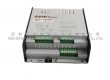
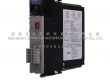
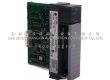
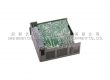
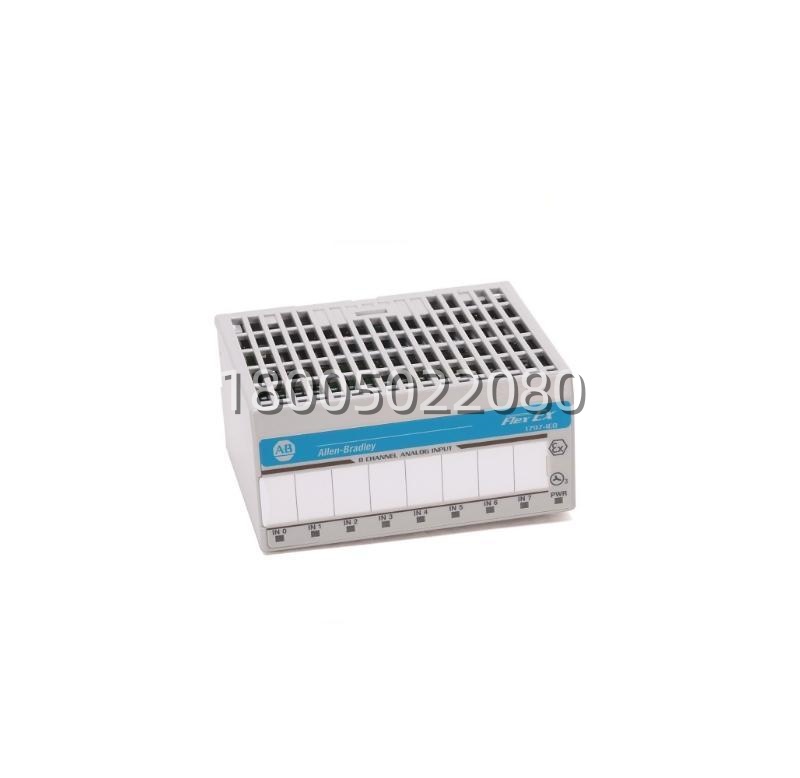
The 1797-IRT8 is an Allen-Bradley (Rockwell Automation) FLEX Ex series 8-channel intrinsically safe analog input module designed to acquire thermocouple (TC), RTD, and millivolt (mV) signals from sensors located in hazardous areas classified as Zone 1 / Class I Division 1. It mounts on a 1797-TB3 or 1797-TB3S terminal base unit and communicates via the FLEX Ex backplane (typically through a ControlNet Ex adapter such as the 1797-ACNR15) to ControlLogix or other Logix-platform controllers, providing 16-bit resolution temperature data with built-in cold-junction compensation and open-wire diagnostics—eliminating the need for external Zener barriers or isolators in many certified installations.
Application Scenarios
Consider a petroleum refinery catalytic cracker unit where eight reactor-skin thermocouples (Type K) and two vessel-bulk RTDs (Pt100) must be monitored from a control room located in the safe area, with the sensor leads running through a Zone 1 hazardous classified area containing flammable hydrocarbon vapors. Installing conventional I/O would require individual intrinsic safety (IS) barriers for each channel—consuming valuable panel width and introducing wiring complexity. Instead, the instrumentation engineer specifies a 1797-IRT8 mounted in a non-hazardous cabinet on a 1797-TB3 terminal base, connected through a certified IS barrier/interface to the field loops. The module’s energy-limiting circuit ensures Ui < 9.5 V DC and Ii < 1 A at the field terminals—below ignition energy thresholds—while each of the eight channels is independently software-configured (four for Type K TC, two for Pt100 RTD, two for mV pressure-transducer signals) without changing jumpers. Built-in cold-junction compensation and digital filtering (0.2 Hz–600 Hz selectable) suppress noise from nearby variable-frequency drives. The 1797-IRT8 directly addresses the pain point of dense, mixed-signal hazardous-area temperature acquisition with simplified certification, reduced panel space, and transparent diagnostics reported back to the control system.
Parameter
| Main Parameters | Value / Description |
|---|---|
| Product Model | 1797-IRT8 |
| Manufacturer | Allen-Bradley (Rockwell Automation) |
| Product Category | FLEX Ex Intrinsically Safe Thermocouple / RTD / mV Analog Input Module (8 Channels) |
| Number of Channels | 8 differential inputs (non-isolated, multiplexed; independently software-configurable per channel) |
| Input Signal Types | Thermocouple: B, E, J, K, N, R, S, T, C (TXK/XK(L)); RTD: Pt100, Pt200, Ni100, Cu10; mV: -40 to +100 mV; Resistance: 0–485 Ω |
| Resolution / Accuracy | 16-bit A/D conversion; ±0.1% FS typical (RTD/TC), ±0.05% FS (mV); ±1 °C typical TC accuracy (with CJC) |
| Conversion / Settling Time | 8 ms to 99% of final value per channel scan (configurable via module data table) |
| Cold Junction Compensation | Built-in CJC sensor on terminal block; configurable as internal CJC, fixed offset, or external reference |
| Digital Filtering | Software-selectable: None, 0.2 Hz, 0.5 Hz, 10 Hz, 40 Hz, 600 Hz (low-pass per channel) |
| Intrinsic Safety Parameters | Ui ≤ 9.5 V DC, Ii ≤ 1.0 A, Pi ≤ 1.6 W, Ci / Li negligible (energy-limited field side for Zone 1/21, Div 1) |
| Backplane / Field Power | Powered from FLEX Ex backplane (24 V DC system supply); field-side dissipation ≈ 1.6 W max |
| Diagnostics | Per-channel open-wire / broken-sensor detect, over-range / under-range flags, CJC sensor fault, module health |
| Required Terminal Base | 1797-TB3 (screw clamp) or 1797-TB3S (spring clamp) intrinsically safe terminal base unit |
| Operating Temp / Humidity | -20 °C to +60 °C (-4 °F to +140 °F); 5–95% RH non-condensing |
| Mounting / Dimensions | 35 mm DIN Rail or panel mount (via FLEX Ex rack); approx. 94 × 75 × 46 mm (H × W × D) |
| Certifications | cULus Listed for Class I Div 1 Groups A-D / Zone 1, ATEX / IECEx Ex ib IIC Gb / Ex tb IIIC Db, CE, C-Tick |
| Status Indicators | Module OK (green/red), Network Active, Fault, and per-point field-input activity via Flexbus diagnostics |
Technical Principles and Innovative Values
- Innovation Point 1 – Energy-Limited Intrinsic Safety Integrated in the Module: The 1797-IRT8 is designed with internal energy-limiting circuits that restrict the maximum voltage (Ui < 9.5 V DC), current (Ii < 1 A), and power (Pi < 1.6 W) presented to the field wiring. This allows direct connection of certified intrinsically safe field instruments in Zone 1 / Class I Div 1 areas without the panel-space penalty and wiring burden of discrete Zener barriers or galvanic isolators—provided the overall system is evaluated per the entity parameters and loop approval.
- Innovation Point 2 – Per-Channel Software-Configurable Input Type (No Jumpers): Each of the eight differential inputs on the 1797-IRT8 can be independently set via RSLogix 5000 / Studio 5000 Add-On Profile to thermocouple (any supported type), RTD (Pt100, Ni100, etc.), resistance (0–485 Ω), or millivolt (-40 to +100 mV). A single module in a reactor skid can simultaneously monitor J-type thermocouples on process lines, Pt100 RTDs in jackets, and mV signals from a draft-pressure transducer—eliminating the need to stock multiple specialized analog-input card types.
- Innovation Point 3 – Built-In Cold-Junction Compensation & Configurable Digital Filtering: The 1797-IRT8 incorporates a CJC sensor at the terminal-block interface and allows the user to select internal CJC, a fixed offset value, or an external reference. Combined with six selectable digital low-pass filter cutoffs (including 0.2 Hz for slow thermal processes and 600 Hz for fast-response probes), the module delivers stable, noise-immune temperature readings even in electrically noisy petrochemical or offshore environments.
- Innovation Point 4 – Comprehensive Open-Wire & Sensor-Fault Diagnostics on the Network: Beyond standard over/under-range detection, the 1797-IRT8 performs automatic open-wire (broken thermocouple / RTD lead) detection per channel and reports fault bits directly into the controller’s input image via the FLEX Ex backplane. This enables the control system to differentiate between a true low-temperature reading and a failed sensor—critical for SIL-aware or regulatory-compliant process applications—without adding external supervision logic.
Application Cases and Industry Value
Case 1 – Offshore Platform Separator Vessel Temperature Monitoring:An upstream oil & gas operator needed to monitor eight temperature points (4 × Type T thermocouples on inlet/outlet process lines, 2 × Pt100 RTDs in the separator jacket, 2 × mV signals from differential-pressure cell amplifiers) on a produced-water separator located in a Zone 1 area of an offshore platform. The existing ControlNet Ex rack housed a 1797-ACNR15 adapter; a 1797-IRT8 was added on a 1797-TB3 terminal base. All eight channels were configured in one download—no hardware changes. The built-in open-wire detect caught a degraded T/C connection during routine trend analysis (flagged via HMI alarm), prompting proactive re-termination before the loop drifted outside spec. The solution replaced what would have been 8 individual IS barriers plus a standard analog card, saving ~40% of the allocated panel width and reducing loop-check time from half a day to under an hour.