WhatsApp:+86 18005022363 WeChat: +86 18005022363
  Email:
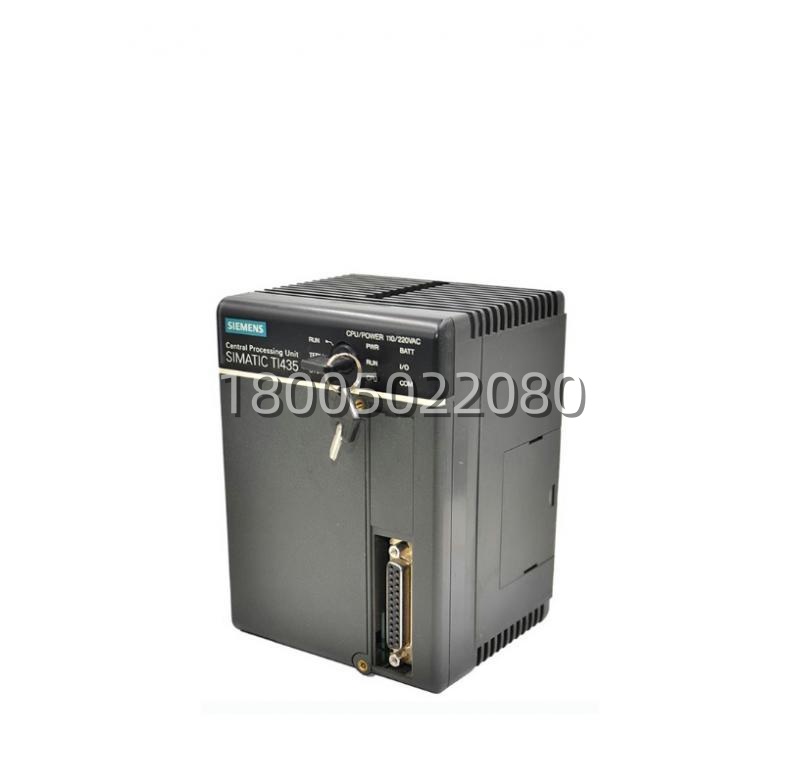
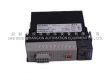
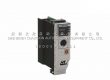
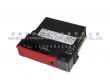
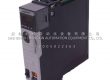
Application Scenarios:In a chemical plant’s batch reactor control system, the existing Siemens 435 CPU is the core controller managing PID loops for temperature and pressure, sequential logic for valve sequencing, and communication with a central SCADA system. The system is reliable but faces challenges due to aging hardware and lack of spare parts. The 435 CPU’s multi-processor capability allows it to handle both the fast logic scanning and the communication processing simultaneously, ensuring precise control of the exothermic reaction process. The primary pain point solved is maintaining operational continuity in a critical process where a full plant shutdown for a control system upgrade is not feasible.
Parameter:
| Main Parameters | Value/Description |
|---|---|
| Product Model | 6ES5 435-8MA12 (Typical variant) |
| Manufacturer | Siemens AG |
| Series/Platform | SIMATIC S5-135U / 155U |
| Architecture | Multi-processor (CPU, Communication Processor, Interrupt Processor) |
| Work Memory | 128 KB RAM (Expandable via memory submodule) |
| Program Memory | EPROM / EEPROM (e.g., 32 KB, 64 KB modules) |
| Programming Language | STEP 5 (STL, LAD, CSF) |
| Communication | SINEC L2 (PROFIBUS DP predecessor), Serial (TTY/RS232), CP for network |
| I/O Expansion | Via IBH Bus (for 155U) / G Bus (for 135U) |
| Special Functions | Multi-processor operation, PID control, Interrupt handling |
| Power Supply | 5V DC (via system bus from central rack) |
| Operating Temp. | 0°C to +60°C |
| Status | Discontinued (Legacy Product) – Part of S5 series (succeeded by S7-400) |
Technical Principles and Innovative Values:The 435 CPU represents the pinnacle of the S5 series architecture, designed before the era of unified processors.
- Innovation Point 1: Multi-Processor Architecture: Unlike modern single-chip CPUs, the 435 CPU often utilizes a distributed architecture on the board, with separate processors for logic execution (CPU), communication (CP), and fast interrupt handling (IP). This allows for true parallel processing, where the communication tasks (e.g., handling network traffic) do not slow down the critical control loop calculations, a key requirement in real-time process control.
- Innovation Point 2: Expandable Memory Architecture: The CPU uses a base memory (e.g., 128 KB) that can be expanded using plug-in memory submodules (e.g., 6ES5 375-0LA11). This modular approach allowed users to scale the memory capacity based on the application’s complexity without replacing the entire CPU unit, offering flexibility in system design.
- Innovation Point 3: Robust Industrial Design: The S5-135U/155U rack system and the 435 CPU were built for harsh industrial environments. The use of EPROM/EEPROM for program storage (in addition to battery-backed RAM) ensured program retention even in the event of prolonged power loss, a critical feature for processes with long batch cycles.
Application Cases and Industry Value:
- Case 1: Steel Mill Rolling Mill Control: A hot strip mill uses a Siemens 435 CPU as the main sequence controller for the roller tables and shears. The multi-processor capability ensures that the high-speed logic for coordinating the rollers (which must be synchronized to the mill speed) is not interrupted by the communication with the HMI. The system’s robustness in a high-vibration, high-temperature environment has allowed it to operate for decades with minimal downtime.
- Case 2: Power Plant Auxiliary System Control: A coal-fired power plant uses the 435 CPU to control the boiler feedwater and flue gas desulfurization systems. The PID control blocks in the STEP 5 library provided stable regulatory control, while the expandable memory allowed for the addition of complex logic for interlocking pumps and valves over the plant’s lifecycle.