WhatsApp:+86 18005022363 WeChat: +86 18005022363
  Email:
Application Scenarios
In a hot strip steel mill’s finishing train, multiple 405‑15ABM modules work in parallel. One module executes the mass flow control algorithm, calculating setpoints for each stand’s drive to maintain tension and prevent loopers from collapsing, while another handles the adaptive gauge control using X‑ray feedback—all synchronized via the TDC’s high‑speed fiber‑optic bus at sub‑millisecond cycles.
Parameter
| Main Parameters | Value/Description |
|---|---|
| Manufacturer / Brand | Siemens AG |
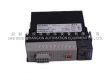
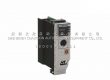
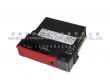
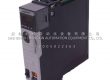
| Full Part Number | 6ES5 405‑15ABM (Commonly referred to as 405‑15ABM) |
| Product Type | Multi‑Processor Coprocessor Module (SIMATIC TDC platform) |
| System Architecture | Multi‑CPU (Supports parallel task processing in a single rack) |
| Cycle Time Capability | Sub‑millisecond (Typically configurable: 100 µs, 200 µs, 400 µs) |
| Processing Power | RISC‑based high‑speed processor (Optimized for floating‑point math) |
| Communication Interfaces | SINEC H1 (Industrial Ethernet) + Fiber‑optic sync bus (for inter‑module communication) |
| Programming Language | CFC (Continuous Function Chart) within Siemens STEP 7 / TDC engineering |
| Memory | Integrated work memory for user program and data (part of global TDC address space) |
| Power Supply | 5 V DC (via TDC backplane bus from central power module) |
| Operating Temperature | 0 °C to +60 °C |
| Physical Dimensions | Approx. 25 mm × 233 mm × 220 mm (Standard TDC double‑width module) |
Technical Principles and Innovative Values
- Innovation Point 1: Deterministic Sub‑Millisecond Control. Unlike standard PLCs that operate in the 10–50 ms range, the 405‑15ABM is engineered for hard real‑time tasks. Its hardware and real‑time OS guarantee cycle times as low as 100 µs. This allows it to directly control drive torque loops and execute model‑based predictive control (MPC) algorithms that would be impossible on a conventional PLC due to latency.
- Innovation Point 2: Parallel Processing in a Single Rack. The TDC architecture allows multiple 405‑15ABM modules (alongside other CPU/coprocessor modules) to be installed in the same rack. They share a global common memory and synchronize via the fiber‑optic bus. This enables true parallel processing—splitting a massive control task (e.g., 20‑axis coordination) across multiple CPUs without the complexity of multiple separate controllers.
- Innovation Point 3: Seamless Drive Integration. The module is the bridge between the automation controller and high‑performance drives (e.g., Siemens SINAMICS). It uses standardized technological function blocks (e.g., for tension control, winding, or cam profiling) that are pre‑optimized to interface with drive parameters, reducing engineering time for complex motion applications.
Application Cases and Industry Value
- Case 1: Paper Machine “Wire Section” Control. In a high‑speed paper machine, the 405‑15ABM manages the wire section speed control and vacuum box pressure profiling. It processes signals from scanning sensors and adjusts the drives and vacuum pumps in real‑time to maintain basis weight consistency. The sub‑millisecond response prevents web breaks at speeds exceeding 1,500 meters per minute.
- Case 2: Test Bench for Electric Vehicle Motors. A dynamometer test stand for EV motors uses the 405‑15ABM to run a real‑time emulation model of the vehicle’s road load and inertia. It calculates the torque setpoint for the drive under test and the load machine simultaneously, ensuring precise replication of driving cycles (like WLTP) with microsecond‑level accuracy.