WhatsApp:+86 18005022363 WeChat: +86 18005022363
  Email:
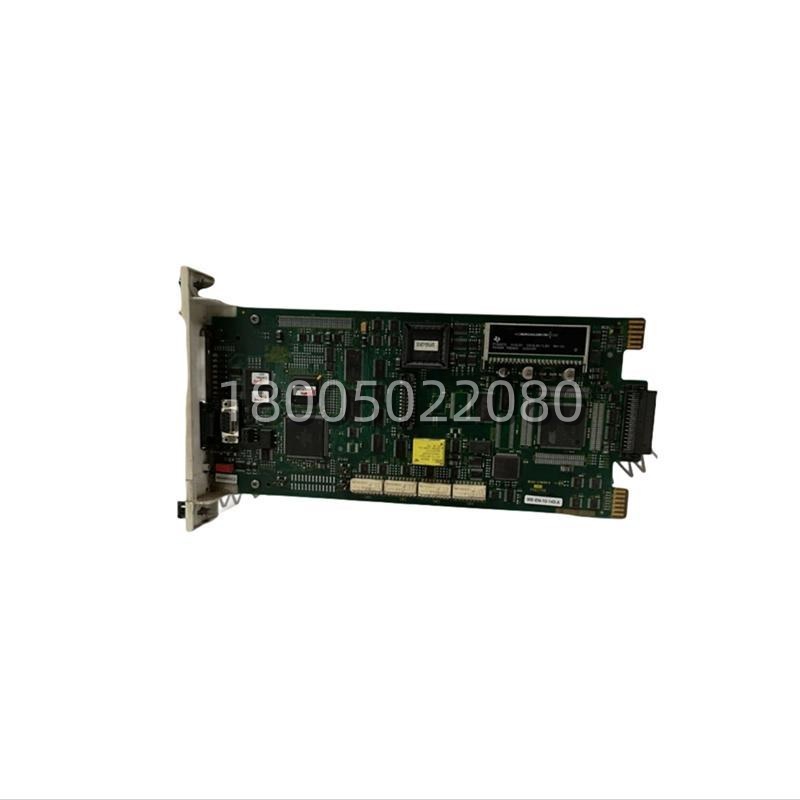
Application Scenarios
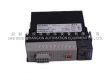
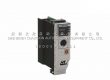
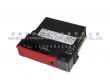
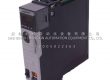
In a large thermal power plant, the boiler and turbine must operate in precise coordination to maintain grid frequency and prevent catastrophic equipment damage. The SPBRC400 controller acts as the central unit within the Symphony Plus DCS, continuously scanning thousands of I/O points from temperature, pressure, and flow transmitters. When a high-pressure condition is detected in the superheater, the SPBRC400 executes pre-programmed PID and interlock logic within milliseconds, adjusting feedwater valves and burner management to stabilize the process. Its role as a bridge controller ensures that data from remote I/O racks is seamlessly integrated, allowing operators to monitor the entire plant’s health from a single interface and preventing costly unplanned shutdowns.
Parameter
| Main Parameters | Value/Description |
|---|---|
| Product Model | SPBRC400 / SPBRC4000000 |
| Manufacturer | ABB |
| Product Category | Bridge Controller / DCS Central Processing Unit |
| Rated Supply Voltage | 24 V DC (18–30 V DC range) |
| Power Consumption | ≤ 5 W (typical) |
| Processor Architecture | PowerPC-based (High-performance RISC) |
| Memory Configuration | Expanded memory for large-scale function block execution |
| Communication Networks | INFI-NET (to operator stations), Harmony Control Bus (to I/O) |
| Backup Power | Onboard lithium button cell (for configuration & clock retention) |
| Operating Temperature | -20°C to +60°C (industrial grade) |
| Mounting | Rack-mounted (fits standard Symphony/Harmony racks) |
| Dimensions (HxWxD) | 358.14 mm x 271.78 mm x 71.12 mm |
| Compatibility | ABB Symphony Plus, Harmony, Bailey Infi 90 |
Technical Principles and Innovative Values
- Innovation Point 1: Bridge Controller Architecture. Unlike a standard PLC CPU, the SPBRC400 employs a unique “bridge” design that optimizes it for high-density data marshaling. It sits between the high-speed INFI-NET control network and the local I/O buses, acting as a powerful data concentrator. This architecture minimizes network congestion by processing I/O scans and logic locally before transmitting only essential data to the supervisory level, ensuring deterministic response times even in systems with tens of thousands of tags.
- Innovation Point 2: Expanded Memory for Legacy Modernization. A key innovation of the SPBRC400 is its significantly expanded memory capacity compared to older bridge controllers (like the BRC series). This allows it to handle modern, complex control strategies involving thousands of function blocks without requiring a complete system overhaul. For facilities upgrading from legacy Bailey Infi 90 systems, the SPBRC400 provides a drop-in replacement that boosts processing power while preserving existing I/O wiring and panel investments.
- Innovation Point 3: Deterministic Real-Time Execution. The module is engineered for hard real-time performance, utilizing a dedicated real-time operating system (RTOS) layer. This ensures that critical safety and control logic, such as turbine trip sequences or emergency shutdown (ESD) functions, are executed with microsecond-level precision and are never interrupted by non-critical tasks like data logging or network communication management.
Application Cases and Industry Value
- Case 1: Petrochemical Plant Safety System Upgrade. A major refinery in the Gulf Coast was experiencing intermittent faults in its aging emergency shutdown system, which relied on obsolete Bailey controllers. The critical challenge was to enhance safety system reliability without halting production for a full plant-wide DCS replacement. The solution involved a phased migration to SPBRC400 controllers. The new modules were installed in parallel racks during scheduled turnarounds. The SPBRC400‘s compatibility with existing I/O modules (like Analog Input AIxxx modules) meant that field wiring remained untouched. Post-upgrade, the plant reported a 40% reduction in system diagnostic alarms and achieved SIL 2 certification for its safety functions, significantly mitigating operational risk.
- Case 2: Municipal Water Treatment Plant Expansion. A growing city needed to expand its water treatment capacity and integrate a new ultrafiltration building into its existing ABB Harmony DCS. The SPBRC400 was selected as the central controller for the new building due to its seamless integration with the existing INFI-NET ring. The bridge controller handled the additional 2,000 I/O points from the new facility, coordinating chemical dosing and filter backwash sequences. The plant engineers highlighted the SPBRC400‘s intuitive configuration tools, which allowed them to replicate and modify control strategies from the old plant, cutting commissioning time by 30%.