WhatsApp:+86 18005022363 WeChat: +86 18005022363
  Email:
Application Scenarios:
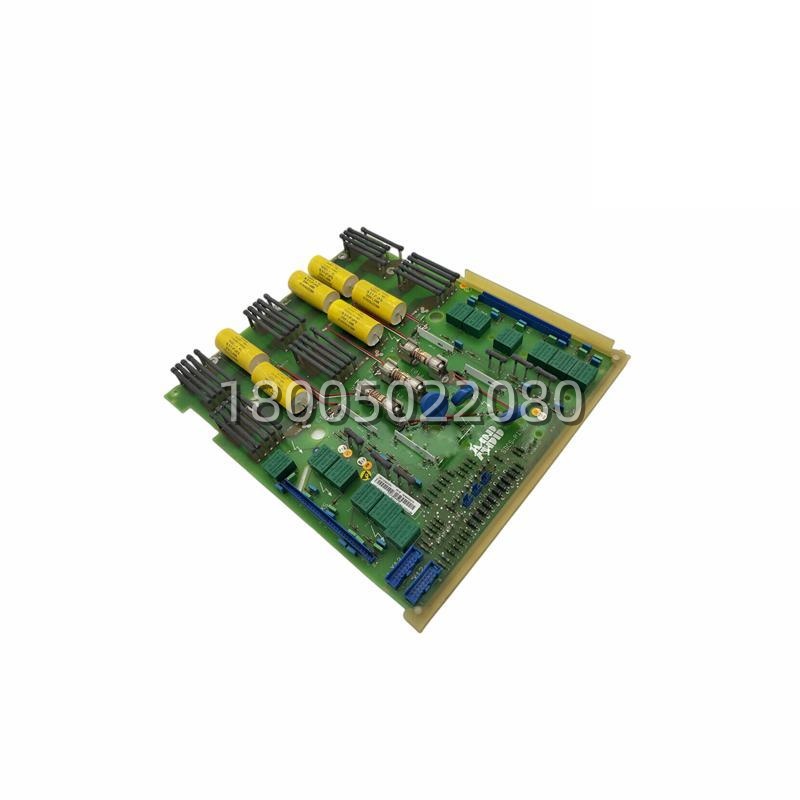
In a steel rolling mill, the main roll drive must respond to speed references within milliseconds while withstanding intense electrical noise. The SDCS-PIN-21 is deployed in the DCS600 cabinet to interface between the control processor (SDCS-CON) and the power unit. It conditions the analog speed signals and digitizes feedback from the tachometer. During a recent coil threading event, the board’s robust signal filtering prevented a false overcurrent trip that would have caused a production line stoppage, saving an estimated 4 hours of downtime.
Parameter:
| Main Parameters | Value/Description |
|---|---|
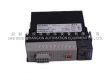
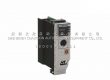
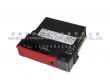
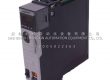
| Product Model | ABB SDCS-PIN-21 (3ADT306200R1) |
| Manufacturer | ABB (Sweden origin) |
| Product Category | Power Interface Card / Signal Conditioning Board |
| Compatible Drives | DCS500, DCS600 Industrial DC Drive Systems |
| Primary Function | Signal routing, isolation, I/O interfacing |
| Input Signal Types | Analog & Digital I/O (Speed Ref, Feedback, Interlocks) |
| Control Power | 24V DC (from drive control system) |
| Mounting | Plug-in module with screw terminals |
| Diagnostics | Status/Fault LEDs |
| Operating Temp | 0°C to +55°C |
| Dimensions (WxHxD) | ~265 x 282 x 40 mm |
| Weight | Approx. 0.6 kg |
Technical Principles and Innovative Values:
The ABB SDCS-PIN-21 excels in providing a hardened interface layer in electrically noisy drive environments.
- Innovation Point 1: Universal Signal Conditioning with High Noise Immunity. Unlike generic I/O cards, the SDCS-PIN-21 is specifically engineered to handle the mixed-signal environment of a DC drive. It accepts a wide range of analog (e.g., ±10V speed reference) and digital (e.g., 24V contactor status) signals. Its internal circuitry provides high common-mode noise rejection, which is critical in cabinet environments where high-current thyristor firing creates significant electromagnetic interference (EMI). This prevents signal corruption and erratic drive behavior.
- Innovation Point 2: Centralized Interface Hub Architecture. The board acts as a centralized patch panel, simplifying wiring and troubleshooting. All critical signals between the control board, power stack, and field devices (contactors, breakers, transducers) pass through this single module. This design drastically reduces the complex point-to-point wiring that was common in older drive systems, lowering installation time by up to 30% and making signal tracing during maintenance significantly easier.
- Innovation Point 3: Visual Diagnostics for Rapid Fault Localization. With onboard status and fault LEDs, the SDCS-PIN-21 provides instant visual indication of signal presence and board health. Technicians can quickly identify a missing speed reference or a failed output signal without connecting a laptop or accessing the HMI. This reduces Mean Time To Repair (MTTR) by allowing maintenance crews to isolate faults to the board, field wiring, or control logic within minutes.