WhatsApp:+86 18005022363 WeChat: +86 18005022363
  Email:
Description:
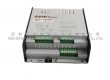
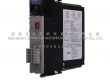
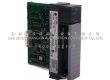
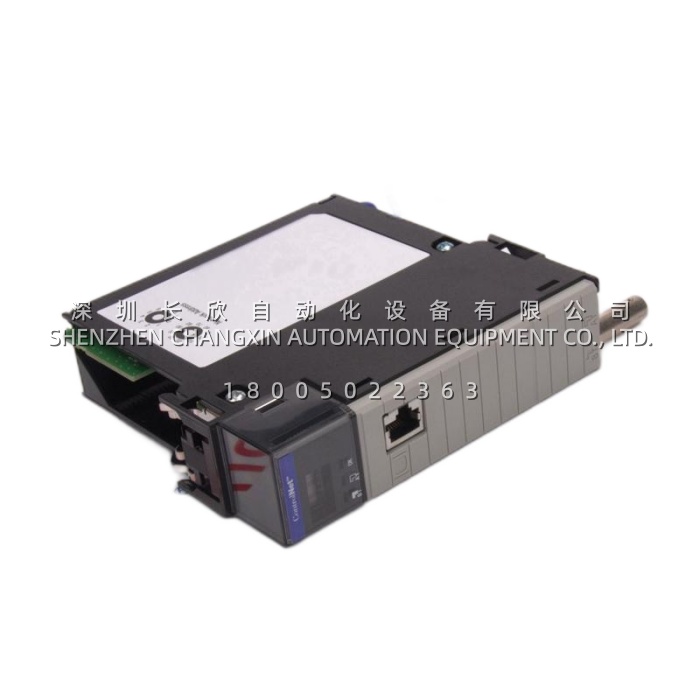
The Allen-Bradley 1746-NR4 is a four-channel RTD and resistance input module from Rockwell Automation, designed for the SLC 500 programmable controller platform. It belongs to the 1746 analog I/O family and converts resistance-based temperature sensor signals directly into digital values that any fixed or modular SLC 500 processor can read from its image table.What distinguishes the 1746-NR4 from a general-purpose analog input card is that it accepts bare RTD elements — platinum, nickel, copper, and nickel-iron — without any intermediate transmitter or signal conditioner. Each channel is independently configurable for sensor type, wiring topology, temperature units, filtering, and excitation current, so a single module can simultaneously serve four completely different temperature sensors on the same process.
Application Scenarios:
A pharmaceutical manufacturer operated an autoclave served by a SLC 5/03, with four Pt100 sensors monitoring chamber temperature, jacket temperature, product probe temperature, and drain temperature. Each sensor ran through a head-mounted 4–20 mA transmitter into a 1746-NI4 current input module. The architecture worked, but it carried a recurring cost: every transmitter was a calibrated device in the validation scope, and the annual calibration cycle required four instruments to be pulled, documented, and reinstated, with the autoclave out of service for the better part of a shift. Worse, transmitter drift was invisible until calibration day — a transmitter that had drifted 0.4 °C was quietly biasing an entire year of sterilization cycles in a GMP-regulated process.Replacing the transmitters and the NI4 with a single 1746-NR4 removed an entire instrument layer. The Pt100 elements wired directly to the module’s removable terminal block in 3-wire configuration, and the module handled excitation, lead-resistance compensation, linearization, and conversion internally. The calibration scope shrank from four transmitters plus one analog input card to one module plus the sensors themselves. Because the 1746-NR4 performs automatic calibration at power-up and on channel enable, the manual trim-pot adjustments that consumed technician time disappeared entirely.This is the pain point the 1746-NR4 addresses: the hidden lifecycle cost of analog temperature architectures. It applies wherever a SLC 500 needs accurate temperature and the alternative is a chain of transmitters, conditioners, and calibration records — pharmaceutical autoclaves and lyophilizers, food and beverage pasteurizers and retorts, chemical reactor jackets, plastic injection molding barrel and manifold zones, heat treat furnaces and kilns, HVAC and chilled water systems, bearing and winding temperature monitoring on motors and turbines, and water treatment digester temperature control. The 1746-NR4 also accepts potentiometers and direct resistance inputs, which makes it the natural choice for position feedback from slide-wire transducers and for any resistive sensing element in the 150 Ω to 3000 Ω range.
Parameter:
| Main Parameters | Value/Description |
|---|---|
| Product Model | 1746-NR4 |
| Manufacturer | Allen-Bradley (Rockwell Automation) |
| Product Category | RTD / Resistance Analog Input Module (SLC 500 specialty I/O) |
| Number of Channels | 4 differential RTD or resistance inputs, each independently configurable |
| Supported RTD Types | Platinum (α = 385 and 3916), Copper (426/427), Nickel (618 and 672), Nickel-Iron (518/604) |
| Supported RTD Values | 10 Ω, 100 Ω, 120 Ω, 200 Ω, 500 Ω, 604 Ω, 1000 Ω — including Pt100, Pt200, Pt500, Pt1000, Cu10, Ni120, NiFe604 |
| Resistance Input Ranges | 0–150 Ω, 0–300 Ω, 0–500 Ω, 0–1000 Ω, and up to 0–3000 Ω depending on configuration |
| Temperature Range | -200 °C to +850 °C depending on RTD type (Pt 385 covers the full span; Pt 3916 typically to +500 °C at full accuracy) |
| A/D Conversion Method | Sigma-delta modulation, 16-bit — delivers 0.1 °C / 0.1 °F or 0.1 Ω resolution with strong noise rejection |
| Resolution | 16-bit input; display resolution selectable as 1 °C or 0.1 °C (and °F equivalent), and 1 Ω or 0.1 Ω for resistance |
| Wiring Configurations | 2-wire, 3-wire, or 4-wire RTD per channel, with automatic lead-wire resistance compensation on 3- and 4-wire |
| Excitation Current | Two user-selectable levels: 0.5 mA or 2.0 mA |
| Input Filter Frequencies | Selectable 10 Hz, 50 Hz, 60 Hz, 250 Hz; bandwidth 2.62 Hz to 65.5 Hz |
| Channel Update Time | 17 ms to 1.2 s per channel depending on filter selection; 60 ms typical with 50/60 Hz rejection |
| Diagnostics | Per-channel open-circuit, short-circuit, and out-of-range detection; recoverable channel errors plus module-level non-recoverable diagnostics |
| Backplane Current | 50 mA at 5V DC and 50 mA at 24V DC |
| Power Consumption | 1.5 W maximum (0.3 W at 5V, 1.2 W at 24V); no external power supply required |
| Isolation | 500V AC for 1 minute, inputs to backplane; note there is no channel-to-channel isolation on this module |
| Slot Requirement | Any 1746 chassis slot except slot 0; compatible with fixed and modular SLC 500 chassis |
| Calibration | Automatic on power-up and on channel enable; no manual trim-pot adjustment |
| Indicators | Four green channel status LEDs (channels 0–3) plus one green module status LED |
| Termination | Removable terminal block (replacement part 1746-RT25G), with cable tie slots and shield terminals per channel |
| Operating Temperature | 0 °C to +60 °C; storage -40 °C to +85 °C; 5–95% non-condensing humidity |
| Hazardous Area Rating | UL and CSA certified for Class I, Division 2, Groups A, B, C, D |
| Configuration Method | Entirely software-based via RSLogix 500 — no DIP switches or jumpers on the module |
| Weight | Approx. 0.26–0.27 kg (0.60 lb) |
| User Manual | Rockwell publication 1746-UM008 (installation reference 1746-IN012) |