WhatsApp:+86 18005022363 WeChat: +86 18005022363
  Email:
Technical Specifications
| Parameter Name | Parameter Value (Weld-pkg DeviceNet BOM A) | Parameter Value (Ext-Axis SMB BOM B) |
|---|---|---|
| Product Model | 3HEA800906-001 | 3HEA800906-001 |
| Manufacturer | ABB Robotics (Application Equipment) | ABB Robotics (Application Equipment) |
| Product Type | Node Splitter / Bus T-Branch (Weld Pkg) | Node Splitter / Ext-Axis SMB Junction Box |
| Host Systems | IRC5 Arc/Spot Weld Option; IRB 1400/1520/2400/2600/4400/7600 weld | IRB 6600/6700/7600 + ext-axis (7th/8th axis positioner/track) |
| Bus / Signal | DeviceNet / CANopen (CAN 2.0A/B, 125–500 kbps) | SMB (Serial Measurement Board) chain — resolver/encoder + brake |
| Topology | 1 IN → 2 OUT (T-branch) | SMB 1 IN → 2 OUT (main-arm + ext-axis) |
| Connector (IN) | 5-pin Mini-DIN or M12 A-coded (era-dependent) | SMB circular (metal, bayonet, ABB std) |
| Connector (OUT A/B) | 5-pin Mini-DIN or M12 A-coded | SMB circular (same) |
| Termination | 120 Ω (enable/bypass per BOM) | N/A (SMB is point-to-point, no CAN term) |
| Mounting | DIN rail / cable-tie (box format) | DIN rail / base-junction mounted |
| Dimensions (D×H×W) | 127 × 53 × 27 mm | 127 × 53 × 27 mm |
| Weight | ~0.1 kg | ~0.1 kg |
| Operating Temp. | -10 to +60 °C (cable); -20 to +55 °C (box) | Same |
| Protection | IP20 (boxed) | IP20 (boxed, inside cabinet/base junction) |
| Origin | Sweden (SE) / Estonia (EE) | Sweden / Estonia |
| Lifecycle | EOL / Legacy | EOL / Legacy |
| Customs Tariff | 85176200 (per NexAuto) | 85176200 |
(Confirm BOM A vs B with ABB or your weld/ext-axis BOM before procurement — same 3HEA number, different internals.)
Main Features and Advantages
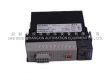
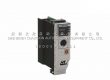
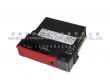
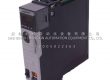
Passive T-branch — no active PHY to fail, but the term resistor matters. The 3HEA800906-001 (weld-pkg BOM A) is electrically passive — just copper traces from IN to OUT-A + OUT-B, plus (on some BOMs) a 120 Ω termination resistor that can be enabled (jumper/DIP) or left bypassed. In a DeviceNet weld-pkg daisy, the last node on the drop needs 120 Ω across CAN-H/CAN-L; intermediate nodes (gun in a tandem, timer in a spot) should NOT have term — having two terms on a short drop causes signal reflection (overshoot/undershoot at CAN edges) → CRC errors at 500 kbps, especially in a weld shop where the drive VFD noise couples onto the CAN shield. The 3HEA800906-001‘s enable/bypass lets the SI configure: e.g., IFU → Splitter (term OFF) → Gun-A (term OFF) → Gun-B (term ON, last node). This is why a generic T-splitter (no jumperable term) isn’t a drop-in — you’d have to add an external 120 Ω dongle at the last node, which in a cramped weld-gun dress-pack is one more failure point.DIN + compact = dress-pack / gun-stand friendly. At 127×53×27 mm and 0.1 kg, the 3HEA800906-001 tucks into the weld-gun’s control-box DIN rail, or straps to the dress-pack carrier on an IRB 7600 spot pendant, or DIN-mounts inside the positioner local-box (ext-axis BOM B). In a spot-weld gun (IRB 7600 + gun + timer + adaptive-force), the dress-pack carries: 3× power (gun servo), 1× SMB 15 m (3HAC2530-1, listing #8), 1× DeviceNet (weld IFU → splitter → gun + timer), 1× air (tip-change), 1× Ethernet (vision/camera). The 3HEA800906-001 is the smallest item on that dress-pack — but if it’s the T for gun+timer and it fails (cold solder on the DIN pins, or the 120 Ω resistor drift open), the timer drops → spot-gun runs open-loop → weld-nugget undersize → car-body rejected at audit. €100 part, €50k recall risk.Era-specific connector trap — 5-pin DIN vs M12 A-coded. ABB’s weld-pkg evolved: S4C+/early IRC5 used 5-pin mini-DIN on the Weld IFU and gun/timer; mid-IRC5 and OmniCore migrated to M12 A-coded 5-pin (more robust in weld-spatter, IP67 mated vs DIN’s IP20-ish). The 3HEA800906-001 was produced in both connector vintages under the same 3HEA800906-001 order code — the BOM suffix (sometimes -001 vs -002 etc.) or the physical plug mold tells them apart. Procurement fail #1 on this SKU: buying a 5-pin DIN version for an M12-A cell (or vice versa) — won’t seat, or seats with pins offset (ABB custom pin on some eras: pin 5 = shield-drain vs standard DeviceNet pin 5 = CAN-Shield — mismatch = bus silent). Always photograph the existing splitter’s connector before ordering, or request the supplier confirm BOM connector type against your cell’s Weld IFU port.External-axis SMB BOM (B) — base-junction split point. In the secondary interpretation , the 3HEA800906-001 is the SMB T at the robot base: main-arm SMB (3HAC2530-1 from controller → base) lands on the splitter IN; OUT-A goes up the arm (axis1→…→axis6 SMB daisy), OUT-B goes to the external-axis motor(s) (7th axis track, 8th axis positioner turntable). This BOM wouldn’t have 120 Ω term (SMB isn’t CAN, it’s a proprietary serial/optical-bridge to the resolver card — different PHY). The “带SMB板” note suggests this variant may carry a small SMB piggyback or just pass-through. If your storeroom calls this “external axis junction box,” confirm with ABB whether your 3HEA800906-001 is BOM A (DeviceNet weld) or BOM B (SMB ext-axis) — they look nearly identical outside, different inside.Legacy EOL — last-time-buy logic. Since 3HEA800906-001 is EOL , plants mid-migrating IRC5→OmniCore lose this SKU. OmniCore weld options use different bus (sometimes EtherCAT or reworked DeviceNet with different T-branch topology), so the 3HEA800906-001 doesn’t carry over. For plants staying on IRC5 weld for another 5–8 years (typical automotive BIW lines run 15–25 yr), locking 3–5 pcs now is cheaper than engineering a generic-T workaround later (which needs pin-mapping, term-jumpering, dressing — 4 hrs SI time + risk).