WhatsApp:+86 18005022363 WeChat: +86 18005022363
  Email:
Product Overview
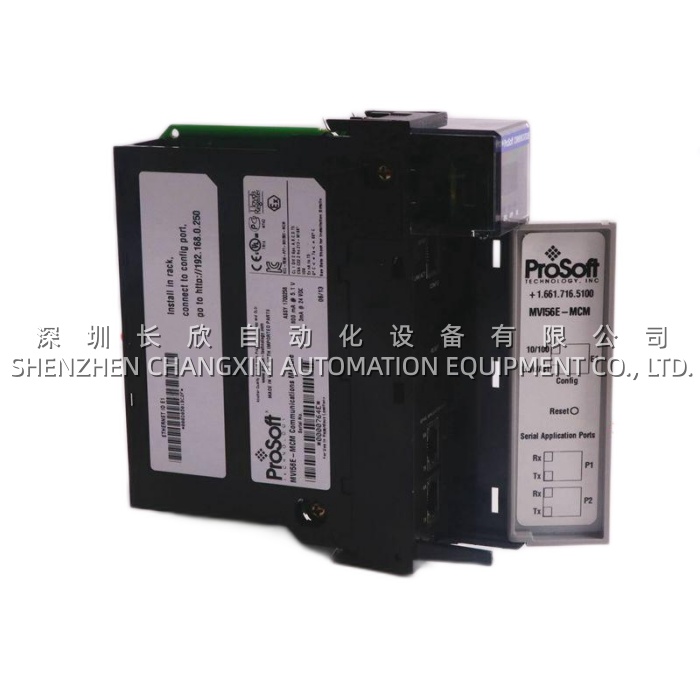
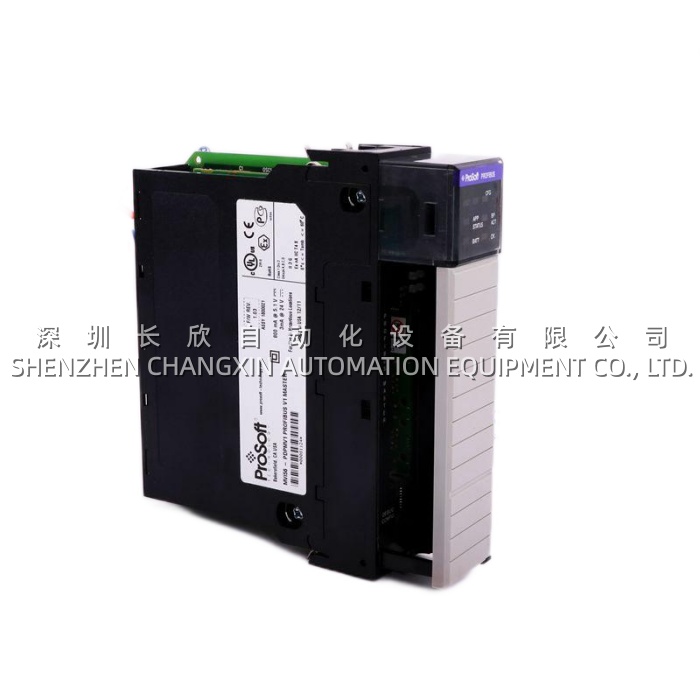
The 3CP340 60-2 B R (best interpreted as a Siemens SIMATIC S7-300 CP340 Communications Processor, with “60-2 B R” an internal plant/ERP suffix — rack 60, slot 2, revision B, R-flag) is a point-to-point serial interface module that seats in the S7-300 universal rack alongside the CPU (312/313/314/315/317) and provides a legacy RS232 or RS422/RS485 port for simple ASCII, 3964R, or RK512 telegrams. While your tag calls it a “cpu_unit,” the CP340 is technically a communications processor — it carries its own microcontroller and firmware, but its job is I/O-adjacent (serial link handler), not logic execution; the actual CPU in the rack is the S7-300 CPU card. That said, storerooms often bin CPs with CPUs because both are processor-class plugin cards on the same 24 VDC backplane, and the CP340 “looks like” a small CPU to the untrained eye.The CP340 exists because not every serial device in a 2000s–2010s plant spoke Profibus or Profinet yet. Weighing scales, barcode readers, RFID tunnel gates, legacy drive parameter panels, serial HMIs, GSM modems for SMS alarm dispatch, and old third-party analyzers (pH, DO, gas) all wanted a simple RS232/485 wire and an ASCII or 3964R handshake — not a $k Profibus slave coupler. The CP340 gave the S7-300 exactly that: one serial port, 19.2 kbps (RS232) or up to 187.5 kbps on RS422/485, 16 KB send/receive buffer on the card so the S7-300 CPU doesn’t have to poll bytes, and Siemens’ standard “ASCII driver” / “3964R driver” / “RK512 driver” loadable onto the CP via STEP 7. Three hardware variants share the same board layout: 1AH02 = RS232 (9-pin D-sub, point-to-point only), 1BH02 = RS422/RS485 (screw terminals, multi-drop capable), 1CH02 = RS232 + RS422/485 combo (both on the same card). All three seat identically in the S7-300 rack, draw ~0.8 A from the 24 VDC backplane (supplied by the rack’s PS307 PSU), and communicate with the S7-300 CPU over the backplane bus (no external cable needed between CPU and CP — the S7 program loads the CP driver via “Loadable Driver” blocks in OB1/OB35).For spare-parts buyers, the CP340 is very much a legacy-retain SKU: Siemens still lists it but nudges new designs to CP341 (has modem support, higher throughput, 3950 protocol) or to CM1241/CM1542 for S7-1200/1500 migrations. But plants with 20-year-old S7-300s running packaging lines, bottling halls, bulk-weigher skids, and legacy drive commissions still chase the CP340 because re-engineering the serial link into Profinet on a live line isn’t in the CAPEX plan. The “60-2 B R” suffix in your tag likely ties to your plant’s rack-layout drawing — worth verifying against the physical card’s MLFB (stamped on the front: 6ES7 340-1… ) before reordering, because the three variants (AH/BH/CH) are mechanically identical but connector- and protocol-different.
Technical Specifications
| Parameter Name | Parameter Value |
|---|---|
| Product Model | 3CP340 60-2 B R (interpreted as Siemens S7-300 CP340, internal plant suffix) |
| Manufacturer | Siemens AG (SIMATIC S7-300 family) |
| Product Type | Communications Processor (Serial Point-to-Point) |
| Retail MLFB Variants | 6ES7340-1AH02-0AE0 (RS232), 6ES7340-1BH02-0AE0 (RS422/485), 6ES7340-1CH02-0AE0 (RS232+485 combo) |
| Compatible Rack | Siemens S7-300 universal rack (UR, CR) |
| Slot Relation | Adjacent to / anywhere after S7-300 CPU (312/313/314/315/317); backplane-bus to CPU |
| Interface | 1× serial port: RS232 (AH02, 9-pin D-sub, PtP) / RS422-485 (BH02, screw terminals, multi-drop) / RS232+485 (CH02) |
| Protocols (firmware loadable) | ASCII (free-format), 3964R (Siemens standard), RK512 (Siemens S5-era compatible) |
| Baud Rate | Up to 19.2 kbps (RS232 AH02), up to 187.5 kbps (RS422/485 BH02/CH02) |
| Buffer Memory | 16 KB send + 16 KB receive (onboard, offloads CPU) |
| Backplane Bus | S7-300 backplane (communication with CPU via STEP 7 Loadable Driver blocks) |
| Power Supply | 24 VDC from S7-300 rack backplane (via PS307 PSU) |
| Current Consumption (backplane) | ~0.8 A (typical, all variants) |
| Operating Temperature | 0 °C to +60 °C |
| Protection | IP20 (cabinet-internal) |
| Dimensions (W×H×D) | 40 × 125 × 130 mm (single S7-300 slot width) |
| Weight | ~0.2–0.3 kg |
Main Features and Advantages
Point-to-point serial without a protocol coupler. The CP340‘s core value is taking “dumb serial” devices off the S7-300 CPU’s scan. A weighing scale that spits “W=123.4kg” every 200 ms over RS232, or a barcode reader that sends “BC:ABC123\r\n” on a trigger — the CP340 buffers those bytes in its 16 KB onboard memory, waits for the S7 CPU to poll the CP via the backplane (FC5/FC6 “AG_SEND”/”AG_RCV” style calls, or the CP-specific “CP_SEND”/”CP_RCV” loadable blocks), and hands up a clean string. The S7-300 CPU never sees individual UART interrupts — its OB1 scan stays clean for the logic that matters. For legacy plants where the serial device can’t be retired (calibrated weigh-scale head, FDA-validated barcode tunnel), the CP340 is the least-disruptive integration path.Three hardware variants, one firmware load. The AH02 (RS232), BH02 (RS422/485), and CH02 (RS232+485) share the same PCB and the same STEP 7 loadable-driver package — the difference is the front connector and the onboard transceiver. For plants, this means one spare-strategy decision: if the rack has both AH02 (scale) and BH02 (multi-drop RFID gate), stock one of each. The CH02 is the “universal spare” — pricier but covers both connector types if the shelf budget allows one SKU. Your tag’s “60-2 B R” — if “B” = BH02 (RS422/485), that’s the multi-drop variant, common on RS485 trunk links to several slave devices (weigh scales daisy-chained, drive-parameter panels, old Modbus-RTU slaves).Legacy protocol support that newer CPs dropped. The CP340 still ships with 3964R and RK512 drivers — Siemens’ own pre-Profibus serial handshakes. RK512 in particular matters for plants migrating old S5 code to S7-300 — the S5 sent/received RK512 telegrams to a PG or to another S5; the CP340 lets the S7-300 talk RK512 to that legacy device without rewriting the partner side. CP341 also does this, but CP340 is cheaper for a single-port need. Newer S7-1200 CM1241 doesn’t do RK512 natively — that’s another reason plants on S7-300 keep CP340 alive.24 VDC backplane power = no extra PSU. The CP340 draws from the same 24 VDC rail that feeds the S7-300 CPU, the PS307, the SM321/322 I/O — the rack’s PS307 (typically 2A, 5A, or 10A) budgets for it. At ~0.8 A, the CP340 is a perceptible but modest draw — a rack already loaded with SM331 analog inputs and an FM350 counter may need the 5A or 10A PS307, but a light rack (CPU + 2×SM + CP340) is fine on 2A. No separate 110/230 VAC feed, no separate fusing — the CP340 just seats and powers.LED diagnostics for field-wiring sanity. The CP340 front has SF (System Fault), BF (Bus Fault / serial-line fault), and the 5× status LEDs per the S7-300 CP standard. On a “COMM FAULT” trip, the BF LED tells you the serial partner didn’t answer (cable cut, baud mismatch, partner powered off) vs. the SF which means the CP itself lost backplane or buffer. For a maintenance electrician at 2 AM on a bottling line where the scale stopped talking, those two LEDs differentiate “CP dead” from “scale powered off / cable cut” in 30 seconds.