WhatsApp:+86 18005022363 WeChat: +86 18005022363
  Email:
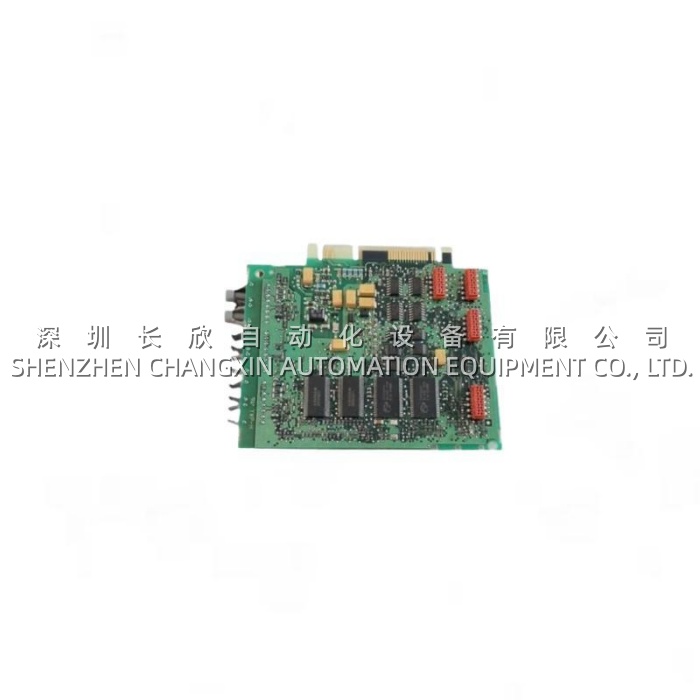
Technical Specifications
| Parameter Name | Parameter Value |
|---|---|
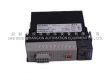
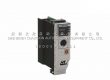
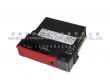
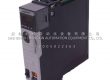
| Product Model | 3BSE018137R1 (CI858-1) |
| Manufacturer | ABB (Process Automation – AC 800M / System 800xA) |
| Product Type | DriveBus Communication Interface Module (CEX-Bus) |
| Compatible Controllers | AC 800M PM864, PM865, PM866, PM867, PM891, PM892 (firmware ≥ R430 recommended for full diag) |
| Protocol | ABB DriveBus (proprietary, optical) |
| Processor | Motorola DSP56303 @ 72 MHz + Xilinx FPGA |
| Max Drives per Module | 24 ABB drives (ACS800/ACS880/ACS580 etc., DriveBus-capable) |
| Max Modules per Controller | 2 × CI858 (→ 48 drives total) |
| Optical Ports | 3 × optical (DriveBus ring, I/O, Tool/commissioning) |
| Baseplate | TP858 (3BSE018135R1 family, alpha-code locked) |
| Power | From AC 800M CPU via CEX-Bus (+24 V stepped down onboard); no external PSU |
| Hot-Swap | Yes (live rack swap, CEX re-enumeration) |
| Commissioning Tool | ABB DriveDebug / DriveWindow (via Tool optical port) |
| Mounting | AC 800M controller rack CEX-Bus slot (TP858 baseplate) |
| Dimensions (module) | ~59 mm W × ~240 mm D (CEX module standard, per AC 800M family ) |
| Weight (with base) | ~700 g (AC 800M CI family average ) |
| Operating Temp. | 0 to +60 °C (controller-rack envelope) |
| Protection | IP20 (rack-mounted inside cabinet) |
| Agency | CE, UL, RoHS |
Main Features and Advantages
Motorola DSP56303 + Xilinx FPGA — purpose-built for DriveBus. Unlike a generic serial gateway (RS-485 → Modbus → drive), the CI858-1 has the DriveBus protocol stack hard-processed on the DSP+FPGA. DriveBus is ABB’s optical ring protocol that carries both cyclic data (speed/torque ref DCS→Drive, speed act / current / fault word Drive→DCS, typically 4–16 words/cycle) and acyclic (parameter read/write — e.g., DCS reads drive fault code “7110” via acyclic, or writes accel ramp from DCS). The DSP handles the protocol state machine; the FPGA handles the 3 optical PHYs and the timing back to the CEX-Bus DMA. This means the CI858-1 can sustain 24 drives on one module at AC 800M scan rates (30–100 ms) without protocol jitter — critical in a rolling mill where Stand C’s 6 drives need speed ref updated every 40 ms and feedback read back before the next DCS scan, or the inter-stand tension loop drifts.Three optical ports — DriveBus ring + Tool port. The CI858-1 front carries three optical connectors : (1) DriveBus port — connects to the fiber ring/hub that daisy-chains the 24 ABB drives (each ACS800/ACS880 has an optical DriveBus in/out; the ring topology means one fiber cut doesn’t kill all drives — ring heals); (2) I/O connection — for local I/O expansion in some BOMs; (3) Tool port — this is the commissioning win: an engineer can plug a laptop running DriveDebug or DriveWindow into the Tool port optically (no electrical into the DCS rack), and talk through the CI858-1 to each drive on the ring — read parameters, capture drive-side traces (current, speed, DC-link voltage), download drive firmware — without disturbing the DCS-Drive live link. In a metallurgy plant where a tandem-mill drive throws “overcurrent” intermittently, the tech hooks DriveDebug to the CI858-1 Tool port during production (live DCS link stays up), captures a 10-second trace on the suspect ACS880, sees the DC-link ripple correlates with the neighboring stand’s firing — diagnoses in 20 min vs 4 hrs of “stop the line and hook directly to the drive” .CEX-Bus power — no external PSU, no extra wiring. The CI858-1 draws from the AC 800M CPU via the CEX-Bus backplane (+24 V stepped down to the DSP/FPGA rails onboard) . No separate 24 V DC terminal, no separate PSU, no separate fuse. This collapses the DCS rack’s wiring — a CI858-1 swap is “unlatch, unplug 3 optics, pull module, seat new, replug 3 optics, latch” — 5 minutes. Compare to a third-party gateway (Profibus→drive) that would need its own 24 V DC PSU, its own DIN rail, its own fusing, and RS-485 cabling to the drive — the CI858-1’s CEX integration is why ABB plants standardize on it for DriveBus instead of gatewaying.Hot-swap + TP858 alpha-code lock. The CI858-1 hot-swaps in a live AC 800M rack (redundant CPU config recommended for bumpless — single CPU will pause CEX traffic ~2–5 s during re-enum, which most drives ride through on last-ref hold). The TP858 baseplate has a 2-letter alpha code lock preset at factory — prevents seating a CI858 into a TP85x that belongs to a different CI (e.g., CI858 into TP853 = CI857/INSUM base, won’t physically key) . This matters in DCS cabinets that carry CI854B (PROFIBUS), CI857 (INSUM), CI858 (DriveBus) all in the same CEX row — the alpha lock prevents the night-shift tech from putting the DriveBus CI into the PROFIBUS TP. The CI858-1 module itself also has keying against the TP858 — forced mismatch = won’t seat.Max 2 modules / controller → 48 drives. An AC 800M CPU (PM865/PM891 class) supports up to 2 × CI858 on the CEX-Bus, meaning 48 DriveBus-capable ABB drives per controller . In practice, large mills split by section: Stand A+B on CI858 #1 (24 drives: main-motor + screwdowns + loopers + side-guides), Stand C+D on CI858 #2 (another 24). This keeps the DCS scan load balanced — each CI858 marshals its 24 drives’ cyclic data to the CPU every scan; 48 on one CI858 would push the DSP+CEX bandwidth, though technically the 24/drive limit is per-module, not per-controller — 2 modules is the controller’s CEX slot + DMA budget.Ecosystem fit vs. the earlier DCS500 DC-drive listing. Thread tie-back: listing #2 covered 3ADT314500R1001 SDCS-FEX-4 — that was the field-excitation board inside the DCS500 DC drive itself (DCS500 has its own SDCS-CON-2 controller). The CI858-1 is the opposite direction: it’s the DCS-side card that talks to the drives. In a modern plant: AC 800M DCS (PM891) → CEX → CI858-1 → optical → ACS880 AC drive (main-stand motor) + ACS880 (screwdowns) + ACS880 (loopers). In an older plant: AC 800M DCS → CI854B (PROFIBUS) → DCS500 DC drive’s SDCS-CON-2 (which then uses SDCS-FEX-4 internally for field, covered in #2). Two generations, same DCS front-end.