WhatsApp:+86 18005022363 WeChat: +86 18005022363
  Email:
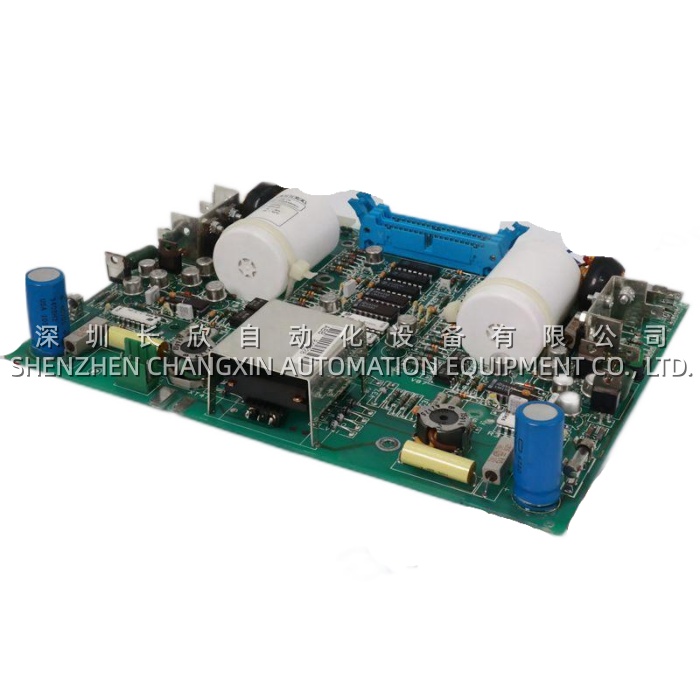
Technical Specifications
| Parameter Name | Parameter Value |
|---|---|
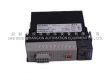
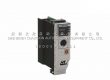
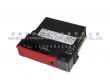
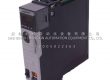
| Product Model | 3BHE022291R0101 (PCD230A) |
| Manufacturer | ABB (Heppenheim, Germany — Power Generation / Excitation) |
| Product Type | Digital Controller for UNITROL 6000 Static Excitation System (AVR) |
| Compatible System | ABB UNITROL 6000 (generator static excitation, up to ~1000 MW class) |
| Control Functions | AVR (auto voltage reg), FCR (field current reg, manual backup), PSS2B, OEL, UEL, V/Hz limiter |
| Generator Inputs | PT 63.5 V or 110 V phase-phase (3-phase V), CT 1 A or 5 A (1-phase or 3-phase I per config) |
| Interface to Power Stage | Fiber-optic link to PWF thyristor firing modules (PWF40 / PWF80 / PWFxx) |
| Communication to Plant | Modbus RTU (RS485), optional Profibus DP / IEC 61850 (via option slot) |
| Local Interface | PUx handheld / cubicle door HMI port (ABB Unitrol PC Tool config) |
| Mounting | UNITROL 6000 CMU rack (cubicle management unit, 19″ proprietary rail) |
| Control Supply | 24 VDC (from CMU PSU, which itself derives from 110 VDC or 230 VAC cubicle control voltage) |
| Operating Temperature | -10 °C to +55 °C (cubicle internal) |
| Redundancy Support | 1+1 hot-standby (two PCD230A units in one cubicle, A-active / B-standby) |
Main Features and Advantages
Full AVR + PSS + limiter suite in one card. The PCD230A isn’t just a voltage PID — it implements the full IEEE 421.5 AVR model with PSS2B (two-block, speed-input power-system stabilizer) for damping inter-area oscillations on large grids, OEL (timed overexcitation limit — “hot” and “cold” curves per IEEE) to protect the generator rotor/timing from thermal overload during system faults, UEL (underexcitation limit to keep the machine away from stator-end overheating and stability loss during light-load/high-voltage conditions), and V/Hz limiter to cap flux during overspeed or underfrequency events. For a grid-connected turbogen, that limiter stack is what keeps the unit online during a system disturbance instead of tripping on “rotor overtemperature” or “stator end overheating.” The PCD230A runs all of this in firmware, so the plant DCS only sees “AVR OK” / “Lim X Active” / “PSS Armed” — the heavy lifting is local.Fiber to PWF thyristor bridge = noise-immune firing in a kV cabinet. The UNITROL 6000 cubicle has the PCD230A in the low-voltage instrument section and the PWF thyristor modules in the power section (480 V AC input, up to several kA DC field output depending on PWF size). Firing pulses travel over short fibers from the PCD230A to each PWF gate unit — no copper logic next to several-kA switching, no dV/dt coupled into the AVR. That fiber isolation also means the PCD230A can be swapped (24 VDC backplane live, with the cubicle 110 VDC/230 VAC still up but the generator off-excitation) without arcing risk on the firing side — though ABB still recommends full cubicle isolation as standard for any controller pull.Redundant 1+1 hot-standby configs. Many UNITROL 6000 cubicles — especially on large turbogens (300 MW+) and grid-critical hydro — carry two PCD230A units in the CMU rack: A = active, B = hot-standby, synchronized over the backplane. If the A unit fails (watchdog timeout, firmware crash, backplane fault), B takes over in <100 ms, the generator stays online, and the cubicle HMI flags “Controller B Active — Replace A.” For those plants, the spare strategy is “one PCD230A per 8–10 units” because the redundancy already covers a single failure; for single-controller cubicles (smaller hydro, industrial cogens, diesel gensets), it’s “one spare per 4–6” because a PCD230A failure = gen off.Plant-communications ready. The PCD230A has an RS485 port running Modbus RTU that lands on the plant DCS or PI system — generator terminal voltage, stator current, field current, AVR mode, limiter-active flags, and PSS status all ride that register map. Optional Profibus DP or IEC 61850 (MMS) can be added via the CMU option slot for plants standardizing on those protocols. For the DCS engineer, that means the generator excitation isn’t a black box — the PCD230A telemetry tells them why the AVR trimmed up 2% during the evening peak (PSS active? OEL approaching? Manual FCR selected?).PCD230A → PCD235 evolution awareness. ABB rolled the PCD235 as the successor controller for newer UNITROL 6000 builds and the UNITROL 6500 class — more flash, faster float, better cyber/profile options. Electrically and mechanically the PCD235 seats in the same CMU rack, but firmware is not backward-compatible — a PCD235 won’t run a PCD230A parameter file without conversion, and a PCD230A won’t accept a PCD235 firmware load. For 1-for-1 failure swaps on an existing UNITROL 6000 cubicle, stay with PCD230A unless the plant already migrated the cubicle firmware to PCD235. Mixing them in a 1+1 redundant cubicle is not supported — both slots must be the same controller type.
Application Field
The PCD230A deploys wherever ABB UNITROL 6000 excitation cubicles are installed — which is essentially every generator class from small industrial cogeneration up to large utility turbogens.Utility power plants are the densest slice: coal-fired, combined-cycle, nuclear, and large hydro units spec UNITROL 6000 for static excitation (replacing older rotating exciters or UNT 5000 hybrid). A 600 MW coal unit typically has two UNITROL 6000 cubicles (main exciter + pilot exciter, or a single cubicle with 1+1 PCD230A redundancy), and the PCD230A in each is the AVR brain. During a system fault (grid voltage sag), the PCD230A‘s AVR pushes field current up within the OEL window to help the grid recover — and the PSS2B damps the post-fault swing so the unit doesn’t go unstable. On a 900 MW nuclear turbogen, the PCD230A redundancy (two units, hot-standby) is class-required — a single controller failure must not trip the reactor’s gen.Hydro plants: from 10 MW run-of-river to 500 MW pumped-storage, UNITROL 6000 + PCD230A is common. Hydro has the unique “load rejection” scenario (governor slams wickets shut, generator overspeeds, voltage rises) — the PCD230A‘s V/Hz limiter caps flux during that overspeed so the core doesn’t overflux, and the AVR ramps field down fast enough to keep terminal V under control. Pumped-storage units also see “pump mode start” (motor starting as synchronous motor, exciting from zero) — the PCD230A‘s FCR (field current reg, manual) often runs that start before handing off to AVR once the unit synchronizes.Industrial cogen and diesel gensets: paper-mill turbogens, refinery captive power, data-center diesel sync sets — UNITROL 6000 in smaller PWF power stages (PWF40 air-cooled) with a single PCD230A (no redundancy, cost-driven). The failure mode here is sharper: no redundant controller, so a PCD230A failure = gen trip = plant island or load shed.Retrofit is a steady slice: plants migrating from UNITROL 5000 (PCD200 controller, older) or even older rotating exciters to UNITROL 6000 keep the PCD230A as the controller in the new cubicle — the PWF power stage scales to the generator field, the PCD230A firmware loads the original UTK (Unitrol ToolKit) parameter file (with some conversion), and the plant DCS Modbus map stays recognizable. For spare-parts buyers, the key risk is firmware-version matching: ABB issued PCD230A under multiple firmware branches (v2.x, v3.x, v4.x) — a v2 PCD230A may not accept a v4 parameter file without a loader update. Always grab the ABB Unitrol config file (.utk or .par) from the cubicle before ordering the spare, and have the vendor verify firmware rev on the replacement PCD230A matches.