WhatsApp:+86 18005022363 WeChat: +86 18005022363
  Email:
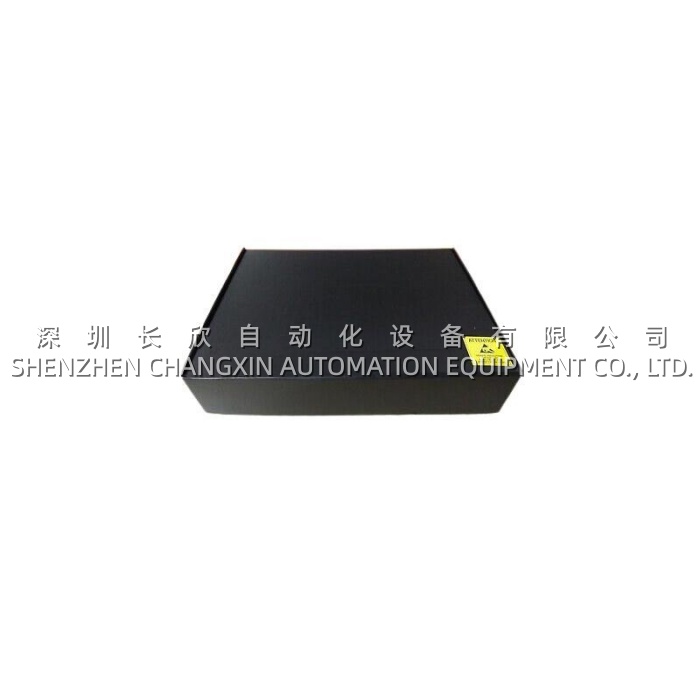
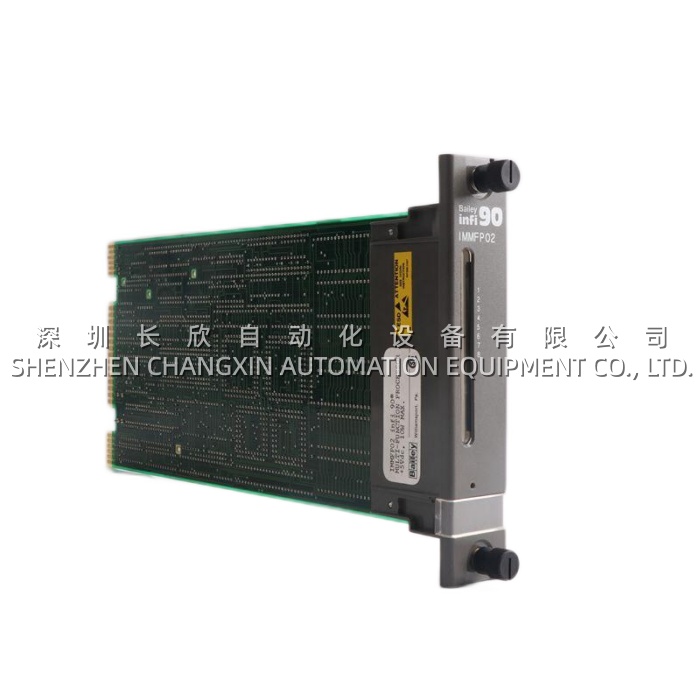
Application ScenariosA 330 MW condensing unit at a coastal thermal plant began showing “voltage wobble” after a scheduled excitation cubicle cleaning — generator terminal voltage drifted ±1.8% during steady-load P-Q dispatch, and the “EXC FAULT” light on the UNITROL 6000 front panel flickered amber every 20–40 minutes. The panel tech pulled the event log: “AVR loop instability — feedback noise threshold exceeded.” The root cause traced to the UNS2880B-P (3BHE014967R0001) in Slot 2 of the DSR rack — one of the 16-bit ADC channel’s reference buffer had drifted, corrupting the rotor-current feedback into the PI loop and causing the firing-angle output to hunt. The plant had a spare UNS2880B-P V1 on the shelf (they’d bought it three years prior “just in case”). Swap procedure: shut down the exciter (ABB recommends power-down for excitation control boards despite theoretical hot-swap — a firing-angle glitch during live swap can kick the generator onto manual), pull the 4 + 2 screw fasteners, extract the UNS2880B-P, seat the new one, torque, power up, and run the built-in AVR self-test from the front HMI. Voltage stability returned to ±0.2% within one synchronization cycle. Eighteen months later, zero repeat. The plant’s electrical supervisor noted: “The UNS2880B-P is one of those ‘if it drifts, the whole unit’s P-Q is compromised’ spares. We now keep two per UNITROL 6000 cubicle — one active, one cold.”
Parameter
| Main Parameters | Value/Description |
|---|---|
| Product Model | UNS2880B-P V1 (Order Code: 3BHE014967R0001) |
| Manufacturer | ABB (UNITROL 5000 / 6000 Excitation Series) |
| Product Category | Excitation Control & Firing Pulse Board (COB) |
| Compatible Systems | UNITROL 5000, UNITROL 6000 static excitation (DSR/RFO rack) |
| Supply Voltage (Internal) | +5 V DC, ±12 V DC (analog), +24 V DC (digital/relay), backplane-fed |
| Power Consumption | ~8 W typical |
| Control Loop Update | 10 kHz (AVR PI + limiter execution) |
| Analog Input | ±10 V DC (rotor V/I feedback), 16-bit ADC resolution |
| Measurement Input | PT secondary (gen terminal V), CT secondary (rotor I), external or on-board conditioning |
| Trigger Pulse Output | Max 6 pulses/cycle (three-phase full-controlled bridge), opto-isolated to pulse amplifier |
| Communication | CAN bus + parallel backplane bus (to redundant board / HMI / interface board) |
| Galvanic Isolation | Logic side ↔ magnetic side ≥ 2.5 kV AC |
| Protection Functions | OEL (over-excitation), UEL (under-excitation), V/Hz limit, Loss-of-Field (LOM), PT-fuse/alarm |
| Redundancy | Supports 1:1 hot-standby with second UNS2880B-P (automatic takeover) |
| Operating Temp | 0°C to +60°C (IEC 60255); some batches rated -20°C to +70°C |
| Dimensions / Weight | ~240 × 200 × 30 mm / ~0.3–0.5 kg (varies by rev) |
| Certifications | CE, IEC 60255, IEC 61000-6-2/6-4 |
Technical Principles and Innovative Values
- Innovation Point 1: 10 kHz AVR Loop with 16-bit Feedback Path. The UNS2880B-P runs the UNITROL AVR PI algorithm at 10 kHz — roughly 5× faster than legacy excitation boards (which typically topped out at 2 kHz). The 16-bit ADC on rotor voltage/current and PT-secondary terminal voltage means the PI loop sees < 0.02% quantization noise, so the firing-angle output to the thyristor bridge is smooth even during P-Q transients (e.g., line reactor switching, sudden 30% load reject). For grid-code units that need < 1% voltage regulation steady-state, this 10 kHz + 16-bit combo is non-negotiable.
- Innovation Point 2: 6-Pulse Firing + On-Board Limiter Stack. The UNS2880B-P doesn’t just compute firing angle — it distributes 6 opto-isolated firing pulses per 50 Hz cycle (one per thyristor in the three-phase full-controlled bridge) to the downstream pulse-amplifier board (e.g., GDC806A / UFC921A). Simultaneously, the onboard firmware runs OEL (ceiling curve), UEL (undrawn reactive limit), V/Hz (overflux), and LOM (loss-of-field impedance relay) — all in the same 10 kHz scan. This means the limiter can “clip” the AVR demand before it overflows the thyristor bridge, rather than relying on an external limiter relay that adds 20–40 ms latency.
- Innovation Point 3: 2.5 kV Logic–Magnetic Isolation + CAN/Backplane Dual Comms. The thyristor side of a UNITROL cubicle sees several kV of commutation dV/dt during each firing event, and the rotor-side CT/PT secondaries can float hundreds of volts off cabinet ground during a stator fault. The UNS2880B-P isolates the logic section (5 V / 24 V) from the magnetic I/O (±10 V feedback, pulse outputs) at 2.5 kV AC working — enough that a CT secondary short or a thyristor snubber flash doesn’t propagate to the CPU. Communication outward: CAN bus talks to the cubicle HMI and the redundant UNS2880B-P; parallel backplane bus talks to the interface board (e.g., UFC760BE143, covered in the prior query) which then bridges to plant DCS over PROFIBUS.
- Innovation Point 4: 1:1 Hot-Standby Redundancy. Two UNS2880B-P boards can occupy adjacent DSR rack slots, running in lockstep via CAN. If the active board fails (ADC drift, watchdog, power), the standby takes over the firing-angle computation within one 20 ms line cycle — the generator never drops to manual excitation. ABB’s default config for grid-critical units (nuclear, large hydro, black-start peakers) is redundant UNS2880B-P + redundant interface board + redundant PPC907BE CPU — three layers of no-single-point-failure.
Application Cases and Industry ValueCase 1 – 420 MW Hydro, Alpine Region. The two generating units run UNITROL 6000 with redundant UNS2880B-P boards (active + standby per cubicle). During a -22°C cold snap (ambient in the exciter bay hit -8°C, within the -20°C extended rating of that batch), Unit 2’s active UNS2880B-P threw a “ADC Reference Fail” watchdog and the standby seamlessly took over — the operator saw “REDUNDANCY SWITCH” on the HMI but the generator never left auto, voltage held ±0.15%. The plant E&I lead pulled the failed UNS2880B-P during the next outage — one of the 5 V rail electrolytics had fractured (cold + 14 years of thermal cycling). They replaced it with a 3BHE014967R0001 V1 spare, and the redundant pair re-synced. “If we’d been single UNS2880B-P, that -22°C night would have been a manual-excitation event and a grid penalty. The redundant config paid for itself once.”Case 2 – 600 MW Coal-Fired, Southeast Asia. The UNITROL 5000 on the main generator had been showing intermittent “PT Fuse Alarm” on Phase B — the UNS2880B-P‘s onboard PT-fault detection (compares |VphA-B-C| against a 3% asymmetry threshold) was catching a slow-melting fuse in the VT secondary cabinet 40 m away, before the fuse opened fully and caused a “loss-of-feedback” AVR trip. The techs replaced the VT fuse during a coffee break, cleared the alarm on the UNS2880B-P HMI, and avoided an unplanned desync. The lead protection engineer: “Most excitation boards just compute firing angle. The UNS2880B-P also watches the PT/CT health. That PT-fault detect has saved us twice — once on a loose secondary terminal, once on a squirrel-chewed VT lead in the yard.”Related Product Combination SolutionsThe UNS2880B-P (3BHE014967R0001) sits in the DSR/RFO excitation rack; it’s one of four key boards in the chain:
- UFC760BE143 (3BHE004573R0143) – Interface board (previous query); the UNS2880B-P talks CAN/backplane to the UFC760BE143, which then bridges to plant DCS via dual PROFIBUS. If you’re buying UNS2880B-P spares, you likely also hold UFC760BE143 in the same rack.
- PPC907BE – AC800PEC CPU that sits upstream of the UFC760BE143 in some UNITROL 6000 configs (the “hybrid” architecture: UNS2880B-P does AVR+firing, PPC907BE does higher-level coordination). Not all UNITROL 6000 racks have PPC907BE (some are pure DSR), but if yours does, it’s the head-end.
- GDC806A / UFC921A101 – Pulse amplifier boards downstream of the UNS2880B-P; the UNS2880B-P sends 6× opto-fired low-power pulses, the GDC806A amplifies them to the ~2 A gate-drive level the thyristors need. If your “EXC FAULT” is “pulse amp fail” not “AVR fail,” the GDC806A is the suspect, not the UNS2880B-P.
- RDCU Power Cabinet – The thyristor bridge + DC smoothing reactor + rotor disconnect that the whole UNS2880B-P → GDC806A → thyristor chain controls.
- UNS2880A – Earlier-generation excitation board (single-board, no redundant hot-standby, 2 kHz loop). If your BOM says “UNS2880A” and you want to upgrade, the UNS2880B-P V1 is the designated successor — same DSR rack footprint, adds CAN, 10 kHz, redundancy.
- 3BHE014967R0101 / R0201 – Likely newer revs of the same UNS2880B-P (component EOL updates, e.g., electrolytic → polymer, ADC reference trim). If your BOM calls for R0001 and stock is tight, check whether R0101 is backward-compatible (ABB typically revs for component lifecycle, firmware stays same).