WhatsApp:+86 18005022363 WeChat: +86 18005022363
  Email:
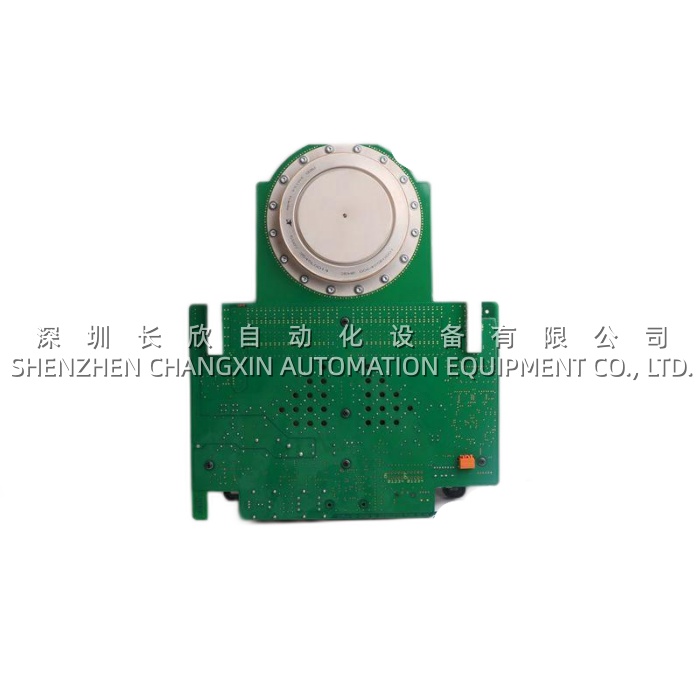
Product Overview
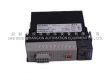
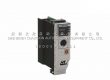
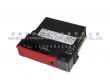
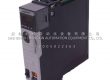
The 3ADT314500R1001, commercially designated SDCS-FEX-4, is a field excitation control module (exciter board) manufactured by ABB and purpose-built for the DCS500 and DCS800 series industrial DC drive systems. Within the DC-drive cabinet architecture, the SDCS-FEX-4 occupies the “field side” of the power-control chain: it converts a 3-phase AC supply (200–500 VAC, 50/60 Hz) into a precisely regulated DC current — up to 25 A nominal — that feeds the field winding of the DC motor, while the armature side is handled by the main power bridge elsewhere in the cabinet. The module uses a full-wave thyristor (SCR) bridge governed by an onboard microprocessor, giving ±1% field-current accuracy and supporting automatic field-weakening operation above motor base speed — a capability that makes the SDCS-FEX-4 indispensable on rolling-mill coilers, wire-draw benches, mine-hoist Ward-Leonard sections, and paper-machine sectional drives where torque stability and extended RPM range both matter.Physically the SDCS-FEX-4 mounts as a plugin / chassis unit inside the DCS drive cabinet, communicating with the drive’s main control board (SDCS-CON-2 or SDCS-CON-4) over an internal high-speed serial link — fiber or backplane depending on cabinet generation. This tight coupling lets the SDCS-FEX-4 receive flux-reference commands from the DCS800 firmware, report field voltage/current/thermal telemetry back to the drive HMI, and trip on field-loss or overcurrent with automatic fault upload to the SDCS-CON. Because the exciter lives inside the drive enclosure rather than in a separate excitation cabinet, the SDCS-FEX-4 approach reduces panel footprint by ~30% versus traditional external-exciter solutions and simplifies EMC/wiring discipline. For spare-parts buyers, the key sibling to know is the SDCS-FEX-4A (3ADT314500R1501), which carries ABB’s COATED corrosion-resistant lacquer and extends the operating envelope to -20…+60 °C — the SDCS-FEX-4 (R1001) is the standard uncoated build, -10…+55 °C, and the two are mechanically/interfaces-identical but coating-differentiated for environment.
Technical Specifications
| Parameter Name | Parameter Value |
|---|---|
| Product Model | 3ADT314500R1001 (SDCS-FEX-4) |
| Manufacturer | ABB |
| Product Type | Field Excitation Control Module (DC Drive Exciter Board) |
| Compatible Drives | ABB DCS500, DCS550, DCS800 series DC drives |
| Input Voltage | 3-phase AC 200–500 V, 50/60 Hz |
| Output Current | Up to 25 A DC (nominal, continuous; depends on cooling / cabinet airflow) |
| Control Topology | Full-wave thyristor (SCR) bridge + microprocessor-based current regulation |
| Current Regulation Accuracy | ±1% (vs. analog exciter heritage) |
| Communication to Host | Internal serial bus / fiber link to SDCS-CON-2 / SDCS-CON-4 control board |
| Protection Functions | Overcurrent, overvoltage, field-loss detection with automatic trip to SDCS-CON |
| Mounting | Plugin / chassis mount inside DCS drive cabinet |
| Cooling | Natural convection / internal cabinet airflow |
| Operating Temperature | -10 °C to +55 °C (standard uncoated; FEX-4A coated version: -20 °C to +60 °C) |
| Dimensions (H×W×D) | Approx. 270 × 50 × 190 mm (module assembly with heat dissipation profile) ; PCB-core footprint ~170 × 100 × 50 mm |
| Weight | ~1.5 kg (module assembly) ; bare board ~0.4 kg |
Main Features and Advantages
Microprocessor-regulated SCR excitation = ±1% flux accuracy. The SDCS-FEX-4 replaces legacy analog exciter cards with a digital current loop: the onboard processor samples field current, compares to the SDCS-CON reference, and fires the SCR bridge accordingly. ±1% regulation versus older generations means torque stays stable on a rolling-mill coiler even as slab temperature and winding tension fluctuate — the kind of drift that analog exciters let slip into “tight-bar” vs. “loose-bar” coil-quality complaints. For wire-draw and foil-rolling where tension = field current × armature current, that accuracy compounds into yield.Native field-weakening integration with DCS800 firmware. One of the SDCS-FEX-4‘s strongest selling points is how little the drive engineer has to do to get above-base-speed operation. The DCS800 firmware handles “automatic field weakening” natively: once armature voltage hits the rail, the SDCS-FEX-4 ramps field current down under processor control, extending the motor’s RPM range without sacrificing torque consistency. On a mandrel uncoiler where the strip linear speed must stay constant while coil diameter shrinks 5:1, that smooth flux taper is what keeps strip tension flat — and the SDCS-FEX-4 + DCS800 combo does it without external function generators or PLC ramp logic.Built-in diagnostics cut MTTR. The SDCS-FEX-4 continuously monitors field voltage, field current, and its own thermal state. A field-loss event (open field winding, brush drop, cabling fault) or an overcurrent (SCR shoot-through, motor-field short) triggers a Fault that propagates to the SDCS-CON and surfaces on the drive operator panel and the plant PLC. For a maintenance electrician on a midnight rollover at a steel mill, that “FEx Loss” or “FEx OC” fault code is a 10-minute diagnosis vs. an hour of meggering motor fields — the SDCS-FEX-4 earns its keep there.Internal-bus architecture kills the external exciter cabinet. Traditional DC drive installs sometimes hung a separate wall-mounted exciter cubicle next to the armature drive — more footprint, more wiring, more EMC grief. The SDCS-FEX-4 lives on the DCS500/DCS800 internal mechanical framework, draws power from the same 3-phase feeder the drive sees, and talks to the SDCS-CON over the internal serial link. ABB quotes ~30% panel-footprint reduction versus the external-exciter approach, but the subtler win is wiring: field-cable homeruns from the SDCS-FEX-4 DC terminals to the motor field box are short (drive-to-motor in the same bay), and the control signals never leave the drive backplane.FEX-4 vs. FEX-4A coating choice. The SDCS-FEX-4 (3ADT314500R1001) is the standard uncoated build; the FEX-4A (R1501) adds ABB’s COATED conformal lacquer for chemical/fumes/corrosion environments (cement, fertilizer, seawater-adjacent pump houses). Same mechanicals, same pinout, same firmware handshake — the SDCS-FEX-4 can be substituted by a 4A in a corrosive plant, but putting a plain SDCS-FEX-4 into a chlor-alkali cell room or a coastal RTG hoist drive will see the PCB scalp over in 3–4 years. For inland steel or paper-machine sections, the uncoated SDCS-FEX-4 is the right-cost choice.