WhatsApp:+86 18005022363 WeChat: +86 18005022363
  Email:
Application
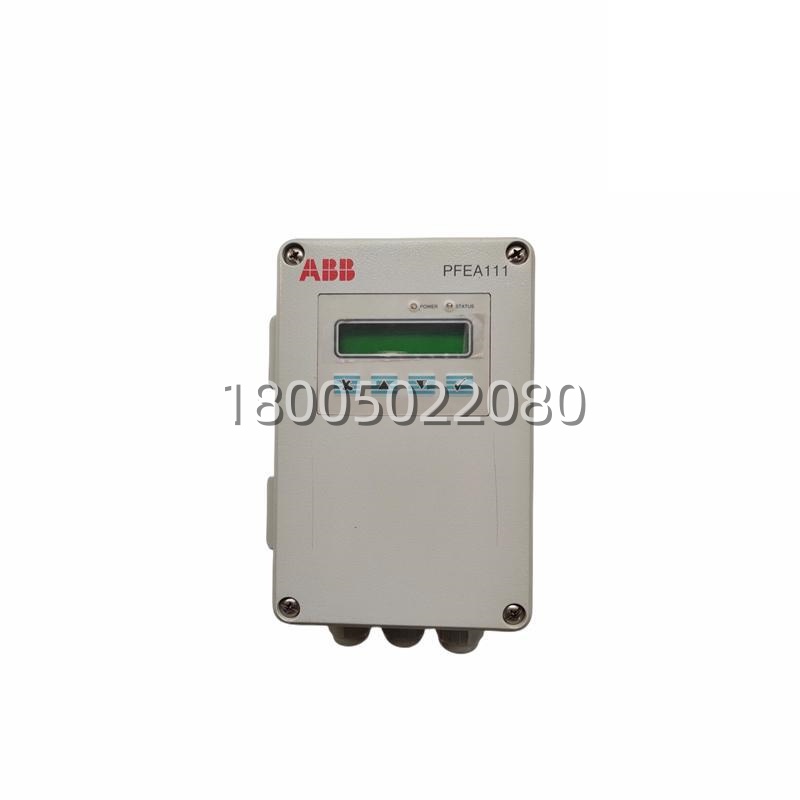
ScenariosOn a 6-high cold-tandem’s No. 5 stand exit-bridle, the original tension looper used a PFEA111-20 in an IP20 DIN rail inside the main MCC—fine for the dry room, but the bridle’s two PFCL 301-20 pressure heads (20 kN each, A+B total tension) were hitting saturation during thread-up when the strip tail whipped and spiked to ~28 kN for 2–3 seconds. The plant upgraded to PFEA111-65 + PFCL 301-65 (65 kN heads): the PFEA111-65‘s front-end differential amp is scaled for the 65 mV/V range, so the same whip spike only hits 43 % of FS instead of clipping. More importantly, the rewinder section’s washdown zone (seal-oil mist + weekly hose-down) had killed two IP20 PFEA111-20 units in three years—the PFEA111-65‘s IP65 gasketed housing went straight onto the machine-side strut 3 m from the rewinder, no extra stainless box, and the 2×16 LCD let the winder operator jog-zero the load cells without calling the electrical room. Eighteen months in, zero PFEA111-65 faults, and the bridle tension ripple (measured at the dancer roll) dropped from ±4.2 % to ±1.8 % FS because the 65 kN head + PFEA111-65 combo had better SNR at the normal 12–18 kN operating point.h2
Parameter
| Main Parameters | Value/Description |
|---|---|
| Product Model | PFEA111-65 (3BSE028140R0065) |
| Manufacturer | ABB |
| Product Category | Tension Electronics Unit (Pressductor Series) |
| Sensor Inputs | 2 × load cell / Pressductor head (350–1000 Ω), A, B, A+B, A–B modes |
| Sensor Excitation | 0.5 A rms @ 330 Hz (AC, optimized for ABB压磁) |
| Max. Cable Resistance | ≤ 5 Ω per sensor (≤ 10 Ω total for 2) |
| Measurement Range | 0–65 kN (sensor-dependent; module itself 0–65 mV/V signal input) |
| Analog Output | 1 × voltage –5 … +11 V DC (max 5 mA); 1 × current 0–21 mA (max 550 Ω) |
| Control | Adaptive PID, auto-tuning, taper tension, speed compensation |
| Filter Time Constants | 15 / 30 / 75 / 250 / 750 / 1500 ms (selectable step) |
| Accuracy | ±0.1 % FS (steady-state) |
| Display | 2 × 16 character multi-language LCD, units: N / kN / kg / lbs / N·m etc. |
| Supply Voltage | 24 V DC (18–36 V), ≤ 7.5 W; some builds also accept 100–240 V AC |
| Operating Temp. | -40 °C to +70 °C (wide-temp version; standard +5 to +55 °C) |
| Protection | IP65 / NEMA 4X (sealed housing version); also avail. IP20 DIN rail |
| Mounting | 35 mm DIN rail (IP20) or wall-mount sealed enclosure (IP65) |
| Dimensions (IP65 housing) | ~122 × 96 × 60 mm (W × H × D, approx.) |
| Weight | ~0.5 kg (IP65 version) |
| Communication | None on PFEA111 (analog out); PFEA112 adds Profibus DP, PFEA113 adds 4 sensors + DP |
| Certifications | CE / UL 61010-1 / CSA C22.2 No.1010 |
| Lifecycle | Active legacy (PFEA111/112/113 still supported, though Pressductor line is mature) |
Technical Principles and Innovative Values
- Innovation Point 1: 330 Hz AC Excitation for Pressductor Heads. Unlike strain-gauge amps that DC-excite (prone to drift and thermoelectric error), the PFEA111-65 pushes 0.5 A rms @ 330 Hz through the ABB压磁 (pressductor) cell. The AC carrier makes the front-end immune to thermal EMF and ground loops—critical on a 65 kN cell where 0.05 % drift = 32.5 N on a steel strip you’re trying to hold at 15 kN.
- Innovation Point 2: Dual-Channel A/B/SUM/DIFF in One Box. The PFEA111-65 reads two load cells (e.g., left + right of a rewinder trunnion) and can output A+B (total tension) or A–B (off-center / telescoping diagnosis). That A–B differential is how you catch a reel “walking” on the mandrel before the edge guide even sees it—one PFEA111-65 replaces “two single-channel amps + a subtractor” in older designs.
- Innovation Point 3: IP65 = Field-Mountable, Not Cabinet-Bound. The “-65” housing is a gasketed polycarbonate box with a transparent lid and membrane keypad. You bolt it to the machine-side strut 2 m from the rewinder, the PFCL 301-65’s 15 m shielded pair lands straight in, and the 0–21 mA output runs 30 m to the MCC’s AI card. No stainless junction box, no climate-controlled cabinet, no “signal degraded by long AI cable” argument. In washdown (paper wet-end, coating kitchen, battery slurry mixing) this alone saves one enclosure per zone.
- Innovation Point 4: Adaptive PID + Taper Tension + Simulation Mode. The PFEA111-65 isn’t just an amp—it runs the loop. Material change (foil → paper → PET)? Hit “auto-tune” and the adaptive PID reshapes in ~0.5 s. Running a conical reel? Engage taper-tension (linear or S-curve) so core tension ≠ full-roll tension—prevents core crush on soft films. Pre-commissioning? “Simulation mode” exercises the PID + output ramp without a real sensor hooked up—zero-risk loop check before the first strip threads.
- Innovation Point 5: 65 kN Scaling vs. 20 kN. The front-end differential amp on the PFEA111-65 is gain-matched to the 65 mV/V full-scale of a PFCL 301-65. Put a 20 kN cell on it and you lose resolution; put a 65 kN cell on a -20 and you clip at 20 kN. The “-65” suffix is range, not just “IP65″—ordering the wrong one silently kills your loop quality.
h2 Application Cases and Industry ValueIn a European lithium-electrode coating line (6 μm Cu foil, 1050 mm width, tension 12–48 N across the run), the original tension looper used a third-party strain-gauge amp that couldn’t hold ±0.5 % through the dryer’s 80 °C thermal cycles—coater-gap variation showed up as ±3 μm coating thickness drift, and the yield hit 91 %. The integrator swapped to PFEA111-65 + two PFCL 201-65 low-profile heads (65 kN range, but the foil only loads ~30 N—deliberate 2000× headroom for chemical stability). The PFEA111-65‘s 330 Hz AC excitation rejected the dryer’s 50 Hz harmonic bleed, and the adaptive PID settled the 15 ms → 750 ms filter step during “tail-thread” (high抖动) vs. “steady run” (low filter). Yield climbed to 96.4 % in week 3, and the PFEA111-65‘s “max load memory” caught a 210 N spike during a bridle-slip event—logged as Err-05 in the unit’s diag—that let the process engineer retune the bridle-wrap angle. The coating lead’s note: “The PFEA111-65 is the first tension amp we’ve had that doesn’t need a yearly zero-recal after a dryer upset.”A second case: a US Gulf wire-rope take-up (65 kN max, normal run 18–42 kN) originally ran PFEA111-20 + PFCL 201-20. During a rope-break recovery, the take-up overspooled 1.5 layers because the 20 kN head saturated at the whip (28 kN for 1.8 s) and the PFEA111-20’s output clamped at 21 mA—drive thought “tension OK” while the rope piled. They upgraded to PFEA111-65 + PFCL 301-65 (65 kN head, IP65 housing because the take-up is outdoors under a roof leak that soaked the old MCC enclosure twice). Post-retrofit, the same whip hits 43 % of FS on the PFEA111-65, output ramps clean, drive sees the overshoot and backs off the torque—no pile-up. The maintenance super: “The PFEA111-65 cost 200 more than the -20. The pile-up cost us 14 k in scrapped rope + 6-hour restart. Math is easy.”