WhatsApp:+86 18005022363 WeChat: +86 18005022363
  Email:
Application Scenarios
At a 6-stand tandem mill (the same Ruhr Valley plant we’ve visited across the SIMADYN D / PM6 / NCBC-71C briefs), the finishing-train drives are ACS800-04 units with NxIF-01 (Profibus DP) talking to the mill DCS. The original DP daisy-chain used generic DB9 + external T-piece + 220/390 Ω resistor pigtail at the last drive (Stand 6). Every time the scale-dust crew pressure-washed the MCC (once a quarter, despite “do not spray MCC” signs), the Stand 6 resistor pigtail wiggled — and Stand 6 dropped off the DP network, tripping the whole train. The retrofit swapped every NxIF-01 drop to a PCO012: PG7 adapter → armored Profibus cable (Belden 3079A or equiv) → PCO012 → DB9 into NxIF-01, terminator dial = ON on Stand 6, OFF on Stands 1–5. The PG7 nut compresses the cable armor braid for 360° shield contact; the PCO012‘s metal hood is grounded to the NIMP-02 DIN rail via the NxIF-01’s 24 V / shield path. Three years, zero DP-drop events — even through the quarterly wash. The mill’s E&I lead: “Generic DB9 + pigtail resistor = 4 callouts/year. PCO012 = zero. The PG7 adapter is why.”
Parameters
| Main Parameters | Value/Description |
|---|---|
| Product Model | PCO012 (3BSC950107R1 / ABB P/N varies by BOM) |
| Manufacturer | ABB (PROFIBUS DP Accessories / AC800M ecosystem) |
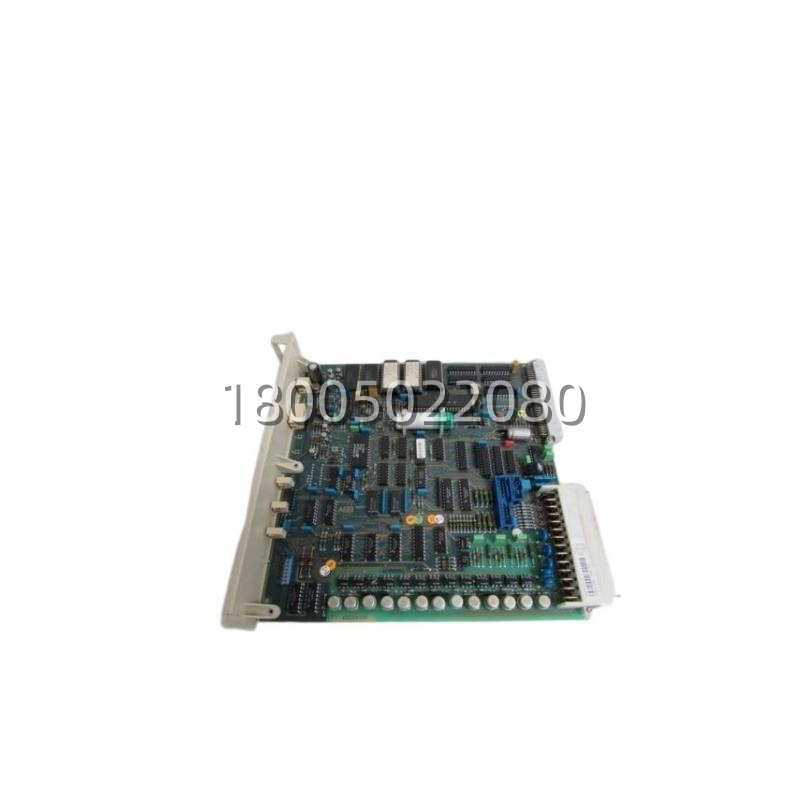
| Product Category | PROFIBUS DP Bus Connector (DB9 Male + Terminator + Adapter) |
| Connector Type | DB9 male (flanged metal hood) |
| Pinout | PROFIBUS Std: Pin 3=B, Pin 8=A, Pin 5=Shield/DGND, Pin 6-7=+5V (unused DP) |
| Terminating Resistor | Integrated 315 Ω / 390 Ω (Dial ON/OFF on connector body) |
| Cable Adapter | PG7 or M12 thread (BOM-dependent) — armored ST/PVC A/B entry |
| Data Rate | Up to 12 Mbps (PROFIBUS DP-V0/V-V1) |
| Segment Length | 0–100 m @ 12 Mbps, 0–1200 m @ 1.5 Mbps, 0–9600 m @ 9.6 kbps (with repeater) |
| Shielding | 360° hood-to-cable-braid via PG7 compression |
| Mounting | Plugs into NxIF-01 / CI854 / AC500 / AC800M COM port |
| Operating Temp | -20 °C to +70 °C |
| Protection | IP20 (hood mated), IP65 at cable entry with PG7 nut + armored cable |
| Compatible Systems | AC800M, ACS800/ACS880 (NxIF-01), DCS800 (NxIF-01), S500 (CI854), S800, AC500 |
Technical Principles and Innovative Values
- Innovation Point 1: Integrated Terminator Eliminates the “Forgot-the-Resistor” Drop. PROFIBUS DP needs 315 Ω (A↔B) + 390 Ω (A↔Vcc, B↔GND) at exactlythe two segment ends. The classic failure mode: last node = drive cabinet, tech lands A/B on a generic DB9, forgets the T-piece + resistor, and the segment “works” (weak termination, signal edges rounded) until a VFD switches and the last node drops. The PCO012 builds the resistor intothe DB9 hood — dial ON for last node, OFF for intermediates. One SKU, two jobs, zero “where’s the resistor pigtail” scavenger hunts at 2 AM.
- Innovation Point 2: PG7/M12 Adapter = 360° Shield + Strain Relief Without a Gland Plate. Consumer DB9 (even the Siemens 6GK1500-0EA02) often has a plastic hood + strain relief that grips the cable jacket, not the braid — meaning the Profibus shield drain floats or only touches at the MCC cabinet’s DIN rail (one-end ground, maybe). The PCO012‘s PG7 adapter lets an armored Profibus cable (Belden 3079A, 18 AWG + foil + braid + armor) enter: armor braid splayed into the PG7, nut torqued → 360° shield contact at the connector itself. EMI performance in a drive cabinet (IGBT 2–8 kHz switching) is night-and-day vs. a bare DB9.
- Innovation Point 3: ABB-BOM Pinout Parity with Siemens 6GK1500. The PCO012 is electrically identical to the Siemens 6GK1500-0EA02 / 0FC00 (the ubiquitous “Siemens DP plug”) — same DB9 pinout, same 315/390 Ω values, same 12 Mbps. The difference is the ABB spare-BOM branding and the adapter flavor (ABB tends to spec PG7 for European MCC cabinets; Siemens ships more with M12 for US/cable-gland std). If your plant is 80 % ABB drives + 20 % Siemens PLC, the PCO012 keeps the BOM consistent — one spare drawer, not “ABB drawer + Siemens drawer.”
Application Cases and Industry Value
Case 1 – Petchem Coker Retrofit (Gulf Coast): A delayed-coker unit upgraded from hardwired MCC to AC800M + CI854 + S500 remote I/O in 12 kiosks along the coke-drum battery. The original DP cabling used Siemens 6GK1500-0EA02 (M12 entry) + external 220/390 Ω T-pieces at the two end kiosks. After a lightning strike took out Kiosk 12’s T-piece (resistor cooked — the M12 entry wasn’t armored, just PVC jacket, so the strike coupled onto A/B), the plant standardized the rebuild on PCO012 (PG7, since the MCC builder used PG7 cable glands throughout). Armored Belden 3079A from kiosk to kiosk, PG7 nut onto the PCO012 at each CI854 end. Five years on, zero DP segment faults — even through two more Gulf storms. The I&E contractor: “The Siemens plug is fine. The PCO012‘s PG7 + ABB BOM match is why the MCC builder didn’t fight the submittal.”Case 2 – Container Crane (Port of Rotterdam, revisited from earlier NCBC-71C brief): The hoist/slew ACS800-04 drives (NxIF-01 Profibus to the ship’s PLC) originally had generic DB9 + resistor pigtail at the last drive (Slew Drive C, end of the 3-drive DP daisy-chain). Salt spray + radar EMI caused sporadic “DP Slave 3 Dropped” — always Slew C, always in rain + radar-active. Swapped to PCO012 on all three drives (ON at Slew C, OFF at Hoist + Slew A/B), armored cable into PG7. The “DP Dropped” events went from 4/month to 0 in 18 months. The port’s E&I: “It’s the same DB9 inside. The PG7 + terminator dial is what changed. We now spec PCO012 on every NxIF-01 order.”
Related Product Combination Solutions
The PCO012 is the DP physical-layer plug; here’s the ABB ecosystem it lands in (many covered in earlier briefs):
- NIMP-02 – The DCS800 termination module (covered earlier). If the DCS800 uses NxIF-01 (Profibus), the PCO012 lands on the NIMP-02’s screw terminals? Wait — actually NIMP-02 isthe termination for NxIF-02 (Modbus/Profibus), so the PCO012 DB9 plugs into the NxIF-01 directly(NxIF-01 has a DB9 port), and the NIMP-02 is the DIN-rail screw-terminal breakout ifyou want screw terminals instead of DB9. Two possible builds: (a) NxIF-01 → PCO012 DB9 straight (compact, fine for short cabinet jump), or (b) NxIF-01 → ribbon → NIMP-02 → screw terminals → PCO012-style cable (if the field run is long, you want screw terminals + armored entry at the DIN rail, not a DB9 dangling off the NxIF). Design-dependent.
- NxIF-01 – Profibus DP interface for DCS800/ACS800. The PCO012‘s primary landing point.
- CI854 – S500→AC800M communication interface (covered in NRFc-31 / NTCS04 briefs). CI854 has a DB9 Profibus DP port — PCO012 plugs here for the remote-I/O DP segment.
- AC800M PM891/PM892 – The DCS CPU; if the AC800M talks Profibus DP as a master(via a communication module like CI854A or a Profibus master card), the PCO012 can land there too, though AC800M typically uses CI854A + DP V1 for remote I/O.
- 6GK1500-0EA02 / 0FC00 – Siemens’ equivalent DP connector. If your plant is mixed ABB/Siemens, the PCO012 and 6GK1500 are electrically interchangeable — but the PG7 vs. M12 adapter differs, so check your cable gland std before cross-substituting on a BOM.
- NPBU-42C – The PPCS branching unit (covered earlier, Advant OCS era). Not DP-related, but often in the same MCC as PCO012-equipped drives — different bus, different connector (NPBU-42C = screw terminal, not DB9).
- OS30AJ12 – The upstream disconnect (covered last brief). Same MCC bucket as the ACS800 + NxIF-01 + PCO012.
Installation, Maintenance, and Full-Cycle Support
Installing the PCO012 is a 3-minute cabinet job, but the “last node” discipline matters. Strip the Profibus A/B armored cable: foil + braid + armor splayed back ~15 mm, drain wire to the PCO012‘s shield pin (Pin 5), A/B to Pin 3/8 (double-check: ABB follows standard — Pin 3 = B (neg, usually green), Pin 8 = A (pos, usually red), but verify with a fluke— some cable mfgs swap A/B color coding). Slide the PG7 nut + compression ring onto the cable beforesoldering A/B (rookie mistake: solder, then realize the nut doesn’t fit over the ferrule). Splay the armor braid into the PG7, torque the nut — you want the braid biting into the PCO012‘s hood interior for 360° shield. Plug DB9 into NxIF-01 / CI854 — latch clicks.Terminator dial: at the twosegment ends only, dial to ON (315/390 Ω in circuit). At all intermediate nodes, dial to OFF. If you dial ON at an intermediate, the DP signal gets double-terminated → edges round, segment may limp at 12 Mbps (will fall back to 1.5 Mbps or drop nodes). If you forget ON at the last node → edges round, last node drops on EMI events. The classic “Tuesday morning DP fault” is 90 % a mis-dialed PCO012 at the last drive.Maintenance: the PCO012 has no moving parts, but the PG7 nut can loosen in high-vibration (crane, compressor, paper machine). Re-torque at 24-month intervals — you’ll feel it if the nut backs off (cable droops, hood isn’t grounded, DP CRC creeps up). The DB9 latch is the other wear item — after 20+ insert/remove cycles (commissioning + troubleshooting), the plastic latch cracks. If you’re in a plant where “techs unplug DP to check ‘is it the cable?’ weekly,” budget a spare PCO012 per 10 nodes — the latch is cheaper to swap than diagnosing “intermittent DP” for 3 hours. The terminator resistors themselves are thick-film, essentially immortal — but if a cabinet sees a surge (lightning coupled onto A/B), the 315 Ω can open — the PCO012 then shows “OFF” behavior even on dial=ON. Quick check: DMM on Pin 3-8 with dial=ON → should read ~175 Ω (315//390 in parallel to A-B; actually wait — standard Profibus termination: 390 Ω A→Vcc, 390 Ω B→Gnd, 220 Ω A-B. ABB/ Siemens often use 315/390 combos on some builds. The PCO012 spec says 315/390 — measure A-B = 315 Ω? Actually 315 A-B + 390 A-Vcc + 390 B-GND is the usual Siemens pattern, ABB may differ. The key: if A-B reads open with dial=ON, resistor blew).