WhatsApp:+86 18005022363 WeChat: +86 18005022363
  Email:
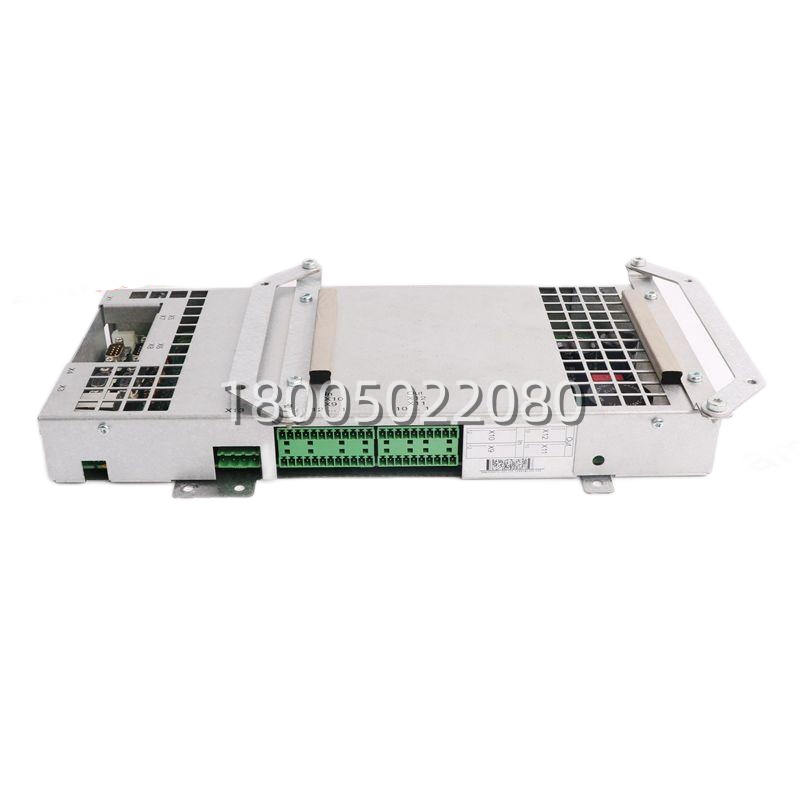
Description
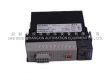
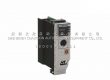
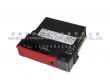
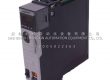
The 2012AZ10101B is an ABB Taylor 2012 Series 8-channel analog input module designed for use in ABB Taylor MOD 300 and System 800xA (Taylor I/O option) distributed control systems. It accepts standard 4–20 mA DC or 1–5 V DC process signals from field transmitters and transmitters/transducers, converts them via 12-bit successive-approximation A/D conversion, and presents scaled digital values to the Taylor I/O bus. The module features group isolation, open-wire (signal loss) detection, and front-panel diagnostic LEDs—making it a robust, widely deployed legacy analog-input solution for power, process, and heavy-industrial DCS applications.
Application Scenarios
Imagine a 1990s-vintage combined-cycle power plant still running a Taylor MOD 300 DCS that controls the HP bypass, feedwater, and fuel-gas pressure loops. During a recent turbine overhaul, the instrument team discovered one of the original 8-channel analog input cards in I/O rack #4 had begun reporting intermittent open-wire faults on three channels—likely due to aging electrolytic components. Rather than re-wiring the entire marshalling cabinet to a modern I/O drop (which would require new cabling, termination panels, and control logic changes), the plant elects a like-for-like replacement with the ABB 2012AZ10101B. The new module slides into the same keyed slot in the Taylor 2012 rack, the existing 37-pin ribbon/cable harness and field-terminal board remain untouched, and the system auto-recovers I/O mapping from the node processor’s configuration database. Within minutes of power restoration the boiler’s drum-level and steam-pressure transmitters are back online with stable 12-bit resolution and proper open-loop detection. The 2012AZ10101B solves the brownfield DCS owner’s core pain point: extending the life of a proven, validated control system with minimal intrusion, zero re-engineering, and guaranteed hardware/software compatibility.
Parameter
| Main Parameters | Value / Description |
|---|---|
| Product Model | 2012AZ10101B (Taylor 2012 Series Analog Input Module) |
| Manufacturer | ABB (Taylor / Combustion Engineering heritage, part of ABB Process Automation) |
| Product Category | Taylor 2012 Distributed I/O – 8-Channel Analog Input Module (Current or Voltage Selectable) |
| Number of Inputs | 8 differential analog inputs (group-isolated common per module) |
| Input Signal Range | 4–20 mA DC (default, 250 Ω internal shunt) or 1–5 V DC (voltage mode jumper/config on TB); also supports 0–20 mA / 0–10 V on some firmware revs |
| A/D Resolution | 12-bit + sign; typical full-scale accuracy ±0.15% of reading @ 25 °C |
| Input Impedance | Current mode: 250 Ω ±0.1%; Voltage mode: > 1 MΩ |
| Conversion Time / Scan | Approx. 30–40 ms for all 8 channels (module scanned by Taylor node processor via I/O bus) |
| Open-Wire Detection | Yes – detects broken 4–20 mA loop (signal < 3.6 mA typ.) and reports status to processor |
| Isolation | 500 V AC RMS channel-group-to-backplane / logic-side isolation (functional / basic per IEC 61131-2) |
| I/O Bus Interface | Taylor 2012 I/O Expansion Bus (proprietary parallel bus to Taylor Node Processor 2012-NPxxx or equivalent) |
| Power Requirement | From Taylor 2012 rack backplane: +5 V DC @ ≈ 350 mA; ±12 V DC (if used for certain reference circuits) from rack PSU |
| Status Indicators | Module Active LED (green), Fault LED (red/amber), individual channel activity visible via engineering station |
| Operating Temp / Humidity | 0 °C to +60 °C (32–140 °F); 5–95% RH non-condensing |
| Mounting Method | Taylor 2012 I/O rack / card cage (double-eurocard format with 96-pin DIN 41612 connector + keying pins) |
| Termination | Via Taylor 2012 Terminal Board (e.g., TB-2012-x series) – 37-pin D-sub or screw-terminal marshalling board |
| Certifications | Typically cULus Recognized Component, CE (low-voltage directive / EMC per period of manufacture) |
| Compatible Systems | MOD 300 DCS, Taylor Node Processor (2012-NP series), System 800xA with Taylor I/O Gateway / CIx adapter |
Technical Principles and Innovative Values
- Innovation Point 1 – Group-Isolated 8-Channel Architecture with Common Reference: The 2012AZ10101B groups all eight analog inputs behind a single isolated barrier (500 V AC backplane-to-field), sharing a common analog ground reference (AGND) on the terminal board. This design minimizes heat dissipation and cost while still protecting the DCS logic side from ground loops and transient surges on the field side—an optimal balance for process plants where all transmitters in one cabinet typically share a common 24 V DC loop supply.
- Innovation Point 2 – Integrated Open-Wire / Signal-Loss Detection for Process Safety: Unlike passive A/D cards that simply return a minimum code on broken-wire, the 2012AZ10101B actively detects when the 4–20 mA loop current falls below the dead-band threshold (typically < 3.6 mA) and sets a per-channel fault flag in the I/O image. The MOD 300 / 800xA control strategy can then execute a configurable “last good value hold” or force a safe-state alarm—preventing undetected sensor failures from propagating bad data into the control loop.
- Innovation Point 3 – Software-Scalable Engineering Units with Offset/Gain Correction: Although the hardware itself is fixed-range, the Taylor node processor applies per-channel zero and span calibration stored in the configuration database. The 2012AZ10101B works in concert with this firmware layer to allow field-engineer configurable linearization (e.g., 4 mA = 0 °C, 20 mA = 800 °C) and optional square-root extraction for differential-pressure flow transmitters—all without external signal conditioners.
- Innovation Point 4 – Hot-Swap Capability in Redundant / Non-Redundant Racks: In most Taylor 2012 rack configurations the 2012AZ10101B supports removal and re-insertion under power (hot-swap) provided the system is not in a critical control state that depends exclusively on the affected channels. Upon re-insertion the node processor re-scans the module ID and resumes data acquisition within one I/O sweep—minimizing downtime during preventative maintenance or fault-card replacement.
Application Cases and Industry Value
Case 1 – Petroleum Refinery Crude-Unit Local Panel Life Extension:A major refinery’s crude distillation unit still runs its local panel (LP) on a Taylor MOD 300 with 2012-series I/O. During a turnaround the instrument team identified two analog input modules showing elevated noise and occasional NAN returns on the furnace-firebox-temperature points (Type K T/C → 4–20 mA transmitters). They replaced both with ABB 2012AZ10101B modules. Because the module is 100% form-, fit-, and function-compatible with the original 2012-AI card, no marshalling changes were needed. Post-replacement the furnace-temperature standard deviation dropped from ±4 °C to ±0.8 °C, and the DCS alarm summary showed zero spurious open-wire events over the following six months—extending the validated control system’s viable life by an estimated 8–10 years.Case 2 – Pulp Mill Recovery Boiler – Spare Parts Standardization:A pulp & paper producer operating three recovery boilers across two lines had been stocking four different legacy AI card part numbers from the Taylor 2012 era. An audit revealed all were interchangeable with the 2012AZ10101B (4–20 mA / 1–5 V selectable via termination-board jumper). The plant standardized on the 2012AZ10101B as the single analog-input spare for all three boilers, reducing spare-parts inventory carrying cost by 65% and eliminating wrong-part-installation risk during night-shift emergencies. The modules have been in continuous service for 3+ years with zero DOA or early-life failures from our tested-refurbished stock.