WhatsApp:+86 18005022363 WeChat: +86 18005022363
  Email:
Product Overview
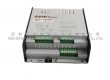
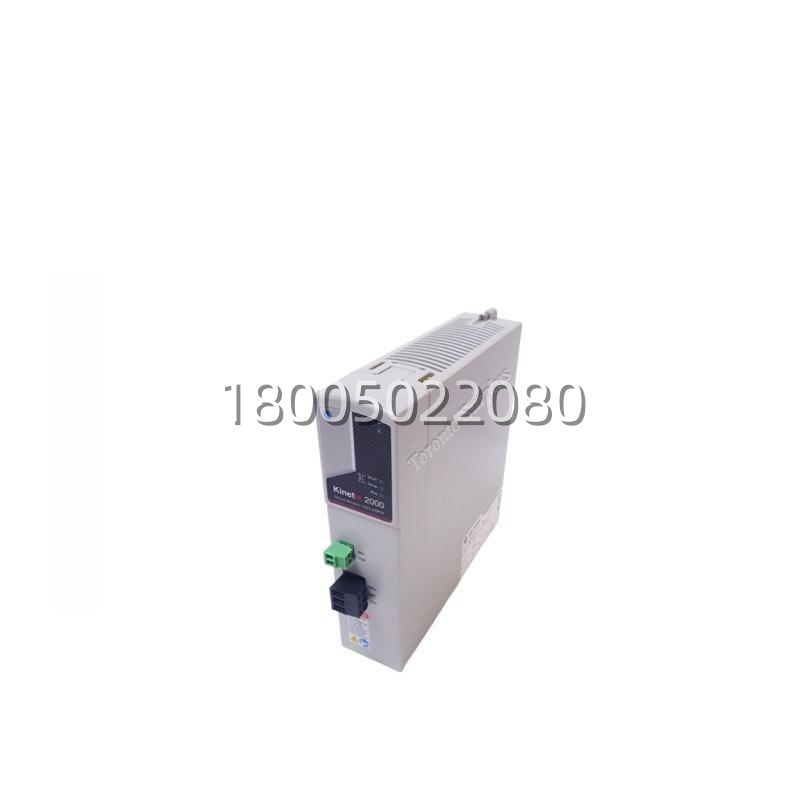
The Allen-Bradley 2093-ASP06 is a 6-kilowatt peak shunt regulator module designed for integration into Rockwell Automation’s Kinetix 2000 series (2093 platform) servo drive systems. It is used when an application’s deceleration profile or overhauling load condition causes regenerative energy to flow back into the drive’s DC bus link faster than the AC line can absorb it, risking a DC bus overvoltage fault (typically fault code 61 or E-Bus OV). The Allen-Bradley 2093-ASP06 contains both the shunt control circuitry and a factory-integrated power resistor sized to dissipate regenerative energy by shunting current from the DC bus when the bus voltage exceeds a preset threshold (approximately 390–410 V DC depending on drive configuration and AC input voltage). This prevents nuisance tripping and protects the drive’s internal bus capacitors and IGBTs from overvoltage stress.Physically, the Allen-Bradley 2093-ASP06 mounts on standard 35 mm DIN rail and occupies its own slot in a 2093 multi-axis power stack assembly, connecting to the DC bus link terminals (DC and –DC) of the adjacent Kinetix 2000 power module or shared-bus configuration. It is rated for use with 2093 drives powered from 380–480 V AC three-phase inputs (resulting in ~540 V DC nominal bus) and is specified for a continuous dissipation of approximately 100 W with short-term peak capability up to 6 kW for typical deceleration intervals (seconds). The Allen-Bradley 2093-ASP06 is auto-detected by the Kinetix 2000 system when correctly wired and present in the power structure; no separate 24 V DC supply or communication cable is required—the shunt enable and monitoring are derived from the DC bus connection itself. For machines with high-inertia flywheels, vertical axes with significant gravitational potential energy return, or frequent start-stop cyclic motion, the Allen-Bradley 2093-ASP06 is an essential accessory to ensure reliable, fault-free stopping without having to artificially slow down deceleration ramps.
Technical Specifications
Product Model | 2093-ASP06 (also 2093-ASP06/A, 2093-ASP06/B)Manufacturer | Allen-Bradley / Rockwell AutomationProduct Type | Kinetix 2000 Series 6 kW Peak Shunt Regulator Module (with integrated shunt resistor)Compatible Drive Family | Kinetix 2000 (2093-xDx, 2093-xEx, 2093-xFx multi-axis and single-axis frames)Rated Peak Shunt Power | 6 kW (short duration, typical ≤ 3–5 s per cycle; duty cycle dependent on application regen profile)Rated Continuous Dissipation | ≈ 100 W (natural convection cooling)DC Bus Voltage Operating Range | 300 … 680 V DC (shunt activates above threshold ~ 390–415 V DC typical; exact level set by drive firmware/parameter)Shunt Activation Threshold | Set indirectly via drive parameter “Shunt Enable” and DC Bus Overvoltage Limit; typical turn-on ~ 390 V DC @ 230V AC input systems, ~ 410–420 V DC @ 460V AC input systemsConnections Terminals | +DC BUS, –DC BUS (connects to Kinetix 2000 power module DC link or shared bus bar)Mounting | 35 mm DIN rail (EN 50022) or panel mount via 2093 chassis/rail systemOperating Temperature | 0 … +50 °C (+32 … +122 °F) (derate above 40 °C per manual)Storage Temperature | -40 … +85 °CHumidity (non-condensing) | 5 % – 95 % RHDimensions (H × W × D) | Approx. 170 mm × 65 mm × 145 mm (6.7″ × 2.56″ × 5.7″)Weight | Approx. 1.2 kg (2.65 lb)Enclosure Rating | IP20 (for installation inside control cabinet)Certifications | UL Listed, cULus, CE Marked, RoHS CompliantNote | Requires proper DC bus cabling (adequate gauge per 2093 installation manual); not for use with Kinetix 300/350/5000/5700 families
Main Features and Advantages
Integrated resistor & control electronics: Unlike generic external shunt resistor kits that require a separate shunt control card and wiring to the drive’s shunt terminals, the Allen-Bradley 2093-ASP06 packages both the power resistor and the voltage-sensing/shunt-switching circuit in one compact module. This reduces panel wiring complexity, eliminates the need to size an external resistor, and ensures the shunt characteristic is matched to the Kinetix 2000 DC bus characteristics. The Allen-Bradley 2093-ASP06 clamps the bus when regeneration would otherwise cause an overvoltage trip.6 kW peak handling for demanding deceleration profiles: Many material-handling vertical lifts, press flywheel unload cycles, and winder/unwinder overhauling conditions generate short bursts of high regenerative power—often several what the drive’s internal braking capability can absorb. The Allen-Bradley 2093-ASP06 provides up to 6 kW of peak dissipation (versus the smaller 2093-ASP02 at 2 kW), making it the correct choice for larger axis inertias or multi-axis shared-bus applications where cumulative regen exceeds the lower shunt’s capacity. Proper application requires verifying that the total regenerated energy (Joules) during decel fits within the thermal budget of the Allen-Bradley 2093-ASP06 over the machine’s duty cycle.Seamless Kinetix 2000 system integration: When the Allen-Bradley 2093-ASP06 is wired to the DC bus of a 2093 power module or shared-bus configuration, the Kinetix 2000 drive firmware automatically recognizes the shunt presence if the “Shunt Installed” parameter is enabled (or auto-detect on some firmware). Drive diagnostics report shunt active status and can log shunt-overuse events. No RSLogix/Studio 5000 motion instruction changes are needed—the shunt operates transparently at the drive level to protect the DC bus.CostCaution on duty cycle: The Allen-Bradley 2093-ASP06 is not a continuous power dissipater. It is intended for intermittent regenerative events (deceleration, e-stop ramp-down, occasional overhauling load). Sustained heavy regen (e.g., a continuously overhauling vertical axis with insufficient motor torque command to hold it) will cause the shunt resistor to overheat and may result in permanent damage. In such cases, a regenerative (active) power supply or a properly sized external continuous-duty resistor—not the Allen-Bradley 2093-ASP06—must be considered. Rockwell application notes recommend calculating regen energy per cycle and comparing against the shunt’s thermal capacity curve.