WhatsApp:+86 18005022363 WeChat: +86 18005022363
  Email:
Application Scenarios
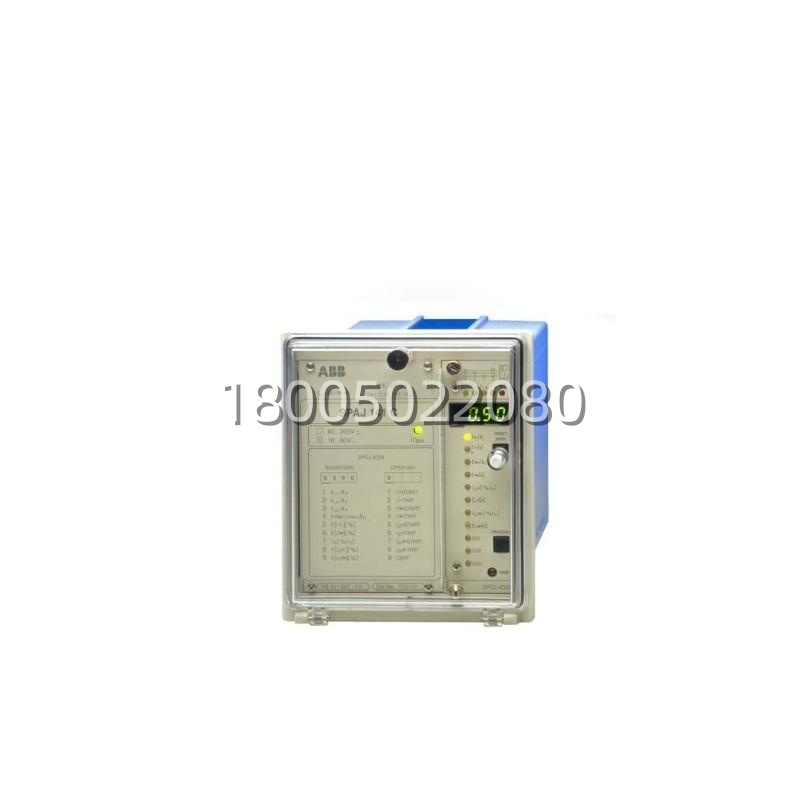
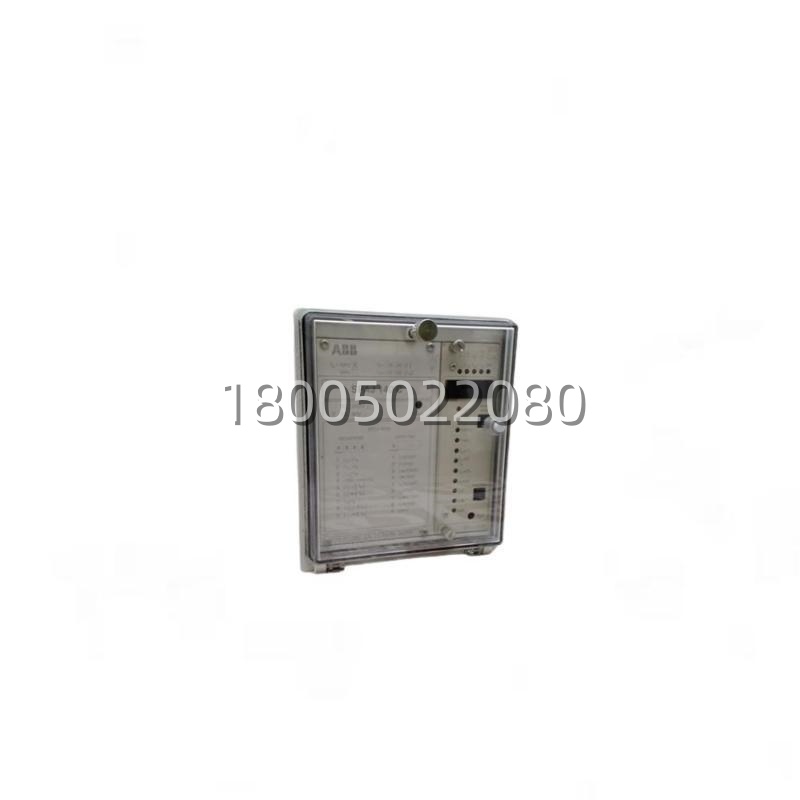
Consider a medium-voltage distribution network in a manufacturing facility where multiple feeders supply power to different production areas. One critical feeder powers the plant’s main production line, where voltage dips or interruptions could cause significant production losses. The SPAJ140C-AA relay monitors this feeder continuously. When a phase-to-phase short circuit occurs due to insulation failure, the relay’s overcurrent protection detects the abnormal current and initiates a selective trip. More importantly, if a high-impedance earth fault develops – a dangerous condition that conventional overcurrent relays might miss – the sensitive earth-fault element of the SPAJ140C-AA detects the residual current and clears the fault before it escalates into a phase-to-phase fault, preventing equipment damage and minimizing downtime.
Parameter
| Main Parameters | Value/Description |
|---|---|
| Product Model | SPAJ140C-AA |
| Manufacturer | ABB |
| Product Category | Combined Overcurrent & Earth-Fault Protection Relay |
| Rated Frequency | 50 Hz |
| Auxiliary Supply Voltage | 80-265 V AC/DC (Wide range) |
| Rated Current (In) | 1 A or 5 A (Configurable) |
| Protection Functions | Phase Overcurrent (2 stages) + Earth Fault (2 stages) |
| Time Characteristics | Definite Time (DT) & IDMT curves (6 standard curves) |
| Output Relays | 2 Trip Relays + 4 Signal Relays |
| Communication Interface | RS-485 serial interface (optional protocol module) |
| Operating Temperature | -25°C to +55°C |
| Dimensions (HxWxD) | 144 x 216 x 197 mm (Panel mounting) |
Technical Principles and Innovative Values
- Innovation Point 1: Combined Protection Philosophy. The SPAJ140C-AA integrates what traditionally required two separate relays – an overcurrent relay and an earth-fault relay – into one intelligent unit. This integration reduces panel space by approximately 40% compared to separate relay installations while providing coordinated protection characteristics that ensure proper selectivity in complex network configurations.
- Innovation Point 2: Adaptive Time-Current Characteristics. Unlike fixed-time relays, the SPAJ140C-AA offers six standardized Inverse Definite Minimum Time (IDMT) curves plus definite time characteristics. This allows protection engineers to tailor the relay’s response to match the specific network’s time-grading requirements. For instance, the relay can be set with a normal inverse curve for coordination with upstream fuses while using a very inverse curve for transformer protection coordination.
- Innovation Point 3: Advanced Self-Supervision System. The relay continuously monitors its own hardware and software integrity. If a fault is detected in the relay’s measurement circuits, power supply, or microprocessor, it immediately activates an alarm relay. This proactive self-diagnosis capability reduces the risk of undetected relay failures, which is critical for protection systems where “silent failures” can have catastrophic consequences.
Application Cases and Industry Value
- Case 1: Cement Plant Distribution Network Upgrade. A large cement plant in Southeast Asia was experiencing unexplained feeder trips that halted production for hours. The existing electromechanical relays couldn’t provide the necessary sensitivity for high-impedance earth faults common in dusty environments. After upgrading to SPAJ140C-AA relays across their 11kV distribution network, the plant achieved 99.8% protection system availability. The relay’s event recording capability pinpointed the exact fault origin – moisture ingress in cable terminations – enabling targeted maintenance. This resulted in a 60% reduction in unexplained trips and approximately $250,000 in annual avoided production losses.
- Case 2: Water Treatment Plant Modernization. A municipal water treatment facility in Europe needed to upgrade its 1960s-era protection system to meet new grid code requirements. The SPAJ140C-AA relays were selected for their compatibility with existing CTs and simple retrofitting process. The installation required minimal wiring changes due to the relay’s flexible I/O configuration. Post-installation, the plant reported improved selectivity during faults, preventing the entire plant from blacking out during feeder faults. The maintenance team particularly valued the relay’s front-panel display for quick fault diagnosis, reducing fault location time from hours to minutes.