WhatsApp:+86 18005022363 WeChat: +86 18005022363
  Email:
Application Scenarios
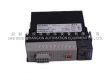
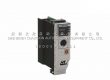
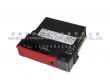
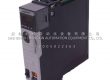
In a municipal water treatment facility, the SCADA system coordinates dozens of processes: raw water intake, chemical dosing, flocculation, filtration, and disinfection. Each process requires tight control of valves, pumps, and analyzers, with complex interlocks to ensure safety. The ABB SC300E CPU Module is deployed as the primary controller for the filtration building. It runs over 200 control loops, managing backwash sequences for multiple filter beds based on differential pressure and time. When a high-turbidity event is detected, the SC300E instantly calculates adjusted setpoints for coagulant dosing pumps (via Modbus communication) and initiates a faster backwash cycle. Its deterministic execution ensures that all valves in a multi-valve sequence actuate in the correct order with millisecond precision. The SC300E addresses the key pain points of integrating continuous and batch control, ensuring deterministic response in safety interlocks, and providing a single, unified platform for complex automation that would traditionally require separate PLC and DCS hardware.
Parameter
| Main Parameters | Value/Description |
|---|---|
| Product Model | ABB SC300E (PAC Identifier: 031-1053-04) |
| Manufacturer | ABB (Asea Brown Boveri) |
| Product Category | CPU Module / Process Automation Controller (PAC) |
| Primary Function | Central processing, logic execution, and system management for the Freelance DCS. |
| Processor | High-performance industrial microprocessor (e.g., PowerPC or similar architecture). |
| Work Memory | Significant onboard RAM for application program and data (e.g., 4-16 MB). |
| Retentive Memory | Battery-backed or flash memory for program and data retention during power loss. |
| Programming Languages | Full IEC 61131-3 support (FBD, LD, SFC, ST, IL) via ABB Control Builder F engineering tool. |
| Integrated Interfaces | System bus for local I/O, serial ports (RS-232/485), and an Ethernet port for engineering and peer-to-peer communication. |
| Real-Time Clock | Integrated with battery backup for time-stamping of events. |
| Typical Scan Time | Sub-millisecond to tens of milliseconds, configurable based on task priority. [Defines control loop speed] |
| Operating Temperature | 0°C to +60°C (standard industrial range). |
| Power Supply | 5V DC or 24V DC via the system backplane from a dedicated power supply module. |
| Certifications | cULus, CE, ATEX (for hazardous areas, depending on enclosure), marine certifications (DNV GL). |
| Typical System | ABB Freelance DCS, AC 700F controller. |
Technical Principles and Innovative Values
The ABB SC300E is architected as a true Process Automation Controller (PAC), merging the high-reliability, deterministic control of a DCS with the flexible programming and connectivity of a modern controller.
Innovation Point 1: Hybrid Task Scheduling for Deterministic Performance. The SC300E employs a sophisticated, time-sliced task scheduler. It allows engineers to define multiple tasks with different cycle times (e.g., a 10ms fast task for PID loops, a 100ms standard task for sequence logic, and a 1s slow task for calculations). The operating system guarantees that these tasks are executed within their defined windows, providing rock-solid deterministic performance for critical control loops while efficiently managing less time-sensitive logic. This prevents a complex sequential operation from interfering with a critical pressure control loop’s execution timing.
Innovation Point 2: Integrated Multi-Protocol Communication Engine. Unlike basic CPUs, the SC300E has a dedicated communication co-processor and firmware that natively support a wide array of industrial protocols simultaneously. This includes PROFIBUS DP, Modbus RTU/TCP, and ABB’s own peer-to-peer network (CIBUS). This means a single SC300E can act as a PROFIBUS DP master to remote I/O, a Modbus TCP client to fetch data from smart instruments, and participate in controller-to-controller communication—all concurrently without loading the main application processor. This native multi-protocol support is a key differentiator that simplifies system architecture and reduces the need for external gateways.