WhatsApp:+86 18005022363 WeChat: +86 18005022363
 Email:

Application Scenarios
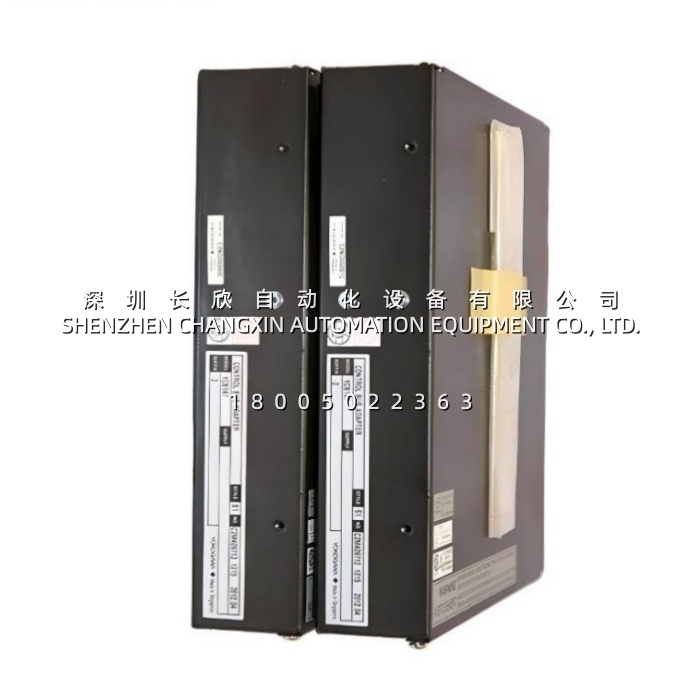
A European specialty chemical plant recently faced a familiar dilemma: its original CENTUM CS 3000 network was built on 10BASE-5 thick Ethernet cabling, but a planned control room consolidation required integration with newer 10BASE-2 thin-coaxial equipment. Rather than rewire the entire plant—a project estimated at over €200,000 and two weeks of downtime—the engineering team deployed the YCB147-2 at each transition point. The adapters converted the physical media transparently while preserving the existing 10 Mbps token-passing control traffic. Commissioning was completed in a single weekend, with zero control interruptions and no changes to the application software.This scenario illustrates the real value of the YCB147-2: it removes a hard infrastructure barrier without forcing a wholesale system replacement. In process industries, where “don’t touch what’s working” is a governing principle, a passive adapter that preserves both legacy cabling and live communication is often the difference between a manageable upgrade and a capital-intensive overhaul.
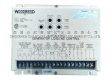
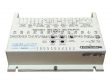
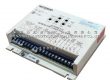
Parameter
| Main Parameters | Value/Description |
|---|---|
| Product Model | YCB147-2 (suffix /BR = 19-inch rack-mount version) |
| Manufacturer | Yokogawa Electric Corporation (Japan) |
| Product Category | Control Bus Cable Conversion Adapter / Bus Interface Terminal Assembly |
| Compatible Systems | CENTUM CS 1000, CENTUM CS 3000 (R3), CENTUM VP |
| Supported Bus Types | Vnet (10BASE-2 / 10BASE-5), ESB bus, ER bus |
| Conversion Function | 10BASE-5 (thick coax, RG-8/U) ↔ 10BASE-2 (thin coax, RG-58A/U) interface conversion |
| Data Rate | 10 Mbps (IEEE 802.3 compliant Manchester-encoded control traffic) |
| Connector Count | 2 (dual BNC-type coaxial connectors) |
| Impedance Matching | 50 Ω built-in termination resistors — eliminates signal reflection and “bounce” |
| Operating Mode | Passive conversion — no external power required |
| Signal Delay | Negligible (purely physical-layer bridging) |
| Shielding | Double-layer copper mesh shielding, single-point grounding |
| Mounting Method | Panel mount or DIN-rail; /BR suffix for 19-inch rack mount |
| Explosion Protection | None (non-explosion-proof; no ATEX/FM/CSA rating) |
| Operating Temperature | -10 °C to +55 °C (some sources cite 0 to +55 °C) |
| Storage Temperature | -20 °C to +70 °C |
| Humidity Range | 5% to 95% RH, non-condensing |
| Ingress Protection | IP20 (designed for cabinet installation) |
| Corrosion Rating | ISA G3 compliant (suitable for chemical and petrochemical environments) |
| Physical Dimensions (W×H×D) | Approx. 150 × 40 × 120 mm |
| Weight | Approx. 0.8 kg (some sources cite 100 g for base unit) |
Technical Principles and Innovative Values
- Innovation Point 1 — Zero-Power Passive Conversion: The YCB147-2 operates entirely without an external power supply. Because it performs no active signal regeneration, there is no internal circuitry to fail, no firmware to update, and no power-related fault mode—making it one of the most reliable components in a DCS cabinet. Its Mean Time Between Failure (MTBF) is effectively governed by its connectors and shielding alone.
- Innovation Point 2 — Precision 50 Ω Impedance Matching: The adapter’s built-in termination resistors are tuned to the characteristic impedance of both RG-8/U (10BASE-5) and RG-58A/U (10BASE-2) cabling. This eliminates signal reflection (“bounce”) that would otherwise cause intermittent token-ring timeouts on long bus runs—a common and notoriously difficult-to-diagnose problem in legacy coaxial networks.
- Innovation Point 3 — Transparent Legacy-to-Modern Bridging: The YCB147-2 solves a specific but critical integration gap: allowing older thick-Ethernet field networks to communicate with newer thin-Ethernet control room equipment. This lets plants preserve proven field cabling while modernizing their operator environment—a phased approach that dramatically reduces both capital expenditure and commissioning risk.
- Innovation Point 4 — Redundant Bus Support: In a dual-redundant Yokogawa architecture, two YCB147-2 units are deployed (one for Bus A, one for Bus B). Because the adapter is fully passive and sits at the physical layer, a failure or maintenance activity on one bus path never affects the other, preserving the “no single point of failure” design principle of the overall DCS.
- Innovation Point 5 — Diagnostics Enablement Through Clean Signals: By providing a properly terminated signal path, the YCB147-2 removes cable-induced noise from the equation. This allows the DCS diagnostic software to distinguish genuine hardware faults from false positives caused by poor termination—dramatically reducing mean time to diagnosis and eliminating “ghost” alarms.
Application Cases and Industry Value
Case 1 — Oil Refinery Network Segmentation (Middle East):A large refinery operating a 1990s-era CENTUM CS 3000 system needed to extend its Vnet control network to a newly constructed sulfur recovery unit located 400 meters from the main control building. Running new 10BASE-5 thick coax for the entire distance was cost-prohibitive. The project team instead used YCB147-2 adapters at both transition points, converting to 10BASE-2 for the intermediate run and back to 10BASE-5 at the remote node. The entire extension was completed for under 15% of the originally budgeted rewiring cost, with no disruption to the live control network.Case 2 — Pharmaceutical Plant DCS Modernization (Asia-Pacific):A pharmaceutical manufacturer was migrating from CENTUM CS 1000 to CENTUM VP but needed to keep its existing field-mounted ESB/ER bus node units in service for another five years. The Yokogawa YCB147-2 was installed at each interface boundary to normalize the physical connections between the old and new bus segments. Over 24 months of operation, the plant reported zero communication-related batch interruptions—a critical factor in maintaining product quality and regulatory compliance. The automation manager noted: “The adapter cost less than a single engineering hour, yet it was the keystone that made our entire migration strategy viable.”