WhatsApp:+86 18005022363 WeChat: +86 18005022363
 Email:

Description
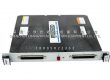
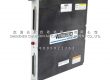
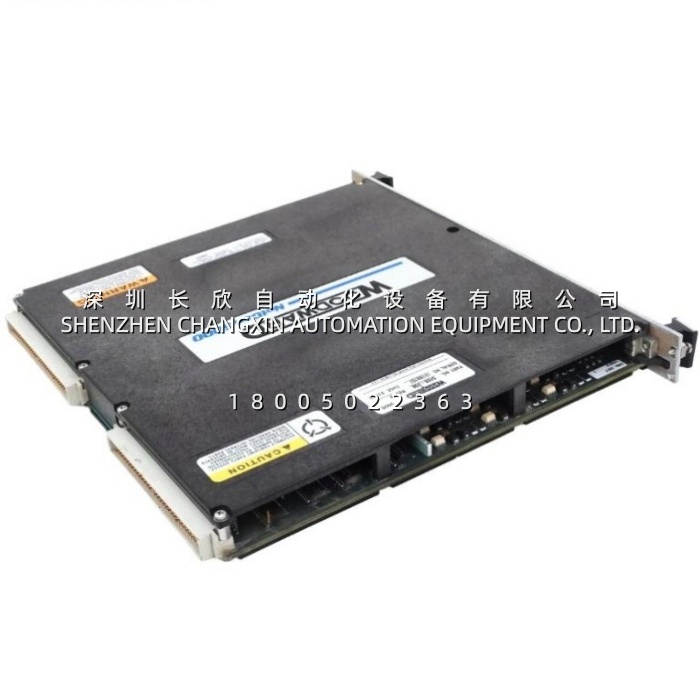
The 5466-258M is Woodward’s MicroNet-family Simplex High-Density Discrete (HDD) input/output module — a 48-input, 24-output, 24 Vdc, opto-isolated I/O pack that lives in the I/O slots of a MicroNet, MicroNet Plus or Vertex-Pro chassis. It does not run the control law and it is not a CPU: the module’s job is to sit between the backplane and a pair of Field Termination Modules, read every limit switch, pressure switch, contactor auxiliary and E-stop contact on the skid, then drive the solenoid valves, starter coils, pump commands and annunciator points the other way.The M suffix is a revision/option letter on the base 5466-258 silicon, not a different product family. That distinction matters more than it sounds like: the 258M is the card you stock because the 258 is what is already in the rack, and the wrong suffix is the most expensive kind of wrong shipment in a turbine cabinet.
Application Scenarios
A gas-pipeline compressor station runs its balance-of-plant sequencing on a MicroNet Plus chassis: lube-oil pressure switches, seal-gas low-flow, suction and discharge valve limit switches, local/remote selectors, breaker auxiliaries — forty-one inputs before you count the annunciator points. The outputs drive the lube-oil pump contactor, the cooling-fan starter, two solenoid vents and a handful of “running / tripped / local” indicators. The whole tree used to sprawl across three low-density I/O cards and a terminal-block forest that no one wanted to re-wire during an outage.They consolidated onto a single 5466-258M. The field side never moved — the two 24/12 FTMs stayed screwed to the cabinet wall, connected by the same high-density cables. When a bypass-valve limit switch started chatting during a startup, the module’s fault LED flagged a wiring-side problem, not an internal one, and the electrician found a stranded conductor working loose at the FTM in twenty minutes. The compressor never came off auto. That is the product’s real value: it makes the interlock tree dense enough to fit, and then gets out of the way.
Parameter
| Parameter | Value / Description |
|---|---|
| Product Model | 5466-258M — M is the revision/option suffix on the base 5466-258 HDD module; function is 48 DI / 24 DO. Confirm the suffix against the removed card before ordering |
| Manufacturer | Woodward (Fort Collins, Colorado), MicroNet / MicroNet Plus / Vertex-Pro product line |
| Product Category | Simplex High-Density Discrete (HDD) I/O module — a backplane I/O pack, not a CPU and not a communications card |
| I/O count | 48 discrete inputs + 24 discrete outputs, 72 channels in one slot. This is the one number the credible sources agree on; 16/16 and 8/8 listings are mis-attributed siblings and are wrong for the 258 |
| Input type | 24 Vdc nominal, 18–32 Vdc tolerance; dry-contact or wet/sourcing-voltage sensing. Inputs are opto-isolated and grouped across two FTM connections |
| Output type | 24 high-side discrete outputs, current-driving, ~500 mA continuous per channel cited across the channel. Drive contactor coils, solenoids, relays and lamps — with the suppression network you would fit anyway |
| Isolation | 500 Vdc channel-to-earth, 1000 Vdc to control common are the figures published for the family. The air gap is what keeps a welded field contact from walking back into the backplane |
| Backplane / comms | MicroNet proprietary backplane bus; the module is addressed by on-board rotary switches and discovered by the CPU at reset. No RJ45, no Modbus, no Ethernet on the base card — that is a comms module’s job |
| Update / response | ~5 ms class full-channel scan in the published descriptions. Fast enough for valve feedback and sequencer steps; it is not a vibration or speed-input front end — use the proper SPM/DSM card for those |
| Self-test | Internal power-on self-test covering the I/O scan, memory and backplane handshake; up to eight internal-fault classes are collapsed into one red fault LED on the faceplate. A lit LED means “look at the CPU diag,” not “channel 37 is bad” |
| Power | 18–32 Vdc (24 Vdc nominal) from the chassis/backplane, 6.5 W typical @ 24 Vdc. Budget the 6.5 W per slot before you fill a 14-slot chassis |
| Hot swap | Hot-swappable in a live MicroNet chassis provided the system and slot allow it — Woodward’s own obsolescence notice and the field practice both say so. “Hot” still means you follow the procedure, log the CPU and don’t yank it during a trip test |
| Chassis fit | 8-slot and 14-slot MicroNet / Vertex-Pro chassis, I/O slot position. Address rotary must match the I/O database; a card that seats perfectly but is addressed wrong will sit there silently healthy |
| Environment | 0…+55 °C operating in the Woodward-listed data; storage −40…+105 °F (≈ −40…+40 °C) on the same sheet. Some resellers claim −20…+70 °C or −40…+70 °C — treat those as unverified and size the cabinet for 0…+55 °C |
| Mechanical | Standard MicroNet module form factor; published dimensions vary so wildly (16×16×12 cm down to 10×6×2.5 cm) that they are unusable for panel planning. Measure the removed unit. Weight clusters 0.8–0.95 kg |
| Certifications | UL, ATEX/IECEx, CE (EMC), DNV, ABS, LRS, Pollution Degree 2, Overvoltage Category II are cited for the family. The module mounts in a non-hazardous location or inside a Class I Div 2, Groups A–D enclosure per the Woodward install note |
| Manual | Woodward 26167V1 is the referenced hardware manual for the 5466-258 family — the document to have open before you commission |
| Lifecycle | Replaced in 2010 by the HDDIO family. The 258/258M is obsolete and trades as new-surplus / tested-pull; there is no current Woodward production part with the same number |
Technical Principles and Innovative Values
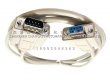
Innovation point 1 — Seventy-two channels, two connectors, zero field re-wire. The 5466-258M doesn’t terminate field wire. It mates to two 24/12 FTMs over high-density discrete/analog cables, and the FTMs are where the screw terminals live. Swap the module and the field wiring does not move. On a compressor skid that was commissioned in 2004, that single fact is worth more than any spec on the sheet.Innovation point 2 — The input is opto-isolated, not just debounced. Every input crosses a light barrier, so a ground loop between the lube-oil skid and the control chassis reads as a clean logic state instead of a chattering bit. In a turbine cell with big VFDs, a 480 V motor frame and a grounded instrumentation drain, that is the difference between a stable sequencer and a “random startup abort” no one can reproduce.Innovation point 3 — Simplex is a cost decision, not a reliability admission. The 5466-258M is a single module, yes — but it sits in a MicroNet that can be simplex or redundant at the system level, and the chassis can be redundant around it. Woodward’s own wording is clear that the 258 is usable in both. The right design question is “which loop is truly single-fault critical?” not “is the card redundant?” Put the trip path on a TMR I/O strategy and the balance-of-plant contacts on the 258, and you spend money where the consequence lives.Innovation point 4 — One LED is a feature, not a defect. There is exactly one red fault LED on the face. It does not pretend to be a channel-level annunciator, because the CPU already has the I/O database and the diagnostic log. The LED’s job is to tell the person walking the cabinet “go look at the diag,” which is honest troubleshooting — and it keeps the front panel from becoming a Christmas tree that no one trusts.Innovation point 5 — It forces discipline on the FTM side. Because the 5466-258M has no terminals of its own, the quality of the installation lives or dies at the FTM: shield termination, suppression across coils, torque on the screw clamp, and a label that matches the I/O database. A module this clean will expose a lazy termination instantly, and that is the kind of exposure you want during commissioning, not during a trip.Innovation point 6 — The upgrade path is documented, which is rare for a 2010-obsolete part. Woodward did not just end-of-life the 258 — they named the replacements. On a 5200/P1020 CPU with Coder 5.04+, the 5466-1050 is the drop-in HDDIO; on Coder 4.06+ it is the 5466-1158. That means you can buy a 5466-258M to keep the plant running this outage and migrate on a schedule, with the same FTM plant-wide. Very few 15-year-old cards come with that kind of exit ramp.