WhatsApp:+86 18005022363 WeChat: +86 18005022363
 Email:

Description
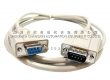
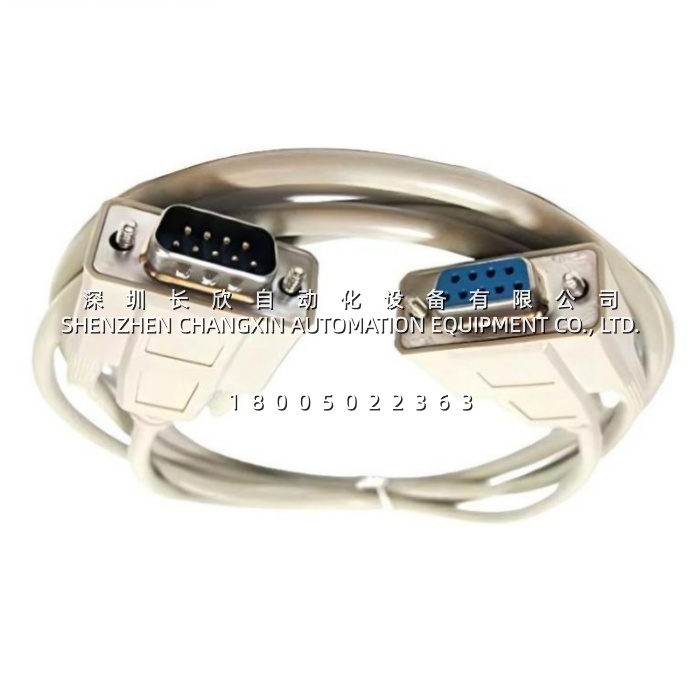
The Woodward 5417-041 is the 12-foot, low-density discrete-signal cable for Woodward’s NetCon control system — the pre-wired, connector-terminated harness that carries contact, discrete and on/off I/O between a NetCon rack or interface and the field device or remote module it serves.It is not a controller, not a governor, not a speed sensor and not a 4–20 mA analog cable. Its whole value is that it is the right harness: correct NetCon connector polarity, correct pinout, correct shielding and a length that reaches the next enclosure without a field-spliced extension. In a NetCon cabinet, “any 12-foot shielded cable” is not a spare — it is a wiring fault waiting to be diagnosed at 2 a.m.
Application Scenarios
A gas-compressor skid’s NetCon rack sits in the main enclosure; the remote discrete panel — emergency-stop contacts, valve-limit verification, skid-local alarms — is mounted 10 feet away on the frame. Someone runs a roll of generic shielded pair, screws it into the terminal blocks, and calls it done. Three weeks later the DCS logs an intermittent “discrete input flicker” every time the VFD ramps. The electrician blames the input card. The real cause is a hand-made harness with the wrong pair twist, no strain relief and a shield grounded at both ends — a ground loop that pumps VFD noise straight into the contact sense.The fix is boring on purpose: pull the homemade run, drop in a Woodward 5417-041. The NetCon connector seats with the right polarity, the shield is terminated the Woodward way, the 12 ft reach lands cleanly in the remote panel, and the flicker vanishes inside one start-up cycle. No card replaced, no software change, no “ghosts.” That is the product’s entire job — be the harness that is impossible to wire wrong.
Parameter
| Parameter | Value / Description |
|---|---|
| Product Model | 5417-041 — the exact Woodward NetCon cable part number; quote it, do not describe it as “NetCon cable approx. 12 ft” |
| Manufacturer | Woodward Inc., Fort Collins, Colorado, USA (NetCon / industrial engine-and-turbine controls family) |
| Product Category | NetCon low-density discrete signal cable / split cable — a finished harness, not bulk wire and not an I/O module |
| Signal Class | Discrete (contact, dry contact, on/off, permissive, trip/interlock, valve-limit sense). If the signal is analog (4–20 mA, 0–10 V, RTD), this is the wrong part — order the 5417-040 |
| Length | 12 ft (3.66 m) — the defining difference from the 10 ft 5417-040 and the longer 5417 family runs |
| Color / Construction | Gray jacket, backshell/tape strain relief at the connector, split/fanned tails at the field end on the standard build — the “split” that gives the cable its alternate name |
| Connector A | NetCon-compatible connector, metal shell, keyed and screw-locked (4-40 UNC jack-screw) so vibration cannot walk it out of the rack |
| Connector B | NetCon-compatible mate / fanned discrete tails, pinned to the Woodward NetCon harness convention — verify the A/B gender and the pin map against your drawing before ordering |
| Conductor | Copper, tinned; 22–18 AWG class on the published family builds. The exact gauge is harness- and revision-specific, so crimp a spare contact onto the same pin tooling, do not assume |
| Shield | Overall foil/braid-style shield with backshell bonding. Cut the ground loop argument short: bond the shield at the cabinet/rack end, leave the remote end floating unless the NetCon installation drawing says otherwise |
| Jacket | PVC, industrial grade; UL VW-1 / IEC 60332-1 flame propagation class on the qualified builds |
| Voltage Rating | 600 V class insulation rating on the cable body — this is the insulation rating, not a 600 V signal. NetCon discrete logic runs at the rack’s low-voltage I/O levels; never energize the harness from a 480 V leg “because the jacket says 600 V” |
| Temperature | −40 to +85 °C operating on the qualified cable construction; storage −55 to +105 °C. The −40 start is why this is the right spare for offshore, winter-ambient and unheated skid enclosures |
| EMC / Immunity | Shielded, grounded-shell construction aimed at IEC 61000-4-4 EFT and 4-5 surge plant-level envelopes. It rejects VFD and contactor noise; it does not make a mis-terminated shield magically quiet |
| Bend / Routing | Minimum bend radius ≈ 8 × cable OD; route in tray or conduit, keep ≥300 mm from VFD/output power runs when run parallel, cross at 90° |
| IP Rating | IP20 at the connector, none on the cable body — the harness lives inside an enclosure or a grounded conduit run, not exposed to washdown |
| Weight / Pack | ≈0.6–2.0 kg published range is shipping-pack variance; the harness itself is light. Ignore the “3 lb / 3 kg” numbers — those are packing, not the part |
| Form Factor | Finished harness, no DIN rail, no 19-inch, no hot-swap. Installation is a powered-down, pin-verify, torque-and-strain-relief job |
| Certifications | CE / UL / RoHS on genuine production builds; certificate copy travels with the COO from the supplier |
| Lifecycle | Active, low-volume custom-run part; lead times quoted 4–8 weeks for non-stocked builds. This is exactly why you keep one on the shelf. |
Technical Principles and Innovative Values
Innovation Point 1 — It is a harness, not a commodity cable, and that is the point. A “low-density discrete” signal has no tolerance for creative wiring. The 5417-041 is factory-pinned to the NetCon convention, factory-terminated with bonded metal shells and factory-tested for continuity and shorts. You cannot transpose a pair, you cannot cold-solder a contact, and you cannot forget the drain wire. In a rack where one wrong discrete means an interlock is silently defeated, that is a safety feature, not a convenience.Innovation Point 2 — The 12 ft length is a system dimension, not a marketing round number. NetCon racks and remote I/O or skid panels are separated by a known envelope — the 10 ft 5417-040 is too short for the next joint, the longer runs leave excess coiled in the tray where they become EMI antennas. The Woodward 5417-041 lands the remote panel with just enough reach to strain-relief properly and no more. Good cable practice is built in, not left to the installer.Innovation Point 3 — Discrete and analog are deliberately separate SKUs. Woodward sells the 5417-040 for analog and the 5417-041 for discrete because the pair count, the shield topology and the pinout are different. That separation is your friend: it forces a two-second check that prevents the classic “oh, the 4–20 mA is on a discrete harness” commissioning disaster. If the drawing says 4–20 mA, stop and order the 5417-040; if it says contact closure or permissive, the 5417-041 is the one.Innovation Point 4 — Metal shells and screw locks are the anti-vibration feature. A NetCon cabinet lives on a skid, a gas turbine deck, a marine engine room or a compressor frame — all places where a push-on connector becomes a intermittent contact in about six months. The 5417-041 uses a metal-shell, keyed, jack-screw-locked mate. You will feel it seat, you will see the screw take torque, and you will not be hunting a “bad input” that was actually a $2 connector walking out of its shell.Innovation Point 5 — It makes the invisible layer testable. Because it is a removable, finite-length, pinned harness, a suspected “I/O fault” becomes a five-minute loop: unplug the 5417-041 at the rack, ohm the pairs, check the shield bond, swap in the spare. No multimeter heroics inside the terminal block, no de-crimping, no “which pair was this.” The cable turns a ghost fault into a replaceable part, which is the definition of maintainable.