WhatsApp:+86 18005022363 WeChat: +86 18005022363
 Email:

Application Scenarios
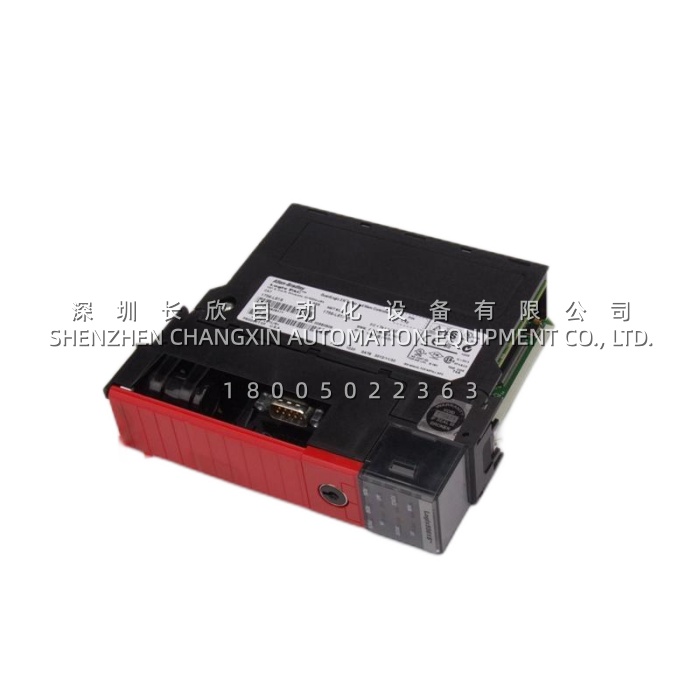
A biomass fuel handling facility at a port in Northeast England required a control system that could manage 791 safety I/O signals alongside 961 conventional I/O points, all within a single integrated architecture. The operators needed SIL-rated protection for conveyor fire suppression, silo explosion prevention, and personnel access interlocks, but also wanted the standard process control—material weighing, silo routing, and rail loading—to reside in the same controller to avoid the complexity of separate safety and standard PLCs communicating across a network boundary. The 1756-L73S delivered exactly this: a single Logix project containing both safety and standard tasks, with the safety partner handling the redundant safety channel automatically . The result was a unified control platform where safety logic and material handling logic shared the same tag database, simplifying commissioning and reducing the engineering hours that would have been spent on cross-platform data mapping.
Parameter
| Parameter | Value/Description |
|---|---|
| Product Model | 1756-L73S (GuardLogix 5573S) |
| Manufacturer | Allen-Bradley / Rockwell Automation |
| Product Category | GuardLogix Safety Controller (Primary) |
| Standard Memory | 8 MB (user RAM for standard tasks) |
| Safety Memory | 4 MB (dedicated to safety tasks) |
| Safety Partner Required | 1756-L7SP (for SIL 3/PLe/Cat. 4) |
| Maximum Motion Axes | 100 |
| Nonvolatile Storage | Secure Digital (SD) card |
| Communication Ports | USB (programming); no embedded Ethernet port |
| Power Dissipation | 2.5 W at full load |
| Operating Temperature | 0°C to +60°C (standard); -25°C to +70°C with XT variant |
| Certifications | TÜV SIL 3, CE, C-Tick, KC |
Technical Principles and Innovative Values
Innovation Point 1: Dual-Processor Safety Architecture Without Dual Programming. The 1756-L73S does not require engineers to learn a separate safety programming language or maintain two distinct projects. The safety partner (1756-L7SP) is automatically configured by the primary controller and requires no user setup . The safety task is created within the same Studio 5000 Logix Designer project as the standard task, with safety tags visually distinguished from standard tags. This single-project approach eliminates the version-control headaches that plague architectures where safety and standard logic reside in separate controllers.
Innovation Point 2: Memory Partitioning for Deterministic Safety Execution. The 1756-L73S physically separates its 8 MB standard memory from its 4 MB safety memory . Safety logic executes within a dedicated safety task that cannot be corrupted by standard program memory overruns or data table corruption. For applications where a standard task handles complex process calculations while a safety task monitors an emergency stop circuit, this partitioning ensures that the safety function retains its integrity regardless of what happens in the standard program space.
Innovation Point 3: Integrated Motion Within the Safety Boundary. The 1756-L73S supports up to 100 motion axes , a capability that distinguishes it from safety controllers limited to discrete I/O. In a robotic workcell, the same controller that certifies a safe torque-off function for a KUKA robot can also command the robot’s standard motion trajectory. A production line at Ford’s Saarlouis facility used the 1756-L73S to control six KUKA KR C4 robots alongside rotary stations, integrating safety interlocks and standard motion programming in one chassis .