WhatsApp:+86 18005022363 WeChat: +86 18005022363
 Email:

Description
Application Scenarios
Picture a ControlLogix panel where the 1756 chassis sits at the top of the enclosure and the 1756-PB75 power supply is mounted on a DIN rail below, exactly 0.9 m away. The 3 ft 1756-CP3 is the correct length: long enough to route neatly along the panel channel, short enough that there is no excess cable to bundle, kink or couple noise into. Using a longer cable here would add inductance and a dangling loop; using a field-made cable would risk a pin-out error that can damage the power supply or the backplane. The 1756-CP3 arrives with the correct 4-pin female connector and the correct polarity, so the installer makes one connection at each end and the backplane powers up. For a panel builder or a maintenance electrician, that predictability is the product’s real value — a few dollars spent on the right cable prevents a very expensive mistake.
Parameter
| Main Parameters | Value / Description |
|---|---|
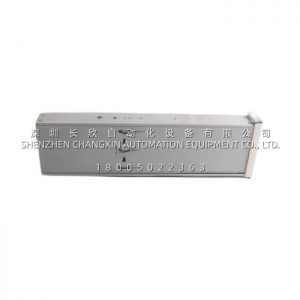
| Product Model | 1756-CP3 (Bulletin 1756, Series A) |
| Manufacturer | Allen-Bradley / Rockwell Automation |
| Product Category | Chassis power extension cable |
| Product Family | ControlLogix, Bulletin 1756 |
| Cable Length | 0.914 m (3.00 ft) — the short-reach variant in the family |
| Connector Type | 4-pin female connector at one end; chassis/power-supply mating connector at the other |
| Number of Pins | 4 pins |
| Jacket Color | Platinum-colored ribbon |
| Conductor Material | Copper (Cu) |
| Rated Voltage | 300V AC / 24V DC |
| Phase | Single phase |
| Frequency Rating | 50 / 60 Hz |
| Operating Temperature | 0…60 °C (32…140 °F) |
| Storage Temperature | −40…85 °C |
| Relative Humidity | 5…95% non-condensing |
| Dimensions (L × W × H) | 16.5 × 12.5 × 5.5 cm (6.5 × 4.9 × 2.2 in.) — packaged/shipping dimensions |
| Weight | Approx. 1.8 kg (3.97 lb) |
| Certifications | UL, CSA, CE, C-Tick |
| Country of Origin | United States |
| Lifecycle Status | Discontinued; no direct replacement — procure as verified spare stock |
| Standard Warranty | 1 year (manufacturer warranty may not apply to post-discontinuation stock) |
Technical Principles and Innovative Values
Innovation Point 1 — A defined length instead of a field-made cable. The 1756-CP3 is 0.914 m (3 ft) by design, which is deliberately short. Chassis power is unregulated 24V DC at several amps, so a long, unshielded, field-made cable adds inductance and becomes an antenna for the VFD and contactor noise that fills a ControlLogix panel. Rockwell’s answer is a family of three fixed lengths — the 1756-CP3 at 3 ft, the 1756-CP10 at 6 ft and the 1756-CP15 at 14 ft — so the installer picks the length that fits the panel instead of coiling excess cable. In a rack with a redundant power supply, the short cable also prevents the two supply leads from becoming a tangled, hard-to-trace pair during a fault.Innovation Point 2 — Correct polarity and pin-out, factory-terminated. The 4-pin female connector is terminated at the factory to the ControlLogix power-supply and chassis-backplane pin-out, with the polarity fixed. A reversed or mis-pinned connection can damage the power supply or the backplane, and the symptom is often a dead chassis with no obvious cause. Using the 1756-CP3 removes that failure mode entirely — there is only one way to seat the connector, and it is the right way.Innovation Point 3 — Part of a redundant and distributed power strategy. In a ControlLogix chassis, the power supply can be mounted locally or remotely, and the 1756-CP3 is the link that makes both layouts possible. In a redundant configuration, the same cable family carries power from the redundant supplies to the chassis, so a failed supply is replaced without rewiring. For a panel builder, that means one cable part number per layout and a wiring plan that is identical across every panel in the plant.Innovation Point 4 — The unglamorous component that decides uptime. A power cable is rarely specified with care, yet it is the single point through which every module in the chassis draws its 24V DC. The 1756-CP3 is built to the same UL/CSA/CE/C-Tick standards as the modules around it, with a 300V AC / 24V DC rating and a 0…60 °C operating range. That consistency matters during an unplanned outage: a verified spare of the correct length is the difference between a 20-minute repair and a day lost to a makeshift cable.
Application Cases and Industry Value
Case 1 — Skid-mounted ControlLogix panel, local power supply. A system integrator building a skid-mounted ControlLogix panel placed the 1756-A10 chassis at the top of the enclosure and the 1756-PB75 power supply on a DIN rail 0.9 m below. The 1756-CP3 was the correct length: it routed along the panel channel without excess, and the factory-terminated 4-pin female connector meant the electrician made two connections and moved on. During commissioning, the backplane powered up cleanly on the first attempt — no polarity check, no voltage drop, no re-termination. The integrator now specifies the 1756-CP3 for every local-supply panel and keeps a verified spare in the skid’s spare-parts kit.Case 2 — Remote power supply in a high-temperature cabinet. A steel-mill application mounted the ControlLogix chassis in an air-conditioned section of the panel and the power supply in a cooler compartment 0.9 m away, to keep the supply out of the worst heat. The 1756-CP3 carried the 24V DC between the two sections without adding a cable loop that could couple mill noise into the backplane. When the supply failed during a scheduled shutdown, the maintenance team swapped it in minutes using the spare 1756-CP3 and the chassis was back online before the next heat. The plant now treats the cable as a consumable spare rather than an afterthought.In both cases the 1756-CP3 raised the automation level by making the power connection predictable and repeatable, cut maintenance cost by eliminating field-terminated cables and polarity errors, and strengthened operational reliability by keeping the backplane supply clean and the spare-parts list short.