WhatsApp:+86 18005022363 WeChat: +86 18005022363
  Email:
Application Scenarios:
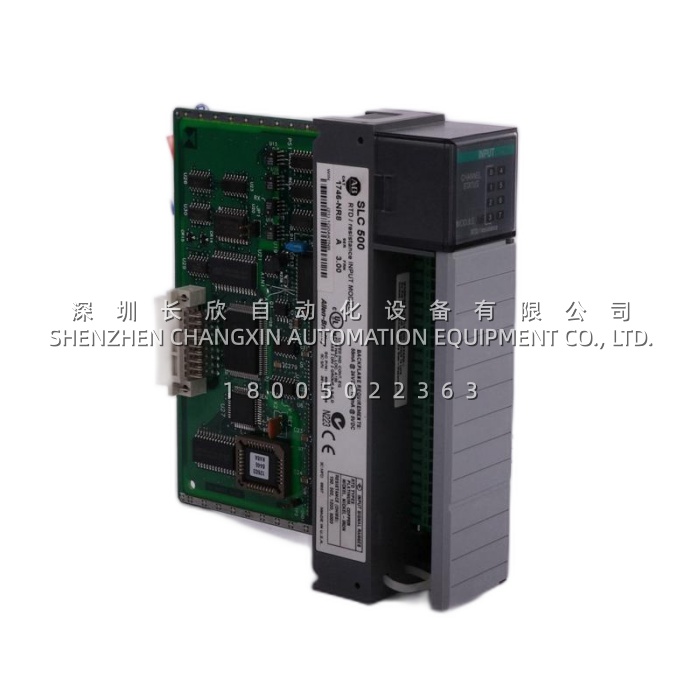
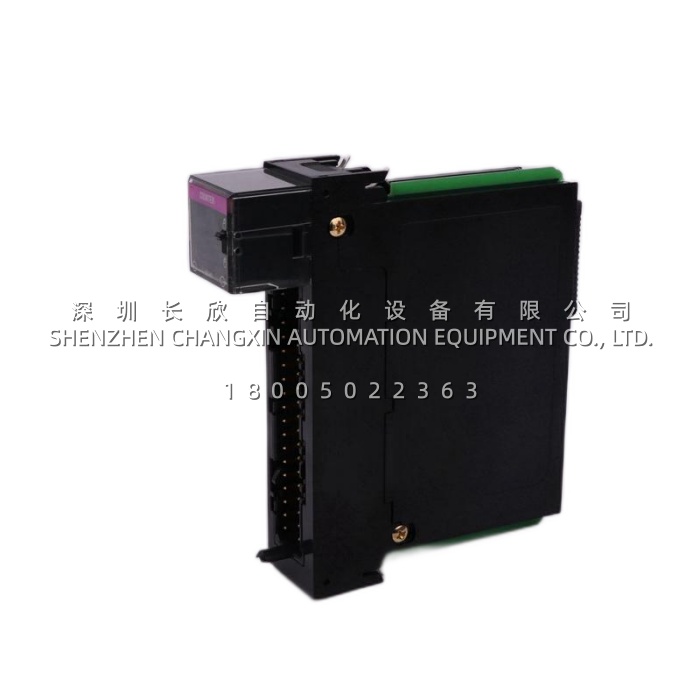
A food and beverage bottling plant runs a filler line controlled by an SLC 5/04 that has been in service since the late 1990s. The output side is a maze of interposing relays: the original 1746-OA8 cards had enough points, but each one had to drive a relay bank because the plant’s solenoid valves and conveyor contactors demand more current than the old cards could safely source. Every relay is another panel component, another coil to fail, another set of contacts to weld — and the maintenance team’s spares cabinet is now more relay catalog than PLC catalog.The 1746-OA16 changes that arithmetic. Dropping one 1746-OA16 into the rack delivers sixteen directly switched AC outputs with enough surge capability to drive contactor coils and solenoid valves straight from the module, letting the panel shop delete most of the interposing relay layer. The pain point it removes is compounding failure risk: fewer components in the current path means fewer things to troubleshoot at three in the morning, and the per-point LEDs tell a technician the output state without a meter.The same logic applies in material handling, where a 1746-OA16 commands zone conveyor starters and diverter solenoids; in HVAC plant rooms driving damper actuators and fan contactors; and in OEM machinery shipped to multiple continents, where the wide 85–265V AC range means one module variant covers both 120V North American and 240V European installations. Because the two eight-point groups are isolated from each other, a single 1746-OA16 can also switch loads fed from different phases or different AC supplies, provided the relevant electrical codes are respected.
Parameter:
| Main Parameters | Value/Description |
|---|---|
| Product Model | 1746-OA16 |
| Manufacturer | Allen-Bradley (Rockwell Automation) |
| Product Category | SLC 500 digital (discrete) AC output module, Triac type |
| Number of Outputs | 16 channels, arranged as 2 isolated groups of 8 points per common |
| Output Voltage | 120/240V AC nominal; operating range 85–265V AC at 47–63 Hz — one part number covers global mains standards |
| Current per Point | 0.5 A continuous at 30 °C, derating to 0.25 A at 60 °C — thermal headroom must be planned in hot panels |
| Current per Module | 8.0 A maximum at 30 °C, derating to 4.0 A at 60 °C across all sixteen points |
| Surge Current | 10 A per point for 25 ms (repeatable every 2 s) — absorbs contactor coil and solenoid inrush |
| Minimum Load Current | 10 mA per point — below this the Triac may not latch reliably |
| Off-State Leakage Current | 2 mA maximum — low enough to avoid false triggering of sensitive loads |
| On-State Voltage Drop | 1.5 V at 0.5 A — modest, but worth including in panel heat calculations |
| Signal Delay | 1 ms ON, 11 ms OFF (resistive load) — Triac switches off at the AC zero crossing, hence the slower OFF |
| Backplane Current Consumption | 370 mA at 5V DC; 0 mA at 24V DC — verify the 5V budget before adding modules |
| Isolation | 1500V AC optical isolation between backplane logic and field circuits; 500V DC across communication circuits |
| Status Indication | 16 individual channel LEDs plus a fuse-blown indicator on protected variants |
| Connection Interface | Removable terminal block (RTB) with screw terminals; 14–18 AWG wire; 1746-HT / 1746-HCA styles |
| Environmental Adaptability | 0 to 60 °C operating, –40 to 85 °C storage, 5–95% non-condensing humidity |
| Installation Method | Single slot in any 1746 chassis (except slot 1, reserved for the processor); local, expansion or remote I/O |