WhatsApp:+86 18005022363 WeChat: +86 18005022363
  Email:
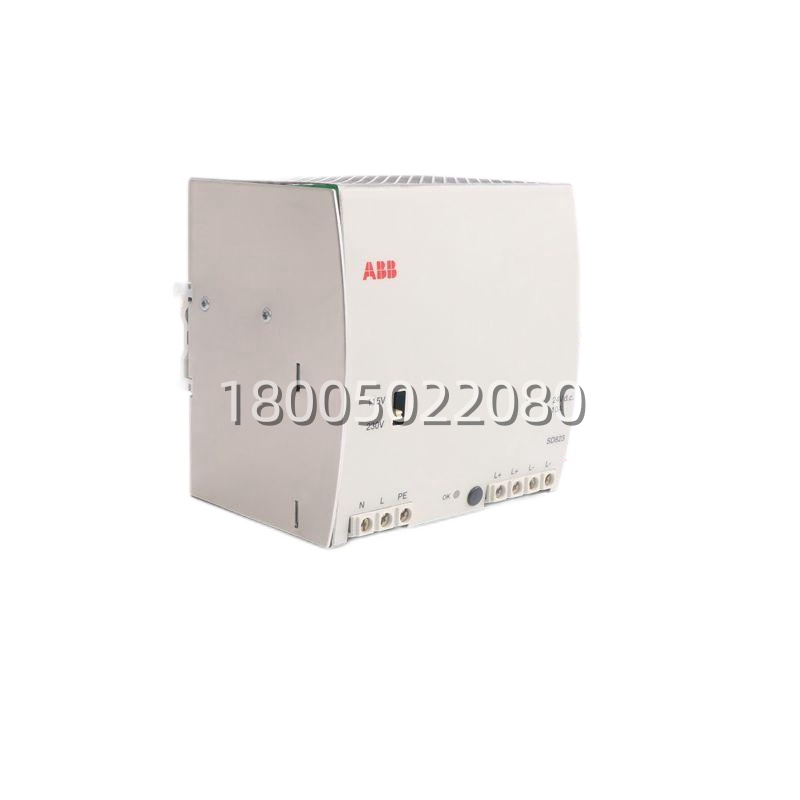
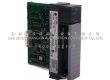
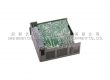
Application ScenariosA 620 MW supercritical coal unit running Bailey INFI 90 across two separate MCC buildings—Boiler (MFP-A) and Turbine (MFP-B)—originally linked the two MFPs with a 450 m NKLS01-20 electrical run daisy-chained through three underground tray ducts. During a 6 kV feeder fault in the switchyard, the induced ground-potential rise (GPR ≈ 600 V) coupled onto the shared tray and took down the INFI-Net backbone for 14 seconds—long enough for the turbine governor’s “comms-loss” trip to cascade into a full load-reject. The retrofit swapped the electrical inter-MFP link for a ABB NTCF23 pair: one at MFP-A, one at MFP-B, with single-mode 9/125 μm ST-ST duplex jumping the 450 m, plus the existing NKLS01-20 landing the last meter into each MFP’s NIS/NPM communication card. The NTCF23‘s 120 Ω termination was software-enabled on the far ends, and dual-fiber redundancy was configured (primary + standby fiber in the same tray but separate conduits). Post-cutover, a repeat GPR event during a storm caused a 3 ms blip on the primary fiber—the NTCF23 pair switched to standby in < 10 ms, and the MFP-B governor never saw a “comms-loss” trip. The plant accepted the retrofit with zero DCS-code changes—the NTCF23 is pin- and protocol-compatible with NTCF22, so the NIS/NPM didn’t even notice the swap.
Parameter
| Main Parameters | Value/Description |
|---|---|
| Product Model | ABB NTCF23 |
| Manufacturer | ABB (Bailey) |
| Product Category | Fiber Optic Communication Termination Unit (Enhanced) |
| System Compatibility | ABB Infi 90, Symphony Harmony, Symphony Plus DCS |
| Bus Protocol | INFI-Net, 10 Mbps deterministic |
| Signal Conversion | Bidirectional Electrical ↔ Optical (E↔O / O↔E) |
| Electrical Interface | INFI-Net bus (NKLS01-20 cable) |
| Fiber Interface | Duplex ST (default) / SC optional; multimode 62.5/125 μm or single-mode 9/125 μm |
| Transmission Distance | Multimode ≤ 2 km; Single-mode ≤ 10 km (upgrade vs. NTCF22’s 2 km limit) |
| Bus Termination | Built-in 120 Ω, software-selectable enable/disable |
| Redundancy | Dual-fiber support (primary + standby), sub-10 ms switchover |
| Supply Voltage | 5 V DC (from DCS rack PSU) |
| Operating Temperature | 0 °C to +60 °C |
| Dimensions (L×W×H) | 160 × 229 × 213 mm |
| Weight | Approx. 0.65 kg |
| Mounting | ABB standard DCS card cage / termination rack (e.g., IEMMU01) |
Technical Principles and Innovative Values
- Innovation Point 1: 10 Mbps INFI-Net Deterministic over Fiber with Zero Protocol Change. The NTCF23 doesn’t repackage or gateway the INFI-Net telegram—it literally converts the 10 Mbps electrical Manchester-encoded stream from the NKLS01-20 coax into optical pulses (850 nm multimode or 1310 nm single-mode depending on SFP/optics choice) and back. The NIS/NPM communication card upstream sees the same INFI-Net timing, token-pass, and P2P telegrams—no firmware change, no parameter remap. This is why the coal-unit retrofit above took zero DCS-code effort.
- Innovation Point 2: Single-Mode 10 km + Dual-Fiber Redundancy (NTCF22 → NTCF23 Upgrade). The older NTCF22 capped at multimode 2 km, which forced plants doing long inter-building INFI-Net to either install a repeater MFP (expensive) or risk attenuation. The NTCF23 adds single-mode 9/125 μm support pushing to 10 km, and the dual-fiber pair (primary + standby on separate fibers) switches in < 10 ms on loss-of-light. For plants with MFPs in separate buildings (BOB architecture), this is the difference between “one fiber cut = half the DCS blind” and “survivable.”
- Innovation Point 3: Built-In 120 Ω + Software Select, No External Terminator. INFI-Net electrically is a 120 Ω balanced pair. On a pure electrical run you’d land NKLS01-20 at both ends and pop a physical 120 Ω terminator on the last node. On the NTCF23, the 120 Ω sits insidethe TU and is software-armable via the NPM/NIS config (Drive Tools / CBF). This means you can pre-stage a spare NTCF23 with termination OFF, rack it into a mid-bus node, and only flip termination ON when it becomes the bus end—no fumbling with DIP switches or external terminator blocks at 2 a.m.
Application Cases and Industry ValueA petrochemical cracker running Symphony Harmony across a 1.8 km stretch between the Ethylene train (MFP-A) and the Utility BOQ (MFP-B) originally used NTCF22 multimode over 62.5/125 μm—but the tray shared a conduit with a 13.8 kV VFD feeder for the propylene compressors, and every VFD start injected enough EMI that the NTCF22 pair threw “token timeouts” ~3× per month. The upgrade swapped to ABB NTCF23 with single-mode 9/125 μm (lower attenuation, less EMI susceptibility than MM) + dual-fiber (primary in the VFD-shared tray, standby in a separate conduit). Post-cutover, token timeouts dropped to zero across 18 months, and the 10 km headroom gave the plant margin to add a third MFP in the future LNG-extraction skid without re-terminating. The E&I lead noted the NTCF23‘s front LEDs (PWR, TX, RX, LINK, REDUND) made “which fiber died?” a 30-second door-open: REDUND LED on = standby active, go hunt the primary tray.