WhatsApp:+86 18005022363 WeChat: +86 18005022363
  Email:
Technical Specifications
| Parameter Name | Parameter Value |
|---|---|
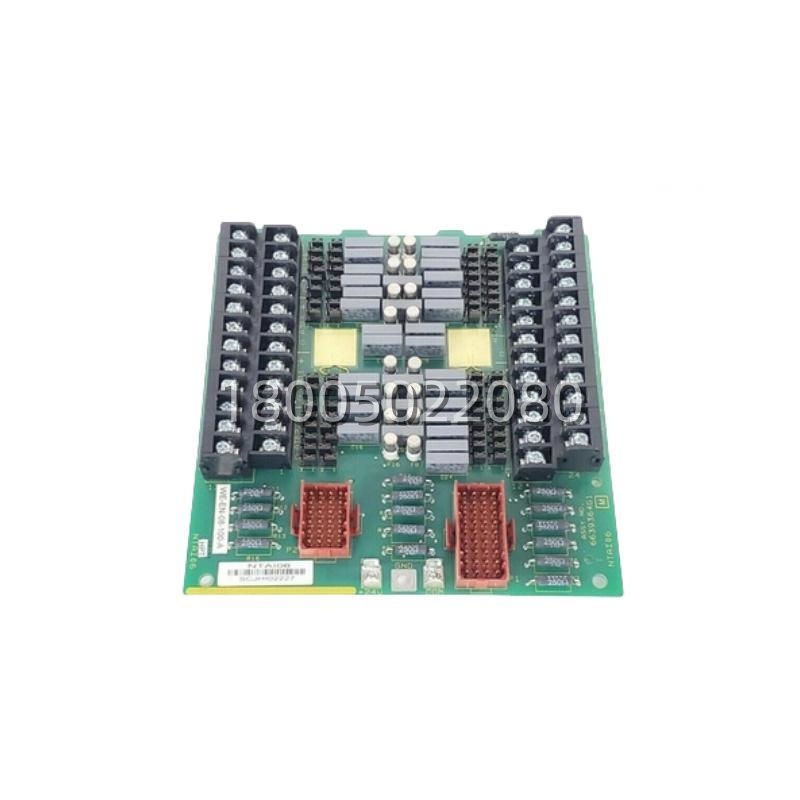
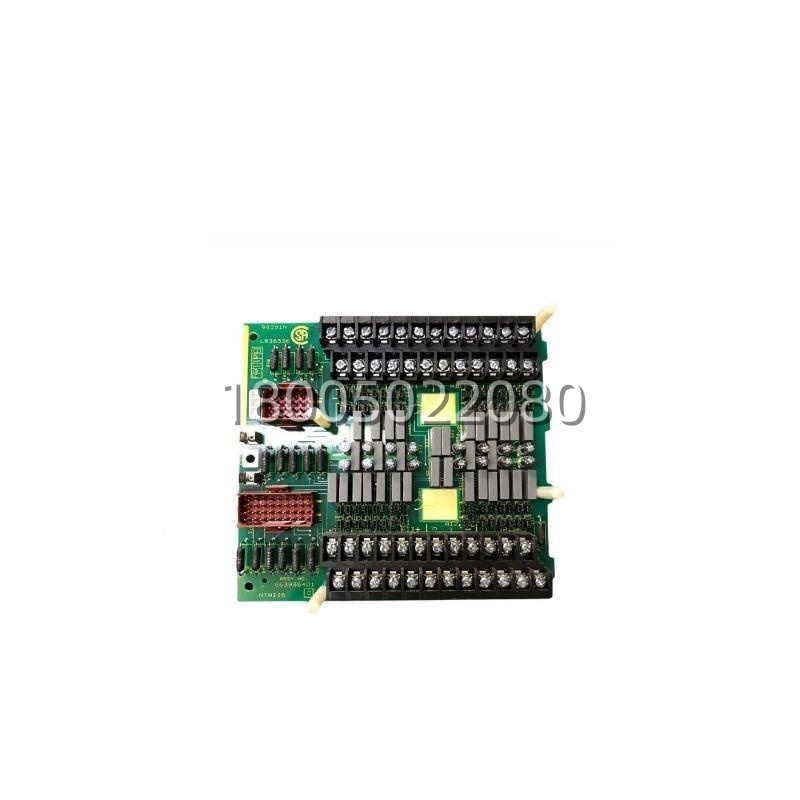
| Product Model | NTAI06 |
| Manufacturer | ABB |
| Product Type | Analog Input Termination Unit |
| Series | S200 I/O (Advant OCS / AC 800M ecosystem) |
| Number of Channels | 6 (single-ended, per S200 AI module pairing) |
| Compatible AI Modules | AI523 (6-ch standard), AI625 (6-ch enhanced/HART-ready in S200) |
| Signal Types (field-side) | 4–20 mA, 0–20 mA, ±10 V, 0–10 V, ±5 V, 0–5 V, ±1 V, ±500 mV (range set in AI module FW) |
| Input Impedance | ≈250 Ω (current mode), ≈200 kΩ (voltage mode) — set by AI module; NTAI06 passive |
| Filtering | RC per channel, ~15–30 Hz cutoff (anti-aliasing / HF suppression) |
| Protection per Channel | PTC overcurrent, TVS/diode clamp against transient; withstands accidental 120 V AC landing (channel recovers after fault cleared) |
| Connection to AI Module | Via TB807 flat cable (0.8 m / 2.0 m variants), 20-pin or 26-pin IDC depending on AI module |
| Field Terminals | Spring-cage or screw-type (per ABB S200 TU style), 2 terminals per channel (signal + return) |
| Channel Status LEDs | 6 × LEDs (green = in-range, off = underrange/open, red = overrange/fault), driven from AI module via TB807 |
| Supply Voltage | 24 V DC (parasitically from AI module via TB807; field-loop 24 V for 2-wire Tx is external) |
| Mounting | DIN-rail (TS35) or door-mount (via S200 TU bracket) |
| Operating Temperature | -20 … +60 °C (S200 cabinet envelope) |
| Dimensions (W × H × D) | ~36 mm × 120 mm × 115 mm (S200 TU standard width = 1 TU unit = 36 mm) |
| Weight | ~0.15 kg |
Main Features and Advantages
Passive, robust field-termination with per-channel protection. The NTAI06 is deliberately simple — no active amplification, no A/D on the TU itself (that’s the AI523/AI625’s job) — but the protection layer is where it earns its keep. Each of the 6 channels carries PTC + clamp diode/TVS, specified to survive a technician landing 120 V AC onto a terminal block that’s supposed to see 4–20 mA. In a busy I/O cabinet during a turnaround, a mislabeled marshalling schedule will eventually cause exactly this — a 120 V AC thermowell-heater circuit or a 230 V AC solenoid neutral lands on a 4–20 mA pair. On an unprotected TU, that fries the AI module’s input amp; on the NTAI06, the PTC trips, the TVS clamps, the AI module sees an overrange fault on that channel, and after the 120 V is removed and the PTC cools (auto-reset, few minutes), the channel comes back. The AI523/AI625 itself is protected too (the S200 AI modules have input clamping), but the NTAI06 is the first line of defense and saves the AI module from repeated stress. The RC filter (~15–30 Hz) on each channel also knocks down HF common-mode that the marshalling cabling picks up — important in VFD-heavy plants where the 4–20 mA run runs parallel to a 400 V VFD feeder for 30 m; the NTAI06 + AI523 combo typically holds <0.1 % linearity even with that EMI envelope because the RC front-end plus the AI module’s delta-sigma reject the HF.6-channel density in 36 mm DIN width. The S200 termination units follow a standardized mechanical envelope: 1 TU unit = 36 mm wide, 120 mm high, ~115 mm deep. The NTAI06 packs 6 analog channels (12 terminal screws) plus 6 status LEDs into that 36 mm — that’s 6 channels per 36 mm, or roughly 1.67 mm per terminal pair counting the LED area, which is dense but workable because the screw terminals are the S200 micro style (2.5 mm² max). In an I/O cabinet with, say, 60 analog loops (not unusual for a small process skid — chemical dosing, boiler BOP, compressor lube-skids), that’s 10 × NTAI06 + 10 × AI523 on S200 baseplates — the whole analog section fits in a 600 mm wide cabinet half-height. Compare to some competitors’ TUs where 6 channels needs 72 mm — the NTAI06 halves the DIN-rail footprint, which matters when the cabinet also has 40 × NTDI06 (digital in) and 20 × NTDO06 (digital out) and the rail is full.TB807 flat-cable bridging — flexible mounting. The NTAI06 doesn’t bolt to the AI module — it connects via TB807, a 20-pin or 26-pin flat-ribbon (0.8 m standard for same-baseplate mounting, 2.0 m for door-mount where the TU is on the cabinet door and the AI module is on the DIN rail inside). This gives cabinet-layout flexibility: in a control-panel build, the panel shop can mount all S200 TUs (NTAI06, NTDI06, NTDO06, NTRO06) on the door for wiring convenience (panel-shop techs wire with the door open, 90° swing, good light), while the electronic modules (AI523, DI524, DO524, RO524) sit on the DIN rail inside the cabinet on S200 baseplates (BC810 / BC820 bus coupler). The TB807 bridges door-to-rail, typically 2 m length. For retrofit where the original panel had TUs on the rail (older builds), the NTAI06 can also sit on the rail directly next to the AI523 — the TB807 0.8 m variant loops between them. Either way, the NTAI06 is hot-swappable from the field side (the TB807 carries live 24 V and signal, but the TU can be unplugged with the AI module online if the plant procedures allow — S200 supports hot-swap of TUs, though best practice is to inhibit the channel in software first to avoid a spurious trip).Channel-status LEDs driven from AI module. Each of the 6 channels on the NTAI06 has an LED visible from the cabinet door / front of the DIN rail: green = signal in the configured range (e.g., 4–20 mA reading 3.9–20.1 mA → green; if the AI module is scaled 4–20 = 0–100 %, green means 1–101 % to give headroom), off = underrange / open-circuit (wire break on 2-wire Tx — the AI523 detects <3.6 mA and the NTAI06 LED goes off), red = overrange (the AI module sees >20.5 mA or >10.5 V, flags overrange, NTAI06 LED red). A maintenance tech walking the cabinet can see “channel 3 red” on a NTAI06, go to the marshalling, find the Tx loop shorted to 24 V common, fix it, the LED goes green — no laptop, no Control Builder, just visual. This is the S200 TU philosophy — put the diagnostics at the wiring point, not just on the CPU.Signal-type agility via AI module firmware, not TU hardware. The NTAI06 terminal block is electrically neutral — the same two screws accept current or voltage. The differentiation (4–20 mA vs ±10 V vs ±500 mV) happens in the AI523/AI625 parameter set: Channel Type → Current/Voltage, Range → the specific span, Burnout Detection → On/Off, Filter Time Constant → 0–100 ms. This means a plant can standardize one NTAI06 spare for all analog loops — pressure (4–20 mA), position feedback (±10 V pot), low-level pH (±500 mV), temperature (0–5 V from a transmitter) — and the AI module config determines behavior. The NTAI06 doesn’t care. Only caution: the AI module’s input impedance differs (≈250 Ω for current, ≈200 kΩ for voltage), and the NTAI06‘s PTC is sized for the current-mode loop current (4–20 mA, so PTC trip ~100–150 mA) — if someone wires a voltage source with <100 Ω internal (basically a short), the PTC still trips, but the AI module’s voltage-mode input (200 kΩ) would see near-zero anyway. The NTAI06 + AI523 combo is forgiving.