WhatsApp:+86 18005022363 WeChat: +86 18005022363
  Email:
Application Scenarios
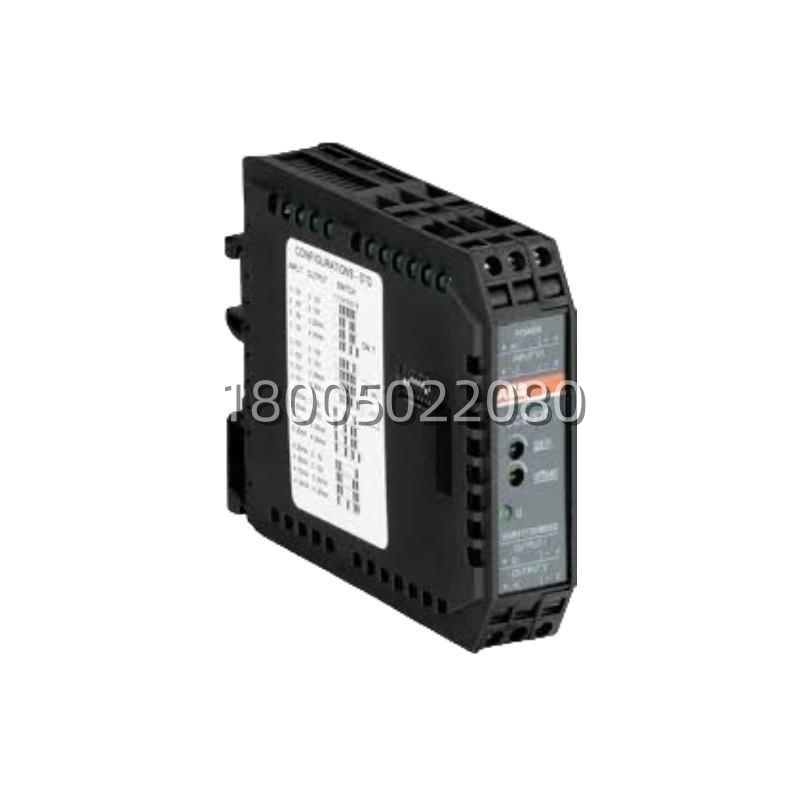
In a municipal water-pump station in Southern Europe, the MCC lineup controls six 132 kW borehole pumps through ABB ACS580 VFDs. The PLC (AC500, 24 V DC transistors on the DO cards) can’t directly drive the 110 V AC pilot circuits for the VFD’s “Run Permissive” contactor, the local hooter, and the dry-pump vibrating-screen starter — the DO cards are rated 0.5 A and the 110 V AC pilot coils would fry them in a season. The panel builder’s standard solution: one ABB 1SVR011714R1100 per pilot load, plugged into CR-S sockets on the DIN rail just above the terminal block. The PLC’s 24 V DC DO feeds the socket’s A1/A2 via a 24 V DC–coil CR-M (different suffix), but for the few loads that are110 V AC coil (legacy contactors left over from the pre-VFD era), the 1SVR011714R1100 with its 110 V AC coil takes the 110 V AC control voltage directly from the station’s auxiliary transformer — no extra interposing stage. Three years in, one of the “run permissive” relays welded during a contactor coil short. The electrician popped the 1SVR011714R1100 out of its CR-S socket (wires stay in the socket — that’s the point of plug-in), snapped a fresh one in, and had the pump back online in four minutes. No ladder rewire, no torque checklist, no “which terminal was 7 again?” The station’s O&M lead now keeps a tube of ten 1SVR011714R1100 in the stores room — cheap insurance for a site where a pump-down delay costs €k per hour.
Parameter
| Main Parameters | Value/Description |
|---|---|
| Product Model | 1SVR011714R1100 |
| Manufacturer | ABB |
| Product Category | Plug-In Interface Relay Module (CR-M series) |
| Coil Voltage | 110 V AC, 50/60 Hz |
| Contact Configuration | SPDT (1 CO – 1 changeover) |
| Contact Rating | 10 A @ 250 V AC / 30 A make (resistive) |
| Coil Power Consumption | ~1.2 VA (AC coil typical for CR-M 110 V) |
| Insulation Resistance | ≥ 10 MΩ |
| Mechanical Life | ~10 million operations (typical CR-M) |
| Electrical Life | ~10⁵ operations at rated load |
| Indicators | LED (coil energized) + mechanical flag (contact position) |
| Test Button | Manual lever – mechanically forces contact, bypasses coil |
| Socket Compatibility | CR-S 100 series (screw / spring cage options) |
| Mounting | 35 mm DIN rail (via CR-S socket) |
| Ambient (Operating) | -5 °C to +45 °C (storage -20 to +70 °C) |
| Protection | IP20 (module), IP20 (socket dependent) |
| Certifications | CE, UL, CSA (typical CR-M family) |
Technical Principles and Innovative Values
- Innovation Point 1: Plug-In, Wires Stay Put. The 1SVR011714R1100 is the relay insertonly — the field wires terminate on the CR-S socket below. When a contact welds or a coil drifts, you pull the relay straight up out of the socket and snap a new one in. Zero re-termination, zero torque-check sheet, zero “which wire was COM” confusion. For MCC rooms where a pump trip costs €k/hour, this cuts MTTR from “call the panel shop” to “grab from the blue ABB tube.”
- Innovation Point 2: LED + Mechanical Flag + Test Button Trio. Cheap generic relays give you a translucent case and hope. The 1SVR011714R1100 gives you (a) orange LED — coil has voltage; (b) green mechanical flag visible through the window — contact is actually made (LED says “coil ok,” flag says “contact moved” — two different failure modes); (c) test button — push it and the contact mechanically toggles even if the coil isn’t powered, so you can prove the downstream contactor or beacon works without firing the PLC logic. Three signals, one front face, zero multimeter diving.
- Innovation Point 3: Socket-Family Interchangeability. The CR-S socket that hosts the 1SVR011714R1100 (110 V AC coil) also accepts CR-M inserts with 24 V DC, 48 V DC, 230 V AC, 12 V DC coils — same pinout, same footprint. If the panel design changes from 110 V AC pilot to 24 V DC, you swap the insert, not the socket, not the wiring. For retrofit contractors, this is the difference between “rewire the MCC” and “swap 12 relays over lunch.”
Application Cases and Industry Value
Case 1 – HVAC Package Units (Commercial Building, Singapore): A chiller plant uses AHU-mounted control panels with 110 V AC auxiliary supply (local site standard, legacy from the 1990s DOL starters). The BMS head-end is 24 V DC, so every damper actuator “open/close” and every freeze-stat alarm needs interposing. The panel shop specced ABB 1SVR011714R1100 across 28 AHU panels — one relay per damper, one per alarm LED string. Two years in, one relay on the roof-mounted AHU (high humidity, condensing) developed a sticky contact on the freeze-stat circuit — the BMS never saw “low temp” and the coil started icing. The facilities tech popped the relay, saw the mechanical flag notdropping when the stat closed (flag said “NO,” stat was calling “NC”), diagnosed it in 30 seconds through the panel window, swapped the 1SVR011714R1100, and avoided a coil-replace job. The building’s EE later standardized the 1SVR011714R1100 across all three towers because “the LED + flag combo lets the night-shift guy diagnose without a meter.”Case 2 – Cement Bagging Line (Turkey): Six rotary packers each have a local J-box with 110 V AC control fed from the main MCC. The packer’s PLC (S7-1500, 24 V DC DO) drives solenoid banks through 1SVR011714R1100 inserts in CR-S sockets. During a bag-jam storm (dust + vibration), two relays on Packer #4 started chattering — the vibration had loosened the socket’s screw-terminal on L+ (not the relay’s fault, but the symptom looked like relay failure). The electrician pulled both 1SVR011714R1100 inserts, checked the socket torque, reseated — five minutes, line back. He commented afterward: “If these were soldered or 8-pin ice-cube with wires direct, I’d have been there twenty minutes longer.”