WhatsApp:+86 18005022363 WeChat: +86 18005022363
  Email:
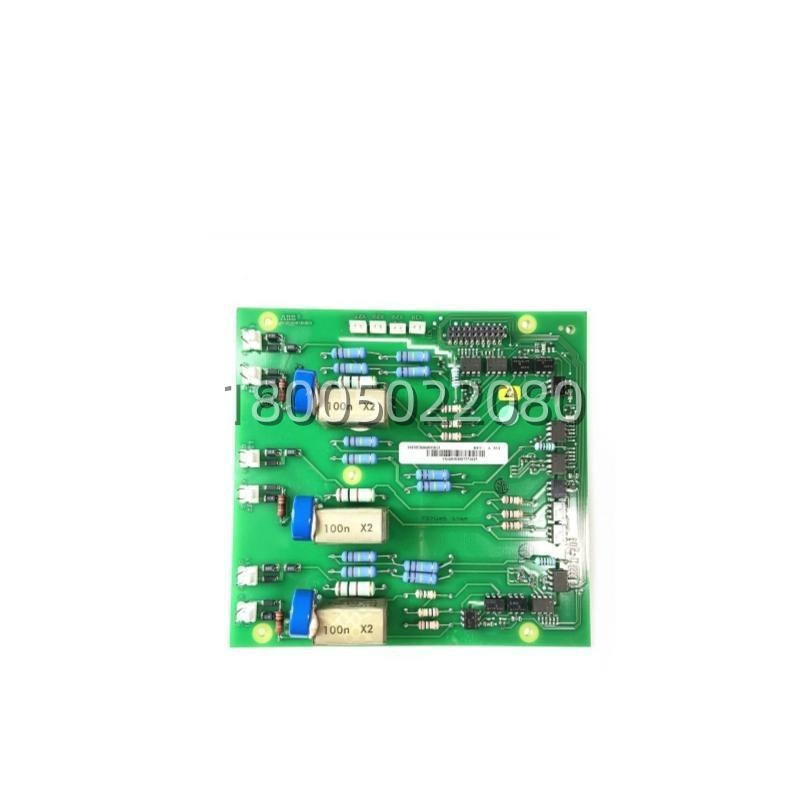
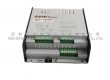
Application ScenariosAt a limestone crushing plant in southern Germany, three PSTB1050 soft starters drive the 400 kW apron-feeder conveyors. The original MCC design had bundled all DI/DO into a central S800 rack tied to the AC800M, but the conveyor-local pushbuttons, pull-cord e-stops, and “motor thermistor trip” dry contacts were running 60 m of multicore back to the control room — a nightmare for fault-finding when a rat chewed through one core. The retrofit added a ABB 1SFB536068D1013 inside each conveyor’s local junction box, right next to the PSTB’s control terminals. The eight DI picked up pull-cord, local auto/manual selector, motor thermistor, and starter-ready contact; the eight DO drove the PSTB’s “start/stop” logic, a local beacon, and a “fault latch” relay back to the AC800M via a single twisted pair of RS-485 daisy-chained back to the control room. Total field wiring dropped from 60 m × 3 conveyors to one RS-485 pair + local 24 V DC supply. When a pull-cord was triggered two months later, the 1SFB536068D1013‘s Modbus register showed the DI state change in the AC800M within 30 ms — and the maintenance tech, standing at the conveyor, could see the 1SFB536068D1013‘s per-channel LEDs confirming which input fired. The plant electrician’s verdict: “The 1SFB536068D1013 turned three messy home-runs into one clean daisy chain.”
Parameter
| Main Parameters | Value/Description |
|---|---|
| Product Model | 1SFB536068D1013 |
| Manufacturer | ABB |
| Product Category | Low-Voltage Digital I/O Module (8DI + 8DO Mixed) |
| Supply Voltage | 24 V DC (±10%) |
| Digital Inputs | 8 × 24 V DC, sink/source configurable, IEC 61131-2 Type 1 |
| Digital Outputs | 8 × 24 V DC transistor, 0.5 A/ch typical, short-circuit protected |
| Communication | RS-485, Modbus RTU slave (baud 9600–115200, dip-switch or software set) |
| Isolation | Channel-to-backplane ≥ 500 V AC (typical industrial grade) |
| Input Delay | ~8 ms (configurable per engineering need) |
| Operating Temperature | -25°C to +70°C |
| Mounting | 35 mm DIN rail (also compatible with PST/PSTB internal mounting in some builds) |
| Protection / Size | IP20 (cabinet mount); ~120 × 106 × 44 mm, ~0.25 kg |
| Compliance | CE, UL, CSA, IEC 61131-2 |
Technical Principles and Innovative Values
- Innovation Point 1: Modbus RTU Without a Gateway. Most ABB I/O wants a CI801/CI840 (S800) or an AC500 head module (XC/S500). The 1SFB536068D1013 skips all that — it’s a self-contained Modbus RTU slave with its own 24 V DC supply and RS-485 terminal. Hang it off an AC800M’s serial port, an AC500’s CM588, or even a non-ABB PLC (Siemens S7-1200, Rockwell Micro850 — anything with Modbus RTU master). That independence is why it shows up in retrofit lists where “add 16 points” doesn’t justify a full S800 rack + comm module (~€2,500) when the 1SFB536068D1013 solves it for a fraction.
- Innovation Point 2: Dual Identity — Distributed I/O andSoft-Starter Board. The same ABB 1SFB536068D1013 that serves as a pump-station Modbus node also appears inside PST/PSTB soft-starter builds as the drive-side DI/DO interface — the 8DI pick up thermistor, bypass contactor feedback, external trip; the 8DO drive the PSTB’s start/stop logic and local annunciation. One SKU, two very different install contexts. For spares managers, that duality means one shelf part covers both “panel I/O expansion” and “soft-starter repair.”
- Innovation Point 3: IEC 61131-2 Input Filtering in a Thin Slice. The 8DI side isn’t just “24 V DC presence detector” — the input threshold (~11 V) and filtering per IEC 61131-2 mean the 1SFB536068D1013 rejects the induced noise you get in MCC rooms where 400 V motor starters are chopping 5 m away. In a head-to-head against a generic 24 V DC terminal-block + relay setup, the 1SFB536068D1013 eliminates the intermediate relays and gives you per-channel diagnostics over Modbus instead of “guess which wire vibrated loose.”
Application Cases and Industry ValueA municipal water utility running 18 groundwater pump stations (each with a 90 kW pump on a PSTB840 soft starter) originally had no remote DI/DO at the wellhead — the PSTB talked via its own Modbus to the SCADA, but local items (float switch, screen-rags alarm, local hand/off/auto selector, foghorn beacon) were hard-wired 800 m back to the treatment-plant DCS on a 24-pair buried cable that had water ingress in three locations. The upgrade added a ABB 1SFB536068D1013 inside each wellhead’s small wall-mount cabinet, powered from the PSTB’s 24 V DC aux. The 8DI absorbed float, screen alarm, HOA selector, and PSTB “ready”/”fault” contacts; the 8DO drove the beacon, a local horn, and a “run permit” relay back to the PSTB’s enable input. All 18 1SFB536068D1013 units daisy-chained on a single RS-485 pair back to the treatment plant’s AC800M serial port. The buried multicore was abandoned. Two years in, the utility’s O&M lead noted: “We haven’t had a single ‘ghost trip from a wet splice’ since the 1SFB536068D1013 went in. And when a float switch failed, the Modbus register told us whichstation and whichDI — no driving 40 km to guess.”In a second case, a mining conveyor upgrade used the ABB 1SFB536068D1013 as a “local satellite” beside each PSTB soft starter across six conveyor drives. During commissioning, one conveyor’s pull-cord test showed a 120 ms delay from cord-pull to PSTB trip — acceptable, but the integrator wanted confirmation the 1SFB536068D1013‘s input scan wasn’t the bottleneck. A scope on the DI pin vs. Modbus register flip showed 8 ms input filter + one Modbus poll at 19.2 kbps = ~22 ms total — the remaining 98 ms was the PSTB’s internal ramp-to-stop logic, not the I/O. The 1SFB536068D1013 was exonerated, and the site kept the config. The EHS officer’s comment: “Knowing the I/O isn’t the weak link matters when your pull-cord protects people, not just motors.”