WhatsApp:+86 18005022363 WeChat: +86 18005022363
  Email:
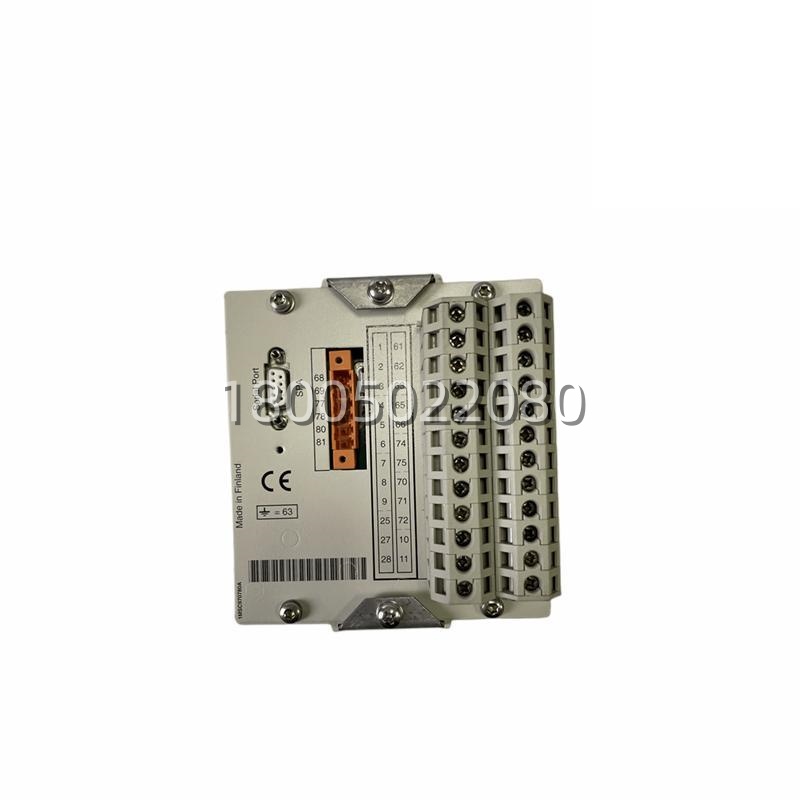
Application Scenarios
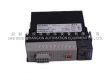
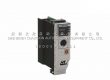
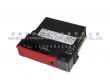
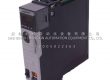
In a mining power distribution network with resistance-earthed neutral, a ground fault on a high-voltage conveyor feeder can be subtle. The ABB SPAJ 142C relay, installed in the switchgear panel, continuously monitors the zero-sequence current (residual current) from current transformers (CTs). When an insulation breakdown occurs, the relay’s sensitive earth-fault stage (set to a low threshold, e.g., 2-10% of CT rating) detects the anomaly. After a configurable time delay (set to coordinate with downstream fuses), the relay energizes its trip output, sending a signal to the circuit breaker to isolate the faulty section. Simultaneously, it triggers an alarm contact and logs the event with a time stamp, enabling maintenance crews to locate and repair the cable fault before it escalates into a phase-to-phase short circuit.
Parameter
| Parameter | Value / Specification |
|---|---|
| Device Type | Numerical Overcurrent & Earth-Fault Relay |
| Rated Frequency | 50 Hz or 60 Hz (model specific) |
| Auxiliary Supply (Uaux) | Common: 80-265V AC/DC (AA/DA models) or 18-80V DC (CA/FA models) |
| Rated Input Current (In) | 1 A or 5 A (from CT secondary) |
| Earth-Fault Sensitivity | Low-set stage configurable down to very low multiples of In (e.g., 0.02 x In for sensitive protection) |
| Time Characteristics | IDMT (Inverse Definite Minimum Time): Normal, Very, Extremely Inverse, etc.; or Definite Time |
| Operating Time Range | Adjustable from 0.05 s to 300 s |
| Communication | SPA bus (optical serial interface), some variants support Modbus |
| Output Contacts | Trip relays (heavy-duty), Signal relays (light-duty) |
| Protection Degree | IP54 (front and with panel seal) |
| Status | Legacy / Spare Part (Active product phase ended ~2012) |
Technical Principles and Innovative Values
- Innovation Point 1: Dual Protection with Selective Coordination: The SPAJ 142C combines a full three-phase overcurrent protection unit (with low-set and high-set stages) and a separate, highly sensitive earth-fault unit in one device. This dual functionality eliminates the need for separate relays, reducing panel space and wiring complexity. Its advanced IDMT (Inverse Definite Minimum Time) characteristics allow engineers to finely tune the tripping curve (e.g., using IEC 60255 standards) to ensure “selectivity.” This means the relay closest to a fault trips first, preventing unnecessary blackouts by isolating only the affected feeder while keeping the rest of the network online.
- Innovation Point 2: Integrated Circuit-Breaker Failure Protection (CBFP): A critical safety feature of the SPAJ 142C is its built-in Circuit-Breaker Failure logic. If the relay issues a trip command but the primary circuit breaker fails to open (detected by persistent fault current after a set time), the CBFP unit automatically initiates a backup tripping sequence. It sends a trip signal to the upstream breaker or to adjacent breakers to clear the fault. This “defense in depth” feature is vital in preventing catastrophic equipment damage in industrial HV networks.
- Innovation Point 3: Advanced HMI and Remote Management: For its era, the SPAJ 142C offered a sophisticated user interface with a front-panel LCD and push-buttons for local settings and fault record review. More significantly, it was a pioneer in substation automation through its support for the SPA (Station Protection and Automation) bus. This fiber-optic or twisted-pair serial link enabled remote monitoring of relay status, fault records, and even remote setting changes from a central control room, laying the groundwork for modern IEC 61850 systems.
Application Cases and Industry Value
- Case Study: Cement Plant Feeder Protection: A large cement plant in Asia was experiencing nuisance trips on its crusher motor feeders due to motor starting currents that mimicked faults. The existing electromechanical relays lacked flexibility. Engineers replaced them with ABB SPAJ 142C relays. By configuring the low-set overcurrent stage with a “long time inverse” characteristic and a higher pickup setting, the relay reliably allowed the motor’s high inrush current to pass without tripping. Simultaneously, the sensitive earth-fault stage (set at 5% of CT) provided critical protection against winding insulation failures. The plant reported a “significant reduction in false trips” and improved fault analysis capabilities through the relay’s event log.
- Industry Value: In the water and wastewater sector, where pump stations are critical, the SPAJ 142C‘s ability to operate reliably in humid, corrosive environments (thanks to its IP54-rated enclosure) ensures continuous protection of submersible pump motors against overload and ground faults, directly contributing to public utility reliability.