WhatsApp:+86 18005022363 WeChat: +86 18005022363
  Email:
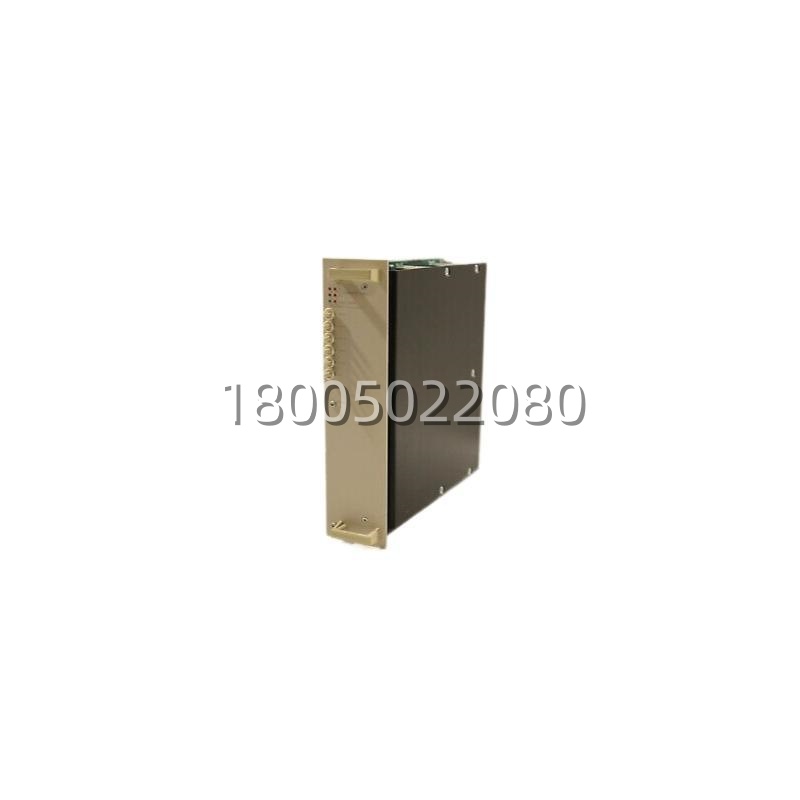
Application ScenariosOn a 6-stand tandem’s exit-bridle tension cabinet, the original PSU was a third-party 24 V / 3 A unit that had been “borrowed” from a spare-parts bin during commissioning 14 years ago. The cabinet housed three PFEA111-65 units (No. 3, 4, 5 stand exit tension) plus a PFTK101 transmitter for the looper load cell — total draw ~3.8 A at steady state, peaking to ~4.6 A during thread-up when all three PFEAs fire their 330 Hz excitation + relay alarms. The cheap PSU started nuisance-tripping on hot summer afternoons (cabinet internal +62 °C, the PSU’s OTP cut in at +70 °C but the electrolytics had aged and the 24 V sagged to 21.5 V under peak, triggering the PFEAs’ “PSU Low” bit). The plant swapped to a PFSK 101 (24 V / 5 A, ABB-native, DIN-rail, same footprint). The PFSK 101‘s wide-input (100–240 V AC) didn’t care about the site’s voltage swing (during the mill’s melt-shop arc flicker the 230 V line drops to 198 V — the PFSK 101 holds 24.0 V DC; the old PSU dropped to 22.1 V). Post-swap, zero PSU-related trips in 22 months. The E&I lead’s note: “The PFSK 101 is the one PSU in that cabinet that doesn’t have a sticker saying ‘CHECK VOLTAGE BEFORE CALLING MAINT.'”h2 Parameter
| Main Parameters | Value/Description |
|---|---|
| Product Model | PFSK 101 |
| Manufacturer | ABB |
| Product Category | Power Supply Unit (Switch-Mode) |
| System Compatibility | ABB Pressductor tension systems (PFEA111/112/113, PFTK101, PFCL load-cell heads) |
| Input Voltage | 100–240 V AC (85–264 V AC range) / 120–370 V DC (universal) |
| Input Frequency | 47–63 Hz |
| Output Voltage | 24 V DC (±1 % static regulation) |
| Output Current | 5 A (120 W) for PFSK 101; (PFSK 102 = 10 A / 240 W, PFSK 103 = 20 A / 480 W — verify your load before ordering) |
| Ripple / Noise | < 50 mV p-p (typical) |
| Efficiency | ~88–90 % (full load) |
| Protection | Short-circuit, overload, overvoltage, overtemperature (auto-recovery) |
| Indicators | Green LED = 24 V OK; Red LED = fault (overtemp / overload / input low) |
| Mounting | 35 mm DIN rail (EN 60715) |
| Connections | Screw terminals (input L/N/PE; output +V / 0 V; also a “PE / functional earth” terminal for EMC) |
| Operating Temp. | -25 °C to +70 °C (derating > +55 °C) |
| Dimensions (H × W × D) | ~124 × 63 × 118 mm (6TE wide, compact DIN) |
| Weight | ~0.3 kg |
| Certifications | CE / UL 508 / CSA / EN 61204-3 |
| Ingress | IP20 (cabinet interior) |
| Lifecycle | Active legacy (PFSK series still supported, though Pressductor line mature) |
Technical Principles and Innovative Values
- Innovation Point 1: Wide-Range Input Eats Arc-Furnace Flicker. The PFSK 101 accepts 85–264 V AC single-phase — that’s a 179 V swing before it blinks. In a melt-shop or rolling-mill plant where the 230 V line regularly dips to 190 V during a ladle arc, a narrow-range PSU (200–240 V only) would fold; the PFSK 101 holds 24.0 V DC. Same story for sites with 120 V AC single-phase (North American MCC) — one PFSK 101 SKU covers both 120 V and 230 V plants globally.
- Innovation Point 2: 24 V DC Clean Enough for 330 Hz Excitation. The PFEA111’s load-cell excitation is 0.5 A rms @ 330 Hz — a noisy 24 V rail shows up as tension ripple. The PFSK 101‘s < 50 mV p-p ripple + ~88 % efficiency (cooler = less thermal drift) keeps the PFEA’s front-end happy. Cheap PSUs at 3 A load often push 200+ mV p-p — that’s 0.8 % FS on a 65 kN tension loop, visible on the bridle dancer.
- Innovation Point 3: Auto-Recovery Protections. The PFSK 101 has short-circuit, overload, OVP, and OTP — all auto-recovery (latches off, cools/resets input, tries again). In a tension cabinet where a field tech might short the 24 V while re-terminating a PFEA, the PFSK 101 trips, protects itself, and comes back when the short clears — no fuse to hunt for at 2 AM.
- Innovation Point 4: Sibling Scaling (101 / 102 / 103). ABB deliberately scales the PFSK series: PFSK 101 = 5 A (1–2 PFEA + a PFTK), PFSK 102 = 10 A (3–4 PFEA + load cells + a small HMI), PFSK 103 = 20 A (full tension cabinet with 6+ PFEA + SafeMove spur + cabinet fan). The form factor is identical (6TE DIN) — you up-size by swapping the module, not re-drilling the DIN rail. That’s rare in PSU land where 5 A → 10 A usually means “next-size enclosure.”
Application Cases and Industry ValueIn a Southeast Asian tinplate temper-mill, the looper and bridle tension cabinet (four PFEA111-65 + two PFTK101 transmitters for the looper load cells) originally ran on a PFSK 101 (5 A). During a mill-expansion that added a fifth PFEA for a new No. 6 stand exit tension, the cabinet’s 24 V draw went from ~4.1 A to ~5.3 A peak — the PFSK 101 started hitting overload-retrip during thread-up (5.3 A > 5 A rating, but the PFEAs’ inrush is spiky so the PSU’s overload curve caught it after 8–10 seconds). The plant swapped to a PFSK 102 (10 A, same DIN footprint) in 5 minutes — unbolt the PFSK 101, seat the 102, re-torque terminals, done. The 10 A headroom also covered a future sixth PFEA they were planning for the recoiler tension. The mill’s electrical super: “The PFSK series’ ‘same footprint, triple the amps’ is the only reason we didn’t have to cut a new DIN rail that day.”A second case: a European battery-foil coating line (the same one from the PFEA111-65 case earlier) runs three PFEA111-65 units (bridle, coater-nip, rewinder) in a washdown-zone MCC that’s “dry-ish” but sees +28 °C ambient year-round. The original PSU was a non-ABB 24 V / 6 A that had its fan fail at year 9, and the PFSK 101 (fanless, convection) replaced it. No moving parts = no fan-bearing death at year 9. The foil line runs 24/7, 340 days/year — the PFSK 101 has now done 6 years without a blink. The maintenance lead: “The PFEA111-65 gets all the glory for the ±0.5 % tension, but the PFSK 101 is the reason the PFEA has clean 24 V to begin with.”h2 Related Product Combination SolutionsThe PFSK 101 is the power source for ABB Pressductor / tension cabinets; typical load-side companions:
- PFEA111-65 / PFEA111-20 – Tension electronics (covered earlier in this series); a single PFSK 101 (5 A) typically feeds 1–2 PFEA111 units + a PFTK101 comfortably.
- PFEA112-65 – Profibus DP version of the PFEA111-65; same 24 V draw (~0.35 A per PFEA), same PFSK 101 can feed it.
- PFTK101 – Pressductor transmitter (load-cell head → 4–20 mA / Profibus PA); draws ~0.15 A, negligible, but lives on the same PFSK 101 rail.
- PFCL 201-65 / PFCL 301-65 – Pressductor load-cell heads; the head itself doesn’t draw from the PFSK 101 (the PFEA’s 330 Hz excitation comes from the PFEA’s internal amp, which doesdraw from the PFSK 101 — indirect chain: PFSK 101 → PFEA → 330 Hz to head).
- PFSK 102 / PFSK 103 – The bigger siblings; if your cabinet has 3+ PFEA + PFTK + HMI + SafeMove spur, step up from PFSK 101 to 102 (10 A) or 103 (20 A). Same DIN footprint, same terminal layout.
- ABB S800 / AC 800M – If the tension cabinet also houses an AC 800M MPC (for supervisory reel-diameter / taper logic), the PFSK 101 can feed the AC 800M’s 24 V input iftotal load < 5 A — otherwise give the AC 800M its own PSU and keep the PFEA rail isolated.
Maintenance, and Full-Cycle SupportThe PFSK 101 mounts on a standard 35 mm DIN rail (EN 60715) inside the tension cabinet — single 6TE width, screws on top/bottom for the terminal block access. Wiring:
- Input side — L / N to the plant’s single-phase 100–240 V AC (or 120–370 V DC if your site uses DC distribution for the MCC). PE terminal mustbe landed — the PFSK 101‘s EMC performance (EN 61204-3) depends on the PE bond; skipping it makes the PFEA’s 330 Hz front-end pick up switch-mode hash.
- Output side — +V / 0 V to the PFEA / PFTK 24 V bus. Torque to 0.5–0.6 N·m (the PFSK 101 terminals are screw-clamp, 0.2–2.5 mm² wire). If you’re feeding multiple PFEAs, run a 24 V / 0 V pair as a backbone (2.5 mm²) and tee off to each PFEA with 1.5 mm² — don’t daisy-chain PFEA-to-PFEA on the 24 V because the PFEA’s 330 Hz excitation return current needs a solid 0 V path.
- LED read — Green = 24 V OK (≥ 22.8 V), Red = fault (overload / overtemp / input low). If Green is off and Red is on: check input L/N (is the MCC breaker tripped?); if Green off and Red off: PFSK 101 is dead or input completely absent. If Green flickers at 2 Hz: input voltage is at the rail (below 85 V AC or above 264 V AC) — the PFSK 101 is in under/over-voltage protect, not delivering 24 V.